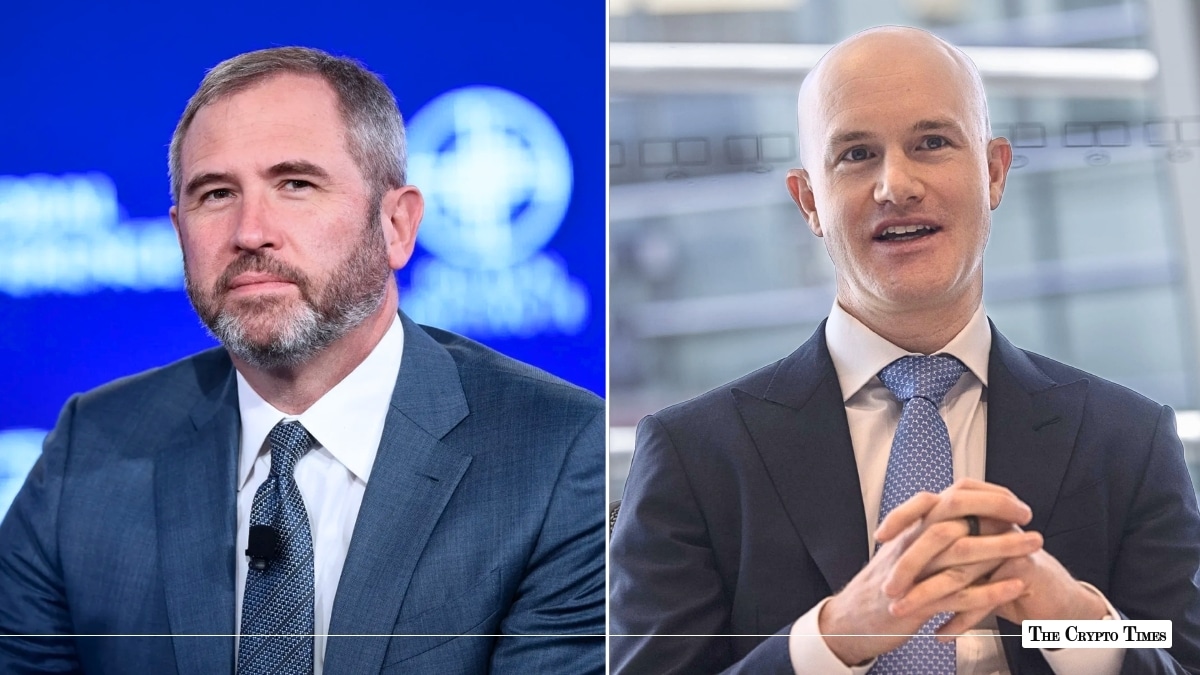
Two of crypto’s most prominent chief executives publicly extended their support to the CLARITY Act on August 20, a day after attending President Donald Trump’s White House meeting with crypto and Wall Street leaders, where Trump urged Congress to pass a “fair version” of the market-structure bill.
Ripple CEO Brad Garlinghouse and Coinbase CEO Brian Armstrong, who were among the meeting’s attendees, used X to frame the moment as a turning point for U.S. crypto regulation. Their posts amount to industry advocacy rather than new developments in the legislation itself, and the claims in them are their own.
Garlinghouse frames crypto as a mainstream voting bloc
Garlinghouse, posting after the gathering, said it was good to be back at the White House alongside Trump, SEC Chairman Paul Atkins and CFTC Chairman Michael Selig. He argued that crypto is no longer a fringe industry, citing a figure of 67 million Americans, which he described as nearly one in four, who hold digital assets, and said Washington now recognizes the “crypto voter.” He called the administration’s commitment to digital assets profound and said “the future is bright.”
Armstrong urges followers to lobby the Senate
Armstrong was more direct about the legislative timeline. In one post, he said the message from the president was clear, that the administration is committed to passing the CLARITY Act, and argued that regulators are aligned and Congress has “set a date.” He said 67 million Americans own crypto and want the legislation, adding, “I’m confident the Senate will listen,” and urged followers to contact their lawmakers.
In a separate, lighter post styled as a “vision board,” Armstrong listed a “strong bipartisan vote on CLARITY Sep 15th,” an “Uptober,” and the start of the next crypto bull run, signing off, “Just as the prophecy foretold.” The post carried no supporting data and reads as personal commentary rather than a forecast tied to specific evidence.
What actually happens on September 15
The vote both executives point to is narrower than the framing suggests. On August 8, Senate Majority Leader John Thune filed cloture on the motion to proceed to the CLARITY Act (H.R. 3633), setting up a procedural vote for 2:15 p.m. ET on Tuesday, September 15, the day after the Senate returns from recess.
That vote is a cloture motion on the motion to proceed, a step that requires 60 votes and, if successful, merely allows the Senate to formally begin debating the bill. It is not a vote on final passage, and a failed cloture vote could effectively end the bill’s chances for the year. The House already passed the CLARITY Act by 294–134 in July 2025, and the Senate Banking Committee advanced its version 15–9 in May, but any Senate-passed bill would still need to be reconciled with the House version before reaching the president.
Why the optimism is contested
Outside the industry’s public messaging, the odds of passage have narrowed rather than improved. Galaxy Research cut its estimate of the CLARITY Act becoming law in 2026 to 10%, citing the shrinking Senate calendar, while prediction-market pricing on Polymarket sat near 17% earlier in the month.
Several disputes remain unresolved. Senators are still negotiating ethics and conflict-of-interest provisions, illicit-finance safeguards, and rules on stablecoin rewards; the last of which the banking sector opposes, warning that yield on stablecoin balances could pull deposits away from traditional lenders. The calendar is also tight: lawmakers return on September 14 with limited floor time before an October election-season recess, with midterms in November competing for attention. Separately, SEC Commissioner Hester Peirce has signaled the agency will keep regulating crypto regardless of whether the bill passes.
For the industry, then, the White House meeting and the executives’ posts function as a coordinated political push rather than evidence the bill is over the line. The September 15 cloture vote, and whether enough Democrats cross over to reach 60, will be the first real test.
Also Read: White House Crypto Adviser Bullish on CLARITY Act Ahead of September 15 Vote