Key Highlights
- Coinbase CPO Faryar Shirzad warned that proposed American Bankers Association changes to stablecoin reward provisions could “kill” the CLARITY Act.
- Shirzad argued that stablecoins are not bank deposits and that rewards should not automatically be treated as deposit interest.
- The GENIUS Act already prohibits stablecoin issuers from paying yield, while the CLARITY Act includes additional restrictions on rewards.
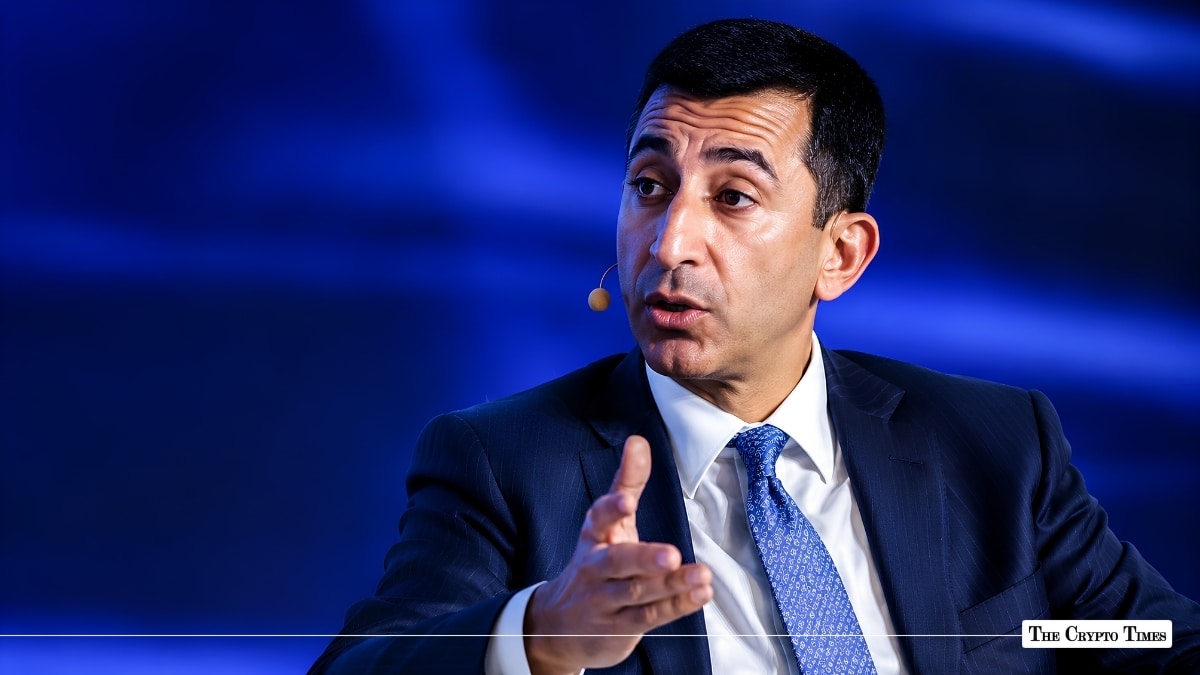
Faryar Shirzad, Chief Policy Officer at Coinbase, warned that proposed changes sought by the American Bankers Association (ABA) to the CLARITY Act’s stablecoin reward provisions could jeopardize the legislation.
In a lengthy X post on Thursday, Shirzad said the changes could “kill” the CLARITY Act while acknowledging the efforts of Rob Nichols, president and CEO of the ABA, to advance the bill.
Shirzad was responding to Nichols’ argument that rewards offered on stablecoin balances could draw funds away from bank deposits and should therefore be treated similarly to deposit interest. He said stablecoins are not bank deposits and that the ABA should not declare rewards to be deposit interest in order to control who can offer them and when.
Existing provisions on yield and rewards
Shirzad pointed to prior concessions already secured by the ABA. The GENIUS Act prohibits stablecoin issuers from paying yield. The CLARITY Act goes further by stating that rewards cannot mimic deposits and by restricting platform rewards.
He noted that large banks previously used rewards to encourage credit card adoption and that the same mechanism could support stablecoin adoption. Shirzad described the core issue as competition in payments and money movement, areas where the largest banks hold scale and incumbent positions.
He added that smaller banks could also use stablecoin rails to compete with larger institutions. Shirzad stated that the claim of deposit flight has been contradicted by available evidence and that the matter concerns competition, including competition involving the ABA’s smaller members.
Shirzad said Congress has already addressed many ABA concerns and the current CLARITY compromise, along with new powers granted to banks for digital asset participation, represents a win for ABA members. He concluded that abandoning the bill would leave the existing rules on rewards unchanged and urged Congress to pass the legislation.
ABA position on strengthening the legislation
The ABA has argued that its position is aimed at changing the legislation rather than preventing its passage.
In an opinion piece published on Wednesday, Rob Nichols stated that the ABA seeks to strengthen the CLARITY Act rather than prevent its passage. Nichols wrote that banks of all sizes support establishing a comprehensive regulatory framework for digital assets.
He identified one short provision in the approximately 600-page bill as needing clarification to implement the bipartisan goal of preventing stablecoins from functioning as shadow interest-bearing deposits while still allowing payments innovation.
Nichols noted that the 2025 GENIUS Act already bars stablecoin issuers from offering interest or yield. The remaining question, he said, is whether affiliates such as crypto exchanges can offer interest-like rewards that could encourage consumers to shift bank deposits into stablecoin wallets. Nichols described this as an effort to work around the GENIUS Act prohibition.
Concerns over economic impact and clarity
Nichols argued that bank deposits fund loans for small businesses, first-time homebuyers, and agricultural operations. He stated that stablecoins lack certain consumer protections available to bank deposits, including FDIC insurance.
Nichols argued that the current CLARITY Act text leaves ambiguity about permitted rewards. As an example, he cited a flat monthly payment that increases with higher balances, which could resemble interest yet remain unclear under the bill’s language, potentially leading to regulatory uncertainty and litigation.
The ABA has recommended limited textual adjustments, including replacing ambiguous phrasing with a prohibition on rewards that are “substantially similar” to interest payments and removing the word “solely” in a related sentence.
Nichols said these changes would still permit various reward programs that do not mimic interest and would improve the bill’s prospects for passage. He rejected claims that the ABA had previously agreed to the existing language and later reversed its position, describing such assertions as misinformation.
CLARITY Act faces broader legislative questions
The dispute over stablecoin rewards comes as the CLARITY Act faces several other issues before Congress.
On August 19, President Donald Trump met with crypto and financial-industry executives at the White House and called on Congress to pass a “fair version” of the market-structure bill.
The following day, Ripple CEO Brad Garlinghouse and Coinbase CEO Brian Armstrong publicly expressed support for the CLARITY Act.
Those statements reflect industry positions rather than a change in the bill’s legislative status. Other issues, including ethics provisions, enforcement authority, and the congressional calendar, could also affect its progress.
The stablecoin-reward dispute adds another point of contention between the banking and crypto industries as lawmakers consider changes to the bill.
Also Read: Peter Schiff Calls Bitcoin’s Move Above $72K a “Fakeout”