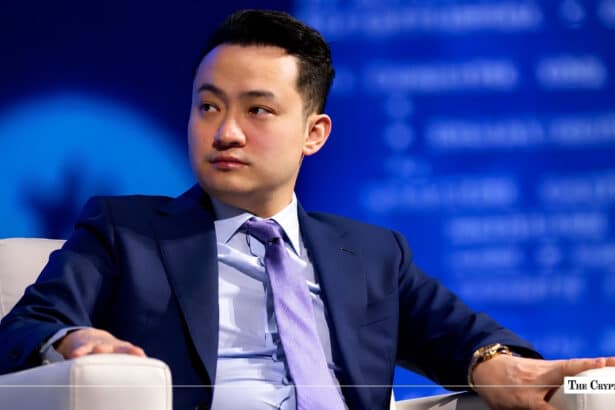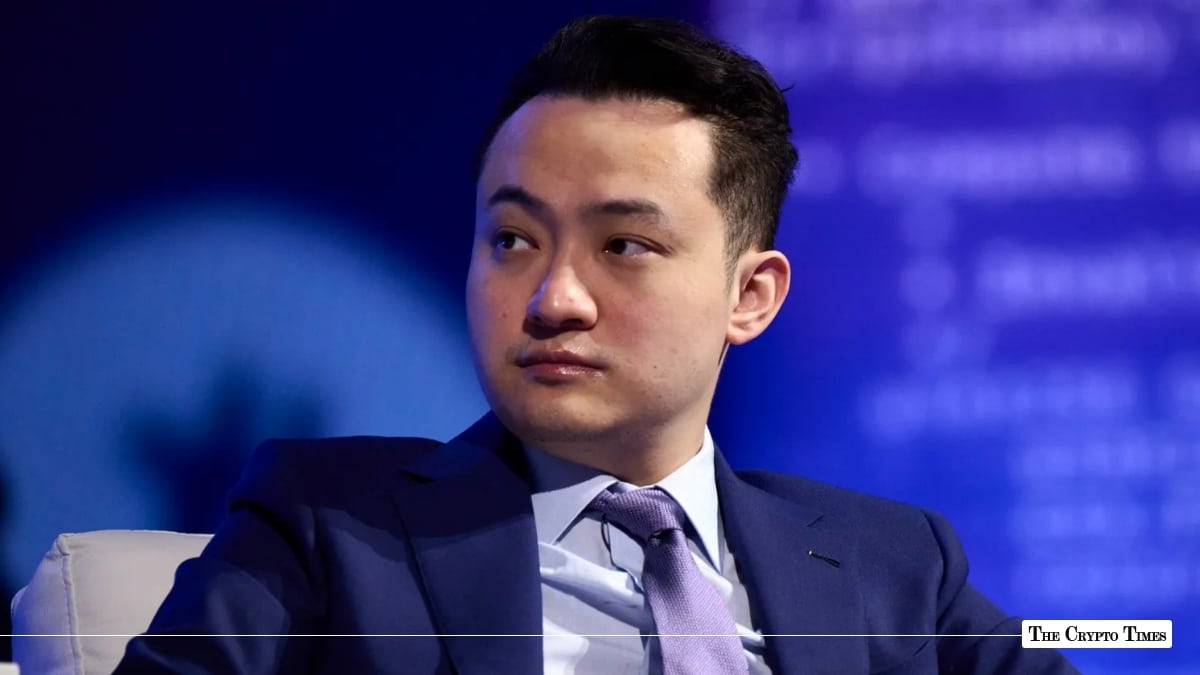
TRON founder Justin Sun secured a significant procedural victory on Thursday after a California federal judge rejected World Liberty Financial’s attempt to force their multi-hundred-million-dollar dispute into private arbitration and shield documents from public view.
The ruling ensures that all of Sun’s individual claims against the Trump family-backed crypto venture will remain in open court, marking the latest escalation in a legal battle that has gripped the decentralized finance industry for months. Sun, one of the earliest and largest investors in the project, described the outcome as a “significant win” and vowed to press forward until token holders receive the transparency he says they deserve.
Announcing the ruling in a detailed statement posted on X, Sun said his counsel appeared before the court to oppose World Liberty’s efforts to force the case into secret arbitration proceedings and seal filings from the public. “We argued forcefully that this case belongs in open court, and the Court agreed with us,” Sun wrote. The judge also rejected World Liberty’s argument that every one of the company-related claims should be arbitrated, ordering the parties instead to meet and confer over which of those claims will remain in court and which will be sent to arbitration.
The case, filed in the US District Court for the Northern District of California and assigned to Judge James Donato, remains one of the most high-profile crypto disputes currently on a federal docket.
“World Liberty tried to push this case behind closed doors, and the Court said no,” Sun wrote in his statement, adding that “token holders deserve to see how projects treat the people who trust them.” The TRON founder further alleged that “World Liberty would not be fighting this hard to hide their actions if those actions were defensible,” insisting that he would not rest until the community received “the transparency it deserves.”
The Origins of the Dispute
The clash traces back to Sun’s early involvement with the project, when he invested $45 million in World Liberty Financial in exchange for $WLFI tokens. According to Sun, that capital was pivotal in transforming what had been a struggling token sale into a $550 million raise. He said he backed the project because he believed in its stated mission of bringing decentralized finance to the public.
As alleged in his complaint, however, once his investment had helped stabilize the offering, World Liberty secretly embedded a backdoor into the $WLFI smart contract that gave the team unilateral power to freeze, restrict, and burn any holder’s tokens without notice or due process.
Sun claims that World Liberty ultimately wielded that power against him, seizing his property in the form of his $WLFI holdings and then threatening him with criminal referrals when he attempted to exercise his legal rights. His lawsuit seeks hundreds of millions of dollars in damages.
Shortly after initiating litigation, Sun said he obtained a court order prohibiting World Liberty from burning, destroying, reallocating, or otherwise permanently disposing of any of his tokens. That order, he said, was necessary because World Liberty had “both threatened to destroy my tokens and ensured it had the unilateral power to carry out that threat.”
The dispute has since escalated on multiple fronts, with the company filing its own defamation lawsuit against Sun in Miami, accusing him of running a public smear campaign.
Warnings Over USD1 Stablecoin
In his latest statement, Sun raised what he described as urgent concerns about the USD1 stablecoin issued by World Liberty Financial. He said he now understands that World Liberty has “implemented the same backdoor capabilities” in the dollar-pegged token as those he alleges exist in the $WLFI smart contract.
In his view, USD1 users should understand that World Liberty has given itself the technical ability to freeze or destroy their assets at any time, and that, as alleged in his complaint, the company has already shown a willingness to use such functions against $WLFI holders.
The warning arrives at a moment of aggressive institutional expansion for the stablecoin. USD1 recently launched natively on the Stripe-backed Tempo L1 blockchain, and the company’s subsidiary was cleared by the Office of the Comptroller of the Currency (OCC) to take over USD1 issuance from BitGo earlier this month. World Liberty had also applied for a US national trust bank charter earlier in the year to expand institutional use of the token, which now carries a market capitalization reported at roughly $4 billion.
Others Allegedly Victimized, Sun Says
Sun claimed that he is not the only alleged victim of what he describes as a fraudulent scheme by World Liberty. “While it is not my place to share other people’s stories without their consent, others have come forward to me privately to say that they too believe they were victimized by World Liberty, but they are concerned about coming forward publicly to file suit,” he wrote.
Sun said he understood their reluctance, arguing that, as alleged in his complaint, “World Liberty has shown that they will retaliate against those who challenge them.”
A Cautionary Comparison to His Own History With Bad Actors
Sun used the moment to remind investors of his previous experience with alleged bad actors in the industry. Before the World Liberty dispute, he said, he was defrauded by ARIA, which he alleges “ran off with approximately $500 million in collateral backing the TUSD stablecoin.” Sun has long accused First Digital Trust and its CEO Vincent Chok of orchestrating the misappropriation, and has previously offered bounties totalling hundreds of millions of dollars for information leading to recovery.
While ARIA was insolvent and, according to Sun, sitting on hundreds of millions in misappropriated funds, its agent Vincent Chok was simultaneously launching a new stablecoin called FDUSD through his company First Digital Trust. That stablecoin, Sun noted, “ultimately collapsed in confidence, de-pegged, and saw its trading pairs stripped from the Binance exchange.”
Binance has since removed numerous FDUSD spot and margin trading pairs across major cryptocurrencies including Bitcoin Cash, TAO, Avalanche, Litecoin, Sui, Cardano and Chainlink. “That experience taught me to look more carefully at the projects I invest in,” Sun said, “and it is one of the reasons I now have serious concerns about World Liberty.”
The Dolomite Borrowing and Circular Leverage Concerns
Sun’s statement zeroed in on what he described as troubling capital arrangements inside the World Liberty ecosystem. According to public reports, World Liberty deposited approximately five billion of its own $WLFI tokens as collateral on Dolomite, a lending platform co-founded by World Liberty’s own Chief Technology Officer. That reportedly amounts to nearly half the project’s treasury and roughly 5% of the total token supply.
Through the arrangement, World Liberty reportedly borrowed at least $75 million in stablecoins, including its own USD1. On-chain analyses have shown that more than $40 million of those borrowed funds moved to Coinbase Prime wallets, while the transaction drained the protocol’s USD1 lending pool to more than 93% utilisation, leaving ordinary depositors unable to withdraw their funds.
As noted in Sun’s complaint, industry analysts have drawn direct comparisons between this style of circular borrowing and the leverage that brought down Sam Bankman-Fried’s massive fraud at FTX.
Dough Finance and the Question of Leadership
Sun’s statement also revisited the past of World Liberty’s founding team. As alleged in his complaint, World Liberty co-founder Chase Herro previously founded another DeFi protocol called Dough Finance, which claimed to have been the victim of a hack in which user assets were stolen. But an investor named Jonathan Lopez has filed a lawsuit alleging that no hack actually occurred and that Herro personally liquidated the platform’s assets into his own wallet.
According to public reporting, only about $281,000 of the roughly $2.5 million that vanished from Dough Finance was ever recovered, leaving the vast majority of the funds missing to this day. As public reporting has documented, many of the same individuals who were involved in Dough Finance, including Herro and co-founder Zak Folkman, are now running World Liberty Financial. The Herro trial in Florida has been set to proceed in the coming months.
Doubts About Ability to Pay a Judgment
Taken together, Sun said, these factors raise fundamental questions about whether World Liberty has the resources to satisfy the sort of judgment he is pursuing. His own claim is for hundreds of millions of dollars, and he said he has “seen no evidence to suggest that they have the resources to satisfy a judgment of that magnitude.”
The market capitalization of USD1 is reportedly $4 billion, but as Sun pointed out, that is user money. “It is collateral that is supposed to back the stablecoins and cannot be used to pay a court judgment,” he wrote. Aside from that collateral, he said, he has seen no indication that World Liberty has sufficient capital to cover a judgment for hundreds of millions of dollars. And that, he emphasized, is only his claim. Others, he said, could bring similar lawsuits in future.
“All of these things, my massive damages claim, the claims of others who have not yet sued, the Dolomite borrowing, and the Dough Finance litigation, raise serious questions in my mind about whether World Liberty and USD1 has enough money to satisfy a judgment, repay their debts, or make investors whole if there is a run on the bank,” Sun wrote.
He urged investors to “do their own diligence and proceed with extreme caution,” questioning whether the venture has the balance sheet to meet all of its potential obligations.
What Happens Next
Thursday’s ruling does not decide whether World Liberty acted illegally. What it does is keep the most personal component of Sun’s dispute in a public forum, where subsequent filings and evidence will face significantly greater scrutiny than they would in a private arbitral proceeding.
The parties will now be required to negotiate over which of the company-related claims proceed in court and which are directed into arbitration, with World Liberty still retaining avenues to seek dismissal on the substance.
For a project that has weathered months of controversy over its governance model, its treasury management, and its founders’ history, the ruling marks a moment where the courtroom, rather than the timeline of X, may become the venue that most decisively shapes the future of both $WLFI and USD1.
Also Read: Senate Democrats Demand Fed Chair Warsh Disclose Trump Conversations