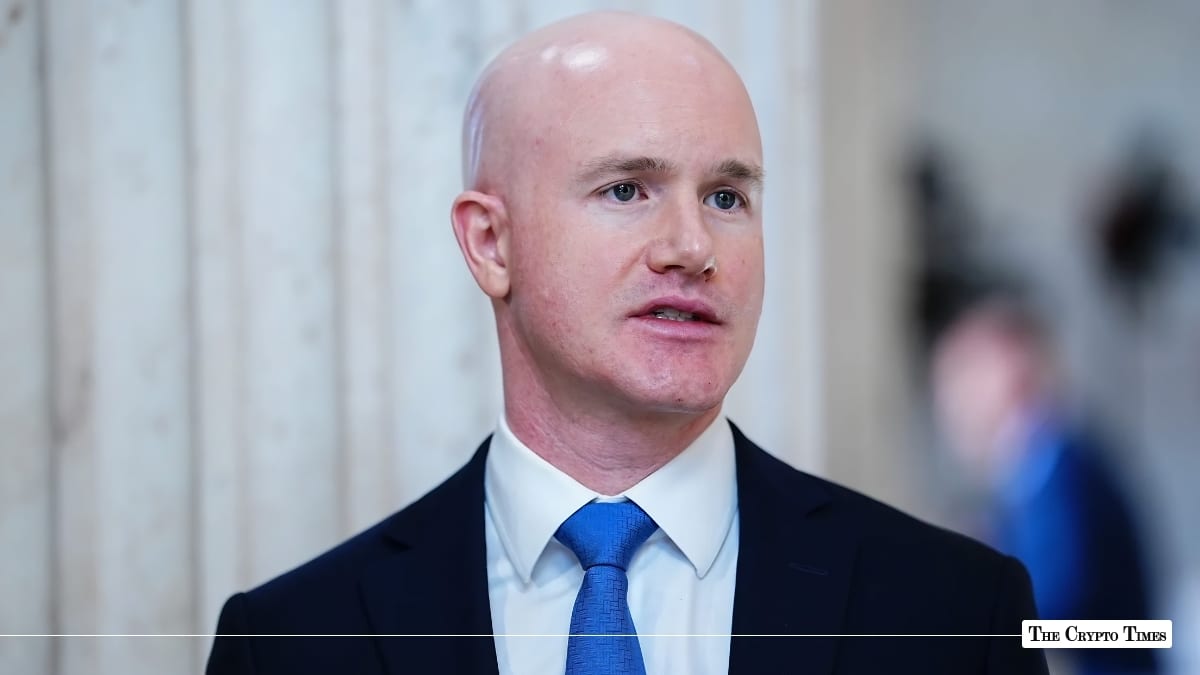
Coinbase CEO Brian Armstrong made a public case on Friday that clearer U.S. crypto rules are now likely regardless of what Congress does, pointing to both a looming Senate vote and a regulatory backup plan from the country’s two main markets regulators: Securities and Exchange Commission (SEC) and Commodity Futures Trading Commission (CFTC).
In one post, Armstrong wrote that “clarity is coming either way,” listing two routes: what he described as 60-plus votes in the Senate on September 15, or a new set of rules from the CFTC and SEC around September 16. In a separate post on the same day, he pressed for tokenization in the United States and urged the Senate to pass the CLARITY Act in the fall.
The CFTC’s backup plan
Armstrong’s “either way” framing followed remarks by CFTC Chairman Mike Selig, who quote-posted his own position and spoke Thursday at the inaugural meeting of the CFTC’s Innovation Advisory Committee.
Selig said his preferred path remains legislation, calling passage of the bipartisan bill the most important step for the industry. But he added that if the bill keeps stalling, which he attributed to what he called Democratic obstruction, the CFTC would “utilize its existing authorities to begin establishing a regime for crypto asset markets.” He said he has directed staff to explore a framework that could let certain exchanges operate as regulated “crypto asset markets,” a category analogous to the CFTC’s existing designated contract markets, and to create a compliant path for DeFi developers.
Selig framed the move as giving the CLARITY Act “breathing room” for a vote while preparing to act if lawmakers fail. His decision to publicly assign blame to one party is unusual for a sitting financial regulator, a point noted in coverage of the meeting.
What the two dates actually mean
Armstrong’s timeline compresses a more complicated reality, and the specifics matter. The September 15 event is not a vote to pass the CLARITY Act. It is a cloture vote on the motion to proceed, a procedural step requiring 60 votes that, if it succeeds, merely allows the Senate to begin debating the bill. The House passed the CLARITY Act (H.R. 3633) in 2025, but the Senate has not.
The “September 16” regulatory path is also shorthand rather than a literal deadline. Selig did not promise finished rules the day after the vote; he said he would direct staff to move swiftly to propose rules. Federal rulemaking involves proposals, public comment and revisions, a process that typically takes months, and any attempt to build a crypto market-structure regime through existing authority alone would likely face legal challenges, which is a large part of why the industry has sought legislation in the first place.
The SEC and the tokenization push
Armstrong’s second post tied the legislative fight to tokenization. He said Coinbase is already launching tokenized equities outside the United States, and pointed to progress at the SEC under Chairman Paul Atkins, citing the agency’s “Reg Crypto” work and an “innovation exemption” he expects to hear more about soon.
Those references have a documented basis. The SEC’s Regulation Crypto is the agency’s planned comprehensive digital-asset framework, developed under Atkins’s “Project Crypto” initiative. The innovation exemption is that project’s central deliverable; a time-limited framework, floated for release since early 2026, that would let qualified firms issue and trade tokenized securities on-chain under lighter-touch conditions while remaining under SEC oversight. Coinbase, for its part, has been expanding tokenization abroad, including authorization to set up a tokenization hub in Abu Dhabi, while U.S. rules remain pending.
The tokenization drive is contested. Traditional exchange operators including Nasdaq, CME and NYSE have pushed back on proposals that would let crypto platforms trade tokenized equities without the full set of securities-market requirements, and the SEC itself has stressed that any exemption would be limited rather than blanket deregulation.
The reality check on CLARITY
For all the optimism, the bill’s near-term prospects have weakened. Galaxy Research cut its estimate of the CLARITY Act becoming law in 2026 to 10% on August 14, down from 60% after a May committee markup, while prediction-market odds for 2026 passage sat near 26%. Senators are still divided over ethics and conflict-of-interest provisions, illicit-finance safeguards and rules on stablecoin yield, and the post-recess calendar is tight ahead of the November midterms.
That backdrop is what makes the regulatory “backup” newsworthy: with legislation uncertain, the CFTC and SEC are signaling they will try to move on their own; a path that is faster in rhetoric than in practice, and less durable than a law, as Selig himself acknowledged in urging Congress to act.
Also Read: Ripple’s Garlinghouse, Coinbase’s Armstrong Back CLARITY Act After White House Crypto Meeting