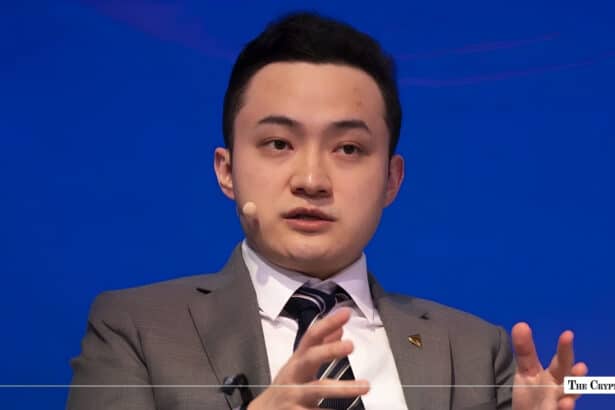
TRON founder Justin Sun has publicly challenged the governance structure of World Liberty Financial, arguing that a recent proposal undermines basic principles of decentralized decision-making.
In a detailed X post on Wednesday, Sun said the voting framework tied to the proposal creates unequal conditions for token holders and raises concerns about how decisions affecting billions of tokens are being made.
Dispute centers on voting design
The criticism focuses on how the proposal handles participation and outcomes. According to Sun, the structure penalizes dissent by keeping tokens locked for holders who do not agree to updated terms.
Under the proposal, large portions of WLFI tokens are subject to revised lockups and vesting schedules, with some allocations facing potential token burns. Holders who opt in receive defined unlock timelines, while those who do not remain locked under existing conditions.
Sun also alleged that certain token holders, including himself, were unable to participate in the vote due to frozen tokens. He said this limits the representativeness of the process, as some accounts with voting power are effectively excluded. The project has not publicly detailed the scope of any such restrictions.
Governance control raises transparency questions
Another point of contention is the role of internal controls over the protocol. Sun claimed that key decisions can be executed by a small group of wallet addresses operating through a multisignature setup.
He argued that this structure concentrates operational authority, even as governance proposals are presented as community-driven. The identities behind these controlling addresses have not been disclosed.
The proposal also introduces compliance requirements for participants, including identity verification for voters in certain cases. Sun contrasted this with the anonymity of entities holding administrative control, questioning whether the arrangement creates an imbalance between oversight of users and transparency of decision-makers.
High stakes: Token unlocks and burns
The governance vote affects tens of billions of WLFI tokens, including revised vesting schedules for team members, partners, and early supporters. Some allocations are subject to potential token burns upon opting into new terms, while others retain their full allocation but remain locked out of participation. The scale of the changes has heightened scrutiny over how the decision is being conducted.
Meanwhile, WLFI has described the proposal as a mechanism to align incentives among stakeholders, citing extended lockups and token burns as commitments to long-term participation. The team said the changes would keep a significant share of tokens engaged in governance for years, while restructuring distribution timelines.
Broader debate over DeFi governance
The dispute highlights ongoing tensions in decentralized finance over how governance systems are designed and enforced.
Questions around voting fairness, transparency, and control mechanisms remain central as projects attempt to balance decentralization with operational oversight, particularly when large token allocations and economic interests are involved.
Also Read: eToro Acquires Zengo for $70M to Expand Crypto Self-Custody Services