Key Highlights
- Sens. Elizabeth Warren and Richard Blumenthal urged the SEC to investigate the $TRUMP memecoin for potential fraud and unlawful financial enrichment.
- The request follows disclosures showing about $636 million in Trump-related crypto income, while the token has lost most of its value since launch.
- Lawmakers are also pushing legislation to bar elected officials and their spouses from issuing or promoting digital assets, citing ethics and consumer protection concerns.
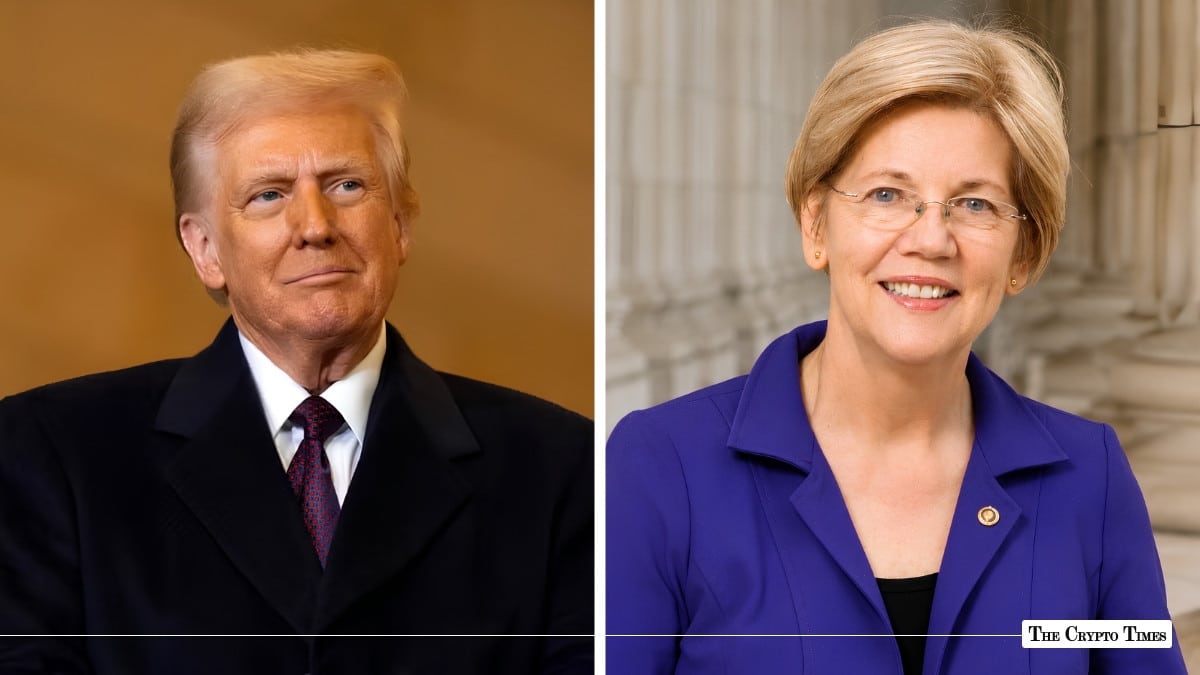
Two Democratic senators, Sens. Elizabeth Warren and Richard Blumenthal, have urged the Securities and Exchange Commission (SEC) to examine President Donald Trump’s $TRUMP memecoin for possible fraud or improper financial benefits.
According to a letter sent Monday to SEC Chair Paul Atkins, Warren and Blumenthal said they worry the project “may constitute an illegal scam.” They urged the agency to look closely for any unlawful deception or enrichment tied to the token.
Why Senators want an SEC review on $TRUMP
The $TRUMP token debuted on the Solana blockchain in the days leading up to Trump’s January 2025 inauguration. Its value surged quickly, briefly reaching a market capitalization near $9 billion. Roughly 80% of the supply was controlled by Trump Organization affiliates at launch. The price later plunged sharply.
By mid-2026 the token’s market value had fallen below $400 million, leaving many later buyers with losses approaching 97%. Analysts estimate that nearly one million people lost money overall, with combined losses totaling about $3.8 billion through the end of June.
In their letter, Warren and Blumenthal raised the possibility that the episode resembles a “rug pull,” or a slower version of one, in which early participants and insiders extract value while ordinary investors suffer the decline.
Questions also remain about the SEC’s authority. Agency guidance issued in early 2025 indicated that typical memecoins generally fall outside securities laws and therefore offer no federal protections to holders. The same statement, however, reserved the right to review tokens that appear labeled as memecoins mainly to avoid regulation. The senators contend Trump’s coin merits that individual review.
Trump’s crypto disclosure faces new scrutiny
The request came a month after new financial disclosures highlighted the scale of Trump’s reported gains from memecoin.
His 2025 annual filing with the U.S. Office of Government Ethics listed roughly $635 million in related income, the largest single cryptocurrency-related entry in the document. According to the filing, most of that money came from royalty and licensing arrangements that channel a portion of the token’s activity to entities connected to the Trump Organization, rather than from personal trading by the president himself.
Senators urge for strong legislation
In a related development on July 4, 2026, Senator Kirsten Gillibrand called for legislation that would stop elected officials and their spouses from creating or promoting digital assets.
The proposal, backed by several colleagues, would ban the president, members of Congress, and their spouses from issuing or sponsoring cryptocurrencies, including memecoins. It would cover both Trump and First Lady Melania Trump, who reported about $6 million in income from NFTs and related digital items.
Gillibrand argued that officeholders should not generate personal profits from digital tokens while in government. Clearer rules, she said, would improve consumer safeguards, curb illicit activity, and maintain public trust as lawmakers shape broader crypto policy.
Democrats propose new oversight agency
In a separate development last week, Senate Democratic Leader Chuck Schumer introduced the Anti-Corruption Bureau Creation Act, seeking to form a new independent federal body focused on probing executive-branch misconduct and reclaiming funds gained through it.
Democrats presented the legislation as a response to what they call President Trump’s blending of public power with personal profit, citing the Trump family’s cryptocurrency activities as a key example.
The proposed bureau would be directed by a seven-member board confirmed by the Senate, serving fixed terms under rules that ensure partisan balance and limit White House influence. It would receive authority to investigate, issue subpoenas, conduct oversight, enforce findings, and release public reports.
The growing bipartisan and intra-party pressure highlights ongoing tensions between political influence, personal branding, and the lightly regulated memecoin sector. How the SEC responds to the investigation request, and whether Congress advances limits on officials’ crypto involvement, will shape the boundary between personal commercial activity and public ethics in the digital-asset space.
Also Read: Crypto Industry Rebuts Sheriffs’ CLARITY Act Objections as Vote Slips