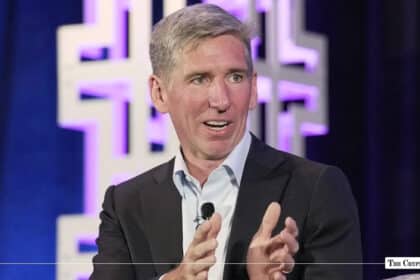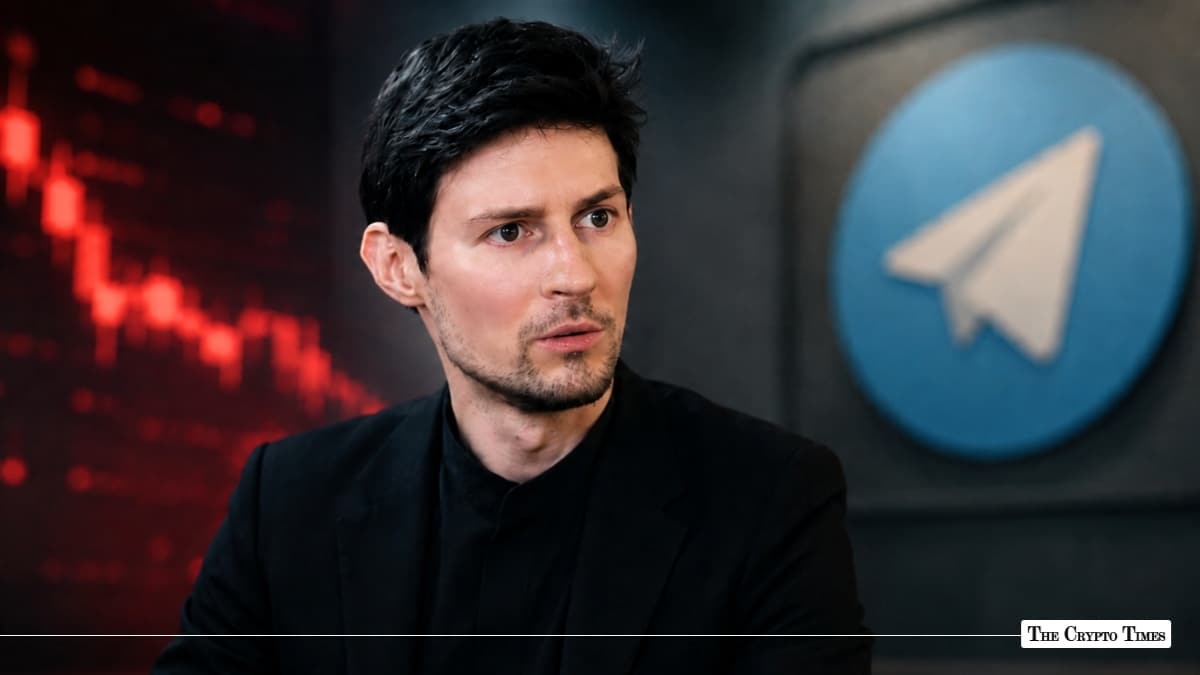
Russia’s Federal Security Service (FSB) has formally charged Telegram Founder Pavel Durov with facilitating terrorist activity and added him to an international wanted list, according to Reuters citing Interfax, in a sharp escalation of a case that began as an investigation earlier this year. GRAM, the cryptocurrency of the Durov-led Open Network, fell in response.
The token dropped roughly 4% to around $1.39 over 24 hours, underperforming a broader market that saw Bitcoin rise 1.08%. As of writing, the token price climbed up a little and was trading at $1.41 and its trading volume climbed more than 65% to roughly $69 million, and GRAM’s market capitalization stood at about $3.87 billion, according to CoinMarketCap data.

What the FSB is alleging
The charge falls under Part 1.1 of Article 205.1 of the Russian Criminal Code, “assistance to terrorist activities,” which carries a maximum sentence of 15 years. The FSB said its case centers on the alleged use of Telegram to recruit Russian citizens into sabotage. According to the agency, Ukrainian special services used a Telegram bot known as “Diver / Leo” (a dating chatbot) to make contact with young people and incite them to illegal acts; it says 46 people aged between 12 and 22 have been detained across Russian regions since July 2025 for offenses including arson and attacks on law enforcement.
Russian state media has framed Telegram’s refusal to hand over encryption keys and delete flagged content as the core of the case, with the official Rossiyskaya Gazeta having earlier branded the app a “tool of hybrid threats.” Durov has consistently rejected the accusations as politically motivated, calling earlier iterations of the case “a sad spectacle of a state afraid of its own people.”
The move formalizes a case the FSB opened as an investigation in February 2026, and lands amid a sustained Kremlin campaign to throttle Telegram and push Russians toward MAX, a state-built messaging app (developed by VK) that is pre-installed on phones sold in Russia and integrated with government services and surveillance infrastructure.
Why a charge against Durov hits GRAM
The price reaction is not guilt by loose association. GRAM is the native token of The Open Network (TON), the layer-1 blockchain that grew out of Telegram’s original 2018 project. For years after Telegram exited under a 2020 SEC settlement, the network was run by the independent TON Foundation. That changed in May 2026, when Durov brought Telegram back as the network’s primary driving force and largest validator, and later revived the original “GRAM” name under his “Make TON Great Again” roadmap.
That reunification tied the token’s fortunes directly to Durov, and the market has priced it accordingly in both directions. GRAM rose nearly 7% when Durov unveiled a native Telegram wallet for over a billion users, and climbed 5% when Binance completed the rebrand. The same dynamic now works in reverse: the asset that rallied on Durov’s every announcement is exposed when its central figure faces criminal jeopardy.
The bigger picture
For GRAM holders, the charge introduces a specific kind of risk that few large-cap tokens carry: concentration around a single individual who is now wanted by a major state. The immediate market impact was contained, a single-digit dip rather than a collapse, and the charge is widely viewed outside Russia as politically driven, with Durov beyond Moscow’s practical reach.
But it sharpens a question the market has so far answered optimistically: a network whose largest validator, technical direction, and brand identity all run through one person inherits that person’s legal exposure. On Wednesday, for the first time, that exposure came with a wanted notice attached.
Also Read: LULA Token on BSC Exploited for $578K in Reserve Manipulation Attack