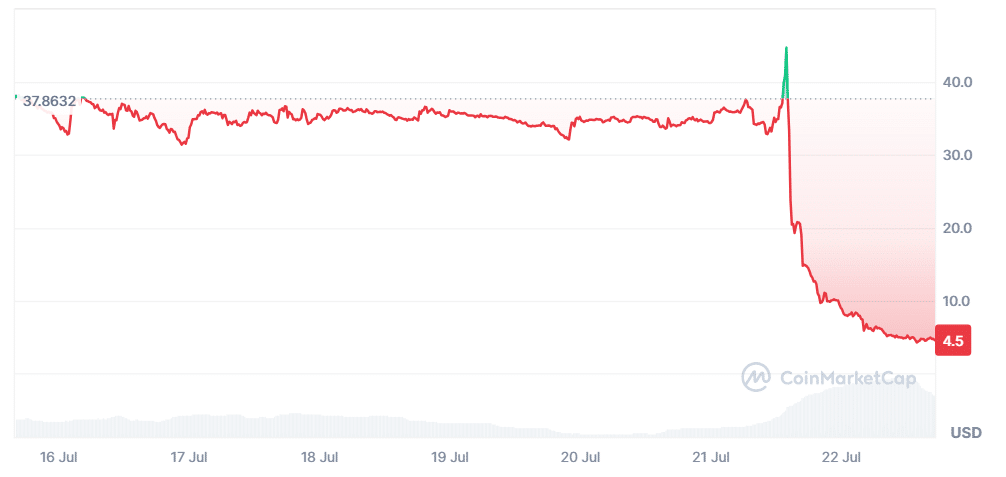
DeXe (DEXE), the governance token of the DeXe Protocol, has erased nearly 90% of its value in a matter of hours. The token, which reached an all-time high of approximately $48.89 just ten days ago, tumbled to lows near $4.22–$4.75, wiping out billions in market value and leaving holders reeling.
As of midday UTC on July 22, DEXE trades around $4.75, representing a roughly 90% drop in the past 24 hours depending on the exact peak reference. Trading volume has exploded to over $335 million, more than 80% of its market capitalization, signaling intense panic selling and liquidation cascades. The token’s market capitalization has contracted to approximately $398 million from peaks well above $2 billion.
The DeXe Protocol positions itself as a modular DAO infrastructure platform, enabling permissionless creation, governance, and management of decentralized organizations, along with social trading features. Its token, DEXE, grants holders voting rights on treasury decisions and protocol upgrades. Despite the project’s ongoing utility, the price action has overshadowed fundamentals.
Sharp Rise Preceded the Fall
The crash caps a parabolic 2026 run for DEXE. The token rose from lows near $2 earlier in the year, delivering gains exceeding 1,000% at its peak. Momentum accelerated in June, with multiple 50–70% single-day surges fueled by short squeezes, leverage, and thin floating supply. Open interest on derivatives platforms hit record highs near $70 million, and short liquidations reached $1.3 million in single cascades.
Analysts attributed much of the rally to a combination of DAO narrative hype, exchange listings offering high leverage (up to 50x on platforms like MEXC), and limited liquid supply due to large holdings in the DAO treasury and controlled wallets.
Whale activity and exchange outflows supported the narrative of accumulation. However, warning signs emerged: bearish RSI divergences, fading volume on later legs, and stretched valuations left the token vulnerable.
Team Selling Alleged as Trigger
On-chain observers and community members quickly pointed fingers at large transfers from wallets believed to be affiliated with the team or treasury. Reports indicate millions of dollars worth of DEXE were moved to centralized exchanges, particularly Binance, in the days leading into the collapse, followed by heavy selling. One analyst noted transfers exceeding $5 million in recent sessions.
“No hack or exploit, no bad news—just the team dumping,” posted trader @EvoOnChain, summarizing widespread sentiment. Critics argue the concentrated supply structure enabled such a rapid unwind once distribution began. Some have labeled it a “rug pull,” though the project has not disappeared and continues to maintain its website, community channels, and protocol operations.
DeXe has not issued an official statement addressing the allegations as of this writing. The lack of immediate transparency has fueled frustration among retail holders who rode the rally.
Implications for Crypto
This event underscores perennial risks in the sector: leverage-fueled pumps, thin liquidity, and asymmetric information around team allocations. While DeXe retains legitimate utility in the growing DAO and governance infrastructure space, the episode may damage confidence in the project for some time.
Holders are advised to monitor official channels for any treasury transparency updates or governance proposals. For the wider market, DEXE serves as a reminder that even tokens with real product traction can experience devastating drawdowns when supply dynamics shift abruptly.
As the dust settles, the crypto community watches closely. Will DEXE stabilize and rebuild on its fundamentals, or has the damage proven too severe? For now, the token’s violent reversal stands as a stark illustration of both crypto’s upside potential and its brutal realities.
Also read: XRP Whales Add 2.8% More Tokens As Price Moves Above $1.16