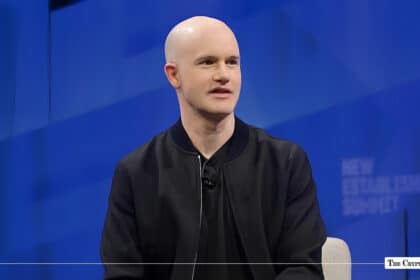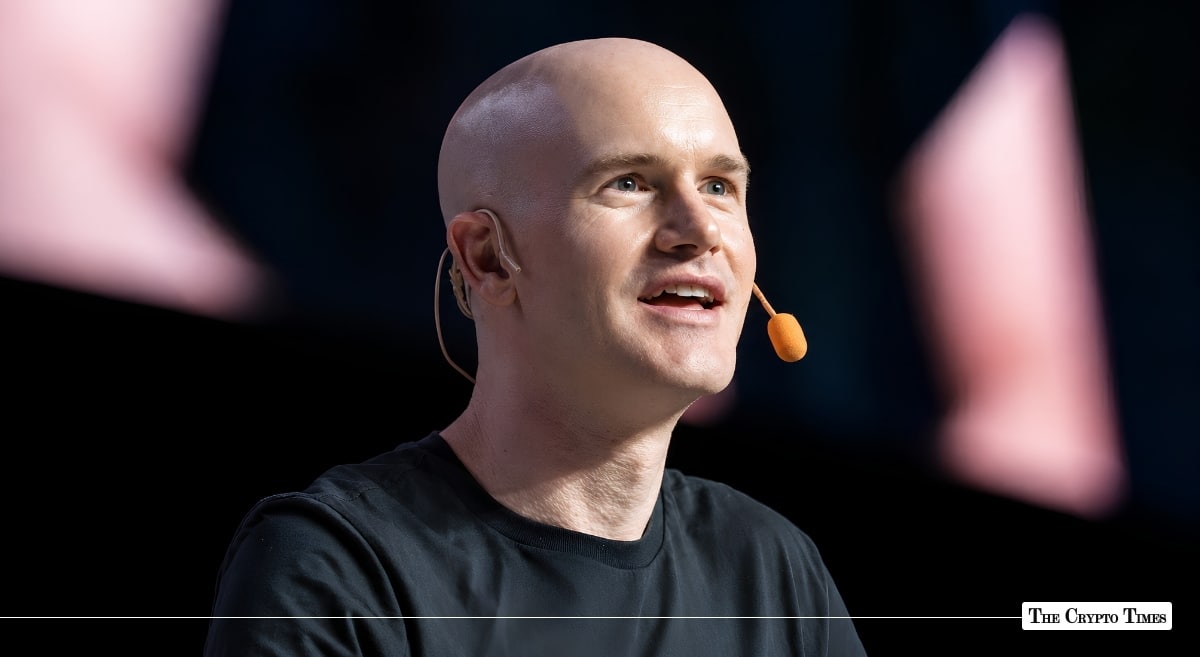
Brian Armstrong, founder and CEO of Coinbase, sat down with Nikhil Kamath — a self-described crypto skeptic who has never bought Bitcoin, held a stablecoin, or traded a perpetual — for Kamath’s “People by WTF” podcast.
Released on July 16, 2026, the wide-ranging interview saw Armstrong explain the industry from first principles while addressing India-specific issues, including adoption scale, tax policy, remittances, and the case for a regulated digital rupee.
Kamath framed the episode as a genuine debate from the outset: “I am a critic… I have never bought any of these ever.” What followed was patient, substantive discussion rather than a promotional monologue.
Coinbase Expands Operations in India with Direct INR Rails
Armstrong confirmed that Coinbase has re-entered the Indian market with a local entity, FIU-IND registration, and direct INR deposits and withdrawals via IMPS. The exchange operates local rupee order books while maintaining access to global liquidity. This represents a significant step beyond its earlier, short-lived 2022 attempt, which faced UPI access challenges.
The company maintains an office in Bengaluru and has been actively building developer infrastructure through its Base Layer-2 chain. Armstrong highlighted roughly 4,000 Base builders in India and around 150 startups building on the network. Coinbase’s Base Grants program provides roughly $10,000 to individual developers, with top teams flown to Silicon Valley for mentorship.
These moves align with Coinbase’s “Everything Exchange” vision, which aims to bring tokenized assets, stocks, perpetual futures, and DeFi features to Indian users through a compliant local framework.
Armstrong Calls India’s 30% Crypto Tax “One of the Most Punitive”
Kamath repeatedly pressed Armstrong on India’s tax regime — a flat 30% on crypto gains with a 1% TDS. Armstrong did not soften his view. He described the framework as “quite punitive” and “one of the most punitive regimes anywhere in the world that we operate.” He expressed hope that policymakers would review the policy, noting that high taxes have pushed significant activity offshore and discouraged broader participation.
Armstrong suggested that Indian crypto users could benefit from organized advocacy similar to efforts in the US, such as mobilizing around clearer rules and more balanced taxation. He emphasized that the fix ultimately lies with lawmakers.
India Leads Global Crypto Adoption by User Numbers
Armstrong repeatedly pointed to India’s top ranking in the Chainalysis Global Crypto Adoption Index, describing it as the number one country by number of users. While the United States leads in trading volume, India’s scale in headcount reflects its large, young, tech-savvy population and use cases such as remittances and inflation hedging.
Kamath expressed some skepticism, noting that everyday conversations and the impact of recent corrections (which hit leveraged users hard) do not always reflect the headline numbers. Armstrong acknowledged volatility’s pain points but maintained the underlying adoption data is robust. The conversation highlighted India’s potential to convert user scale into deeper economic impact through better rails and education.
Read: Coinbase Says No Other International Launch For 12 Months, India Is the Bet
The Case for a Regulated Digital Rupee and Tokenization Opportunities
One of the most detailed exchanges focused on monetary sovereignty. Armstrong argued that every country has the right to maintain control over its currency and that India should consider a regulated rupee stablecoin or digital rupee, modeled on the success of UPI.
He praised India’s digitization achievements and suggested a clear legislative framework (similar to recent US stablecoin legislation) would allow innovation while preserving sovereignty. Without such an option, he warned, users may gravitate toward dollar-backed instruments — an outcome the Reserve Bank of India has sought to avoid.
The pair also explored tokenization. Kamath raised the idea of tokenizing idle household gold (a major store of wealth in India). Armstrong agreed the concept is sound, noting that tokenizing real-world assets can create more liquid, globally accessible markets. Remittances — India receives roughly $150 billion annually, the world’s highest — emerged as another high-potential area where stablecoin rails could deliver faster, cheaper cross-border transfers, provided off-ramp challenges are resolved.
Broader Themes: AI Agents, Stablecoins, and Economic Inclusion
Beyond India, the conversation covered foundational topics and forward-looking ideas. Armstrong explained blockchain as a distributed ledger enabling consensus without intermediaries, the energy efficiency gains of proof-of-stake, and how smart contracts power DeFi lending through over-collateralization.
Stablecoins received significant attention. Armstrong detailed their Treasury-backed model and yield mechanics, while Kamath probed additional returns and whether modern crypto has drifted from Satoshi’s vision. On AI, Armstrong predicted agents will heavily use stablecoins for fast, global, low-friction machine-to-machine payments.
The discussion touched on economic inequality, with Armstrong advocating broader asset ownership to make more people “capitalists,” and the risks of AI concentrating wealth. Entrepreneurship themes included the value of persistence through failure and solving personal problems as a starting point for building.
Kamath remained skeptical overall — “I don’t know if I’ll remain a critic after this, but I suspect I will” — but the exchange provided a clear, patient walkthrough of the industry. Armstrong closed on optimistic notes about crypto’s potential for inclusion and innovation, particularly in high-talent markets like India.
The interview offers valuable insight for anyone navigating crypto in India today. It underscores Coinbase’s long-term bet on the market while highlighting policy areas (taxation, stablecoin frameworks, and digital rupee development) that could determine how fully India realizes its adoption advantage.
Also read: Brian Armstrong’s Profile Pic Drama Sends $BRIAN Memecoin Surging and Crashing 90% on Base