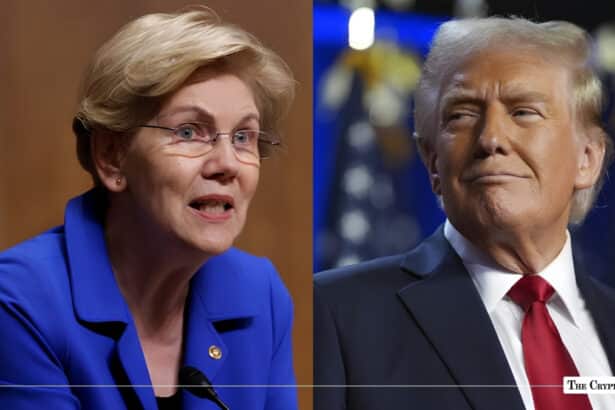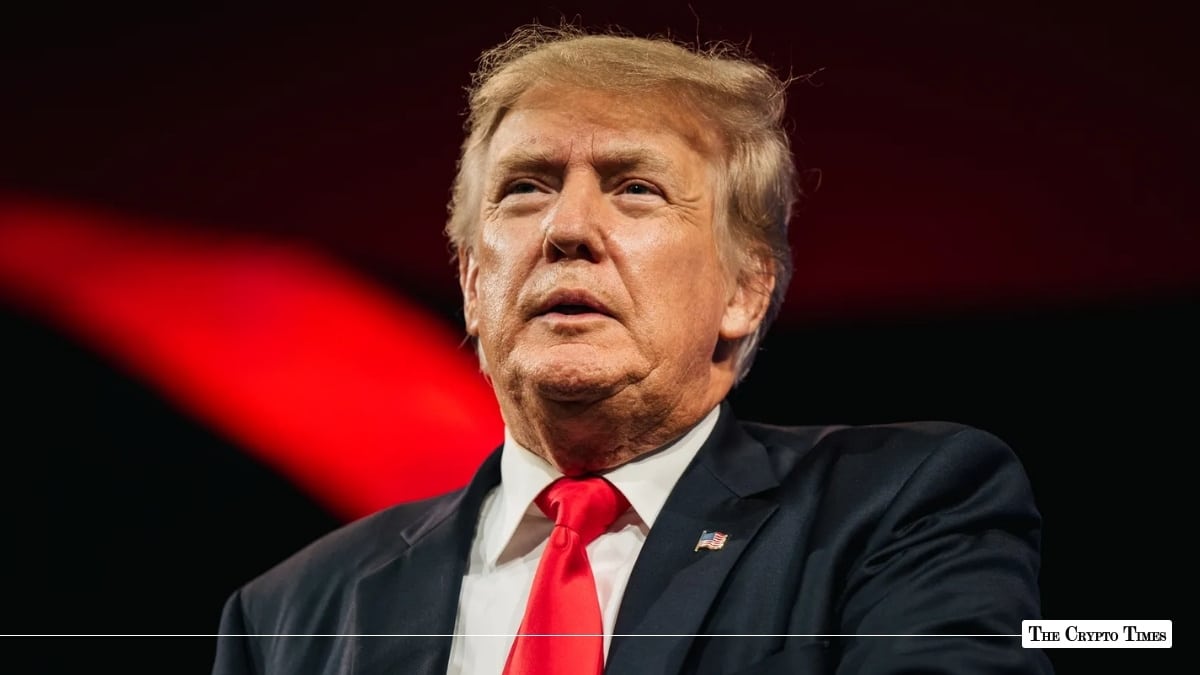
Digital asset traders are factoring a major geopolitical variable into their risk models this week. President Donald Trump announced via Truth Social that he will deliver a primetime speech to the nation on Thursday, July 16, at 9 p.m. Eastern Time.
While the White House has kept the specific agenda close to the chest, the timing leaves minimal room for interpretation. The address comes immediately after the President declared the U.S. will reimpose a strict naval blockade on Iranian vessels and establish an enforcement premium, demanding a 20% cargo tariff on commercial ships transiting the Strait of Hormuz to offset American naval protection costs.
With Bitcoin currently defending local horizontal support near $62,000, the upcoming broadcast is poised to act as a significant volatility catalyst.
The Transmission Mechanism: Oil, Inflation, and Rates
For digital assets, the stakes are direct. The Iran conflict has been one of the most persistent forces pressuring crypto in recent weeks, driving oil prices higher, reviving fears of sticky inflation, and cementing a risk-off tone across markets. That backdrop has helped keep Bitcoin defending support near $62,000, down roughly 30% on the year and trading with a high short-term correlation to gold as a shared macro trade.
The transmission runs through energy: a spike in oil feeds inflation, which hardens the case for the Federal Reserve to keep rates higher for longer — an unfriendly setup for non-yielding assets like Bitcoin.
Further, there is a recent template for how this can play out. After Trump’s April 1 address, in which he vowed to continue the war and hit Iran “extremely hard,” oil prices spiked as traders braced for a longer conflict and hundreds of millions of barrels of supply came into question. Crypto has proven even more sensitive to his off-the-cuff statements: last October, a weekend tariff threat aimed at China triggered the largest single-day liquidation in crypto history, wiping out roughly $19 billion. The lesson markets have internalized is that a Trump policy pronouncement, especially on a Thursday night, can move risk assets violently.
The 24/7 Crypto Pricing Gap
Here is the wrinkle that makes this a crypto story specifically. A 9 p.m. ET speech begins after the US stock market has closed for the day. Equities will not be able to respond until Friday’s open — but crypto trades 24/7. That makes Bitcoin and the broader crypto market the primary real-time gauge of how investors read the president’s words, absorbing the initial reaction in thinner overnight liquidity where moves can be amplified. If the speech signals escalation, crypto could take the first hit; if it points toward de-escalation, it could catch the first relief bounce. Either way, the after-hours timing raises the odds of a sharp, headline-driven move.
Broadly, two paths present themselves. An escalatory message, like enforcing the Strait of Hormuz blockade, promising further strikes, or extending the war, would likely lift oil, intensify inflation worries, and pressure risk assets, potentially dragging Bitcoin lower, though a modest safe-haven bid toward “digital gold” cannot be ruled out.
A de-escalatory message, like an exit strategy, a return to negotiations, or a ceasefire, would likely ease oil and spark a risk-on relief rally that crypto could ride. The one near-certainty is volatility: an unscripted primetime address during an active war is precisely the kind of event that widens trading ranges.
A Concentrated Week of Liquidity Triggers
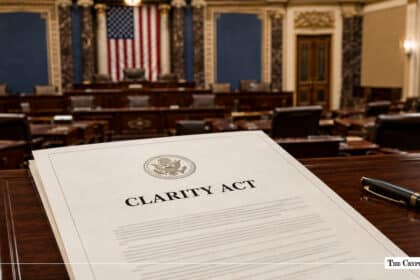
The speech does not arrive in isolation. It piles onto one of the busiest macro weeks of the year for crypto: June inflation data, Fed Chair Kevin Warsh’s congressional testimony on Tuesday and Wednesday, a wave of Q2 big-bank earnings, and a House field hearing on the CLARITY Act on Friday, all feeding into expectations for the July 28-29 Fed meeting.
Crucially, the war and the speech are not separate from that macro story: the oil-price impact of any escalation flows straight into the inflation and rate outlook that Warsh and the CPI print are shaping. For crypto, the geopolitical and the monetary have become the same trade.
The fact that the war, monetary policy, and domestic regulatory frameworks are colliding within the same 72-hour window means asset correlations are clustering tightly. For tactical traders, navigating the Thursday evening address requires managing spot positions closely, as crypto once again steps up to serve as the macro market’s early warning system.
Also Read: Crypto Week Ahead: CLARITY Act, Fed Chair Warsh Testimony, & Inflation Data