Key Highlights
- Vitalik Buterin announced a winner in his AI-assisted authorship challenge.
- Researcher Franklyn Wang used the AI tool Co-Invest to identify Buterin’s anonymous paper.
- Buterin originally wrote the essay in Chinese before translating it with Qwen2.5.
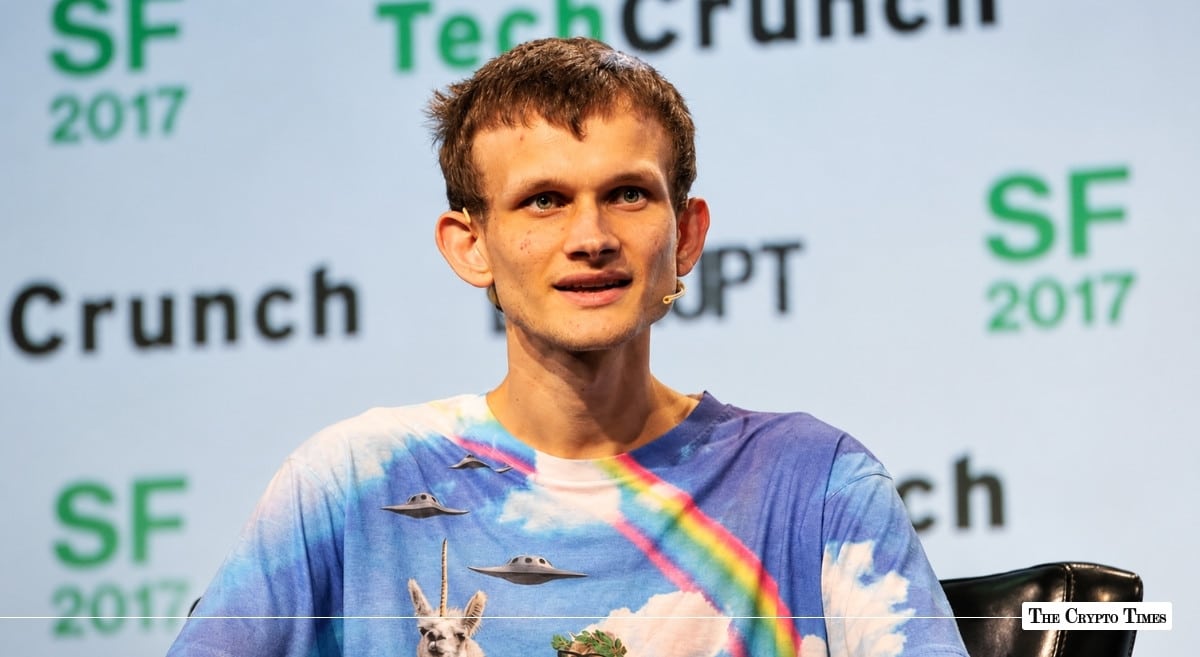
Ethereum co-founder Vitalik Buterin has concluded his public experiment testing whether artificial intelligence can identify an author’s identity despite deliberate attempts to conceal writing style.
In a post on X on Monday, Buterin announced that a participant had successfully identified him as the author of an anonymous essay, saying the experiment exposed an unexpected weakness in his anonymity strategy.
The result follows a challenge Buterin launched earlier this year, inviting the public to determine which anonymous document he had written using AI-assisted analysis.
AI identified Buterin’s anonymous paper
Nearly two weeks after launching the challenge, Buterin confirmed that researcher Franklyn Wang had correctly identified the anonymous document using an AI-assisted analysis tool called Co-Invest.
According to Wang, the document was the December 2024 revision of EIP-7503 (Zero-Knowledge Wormholes), a major rewrite submitted through the anonymous GitHub account 0xwormhole.
Rather than relying solely on writing style, the AI analyzed recurring patterns in Buterin’s technical explanations, mathematical examples, and cryptographic reasoning. Wang said the strongest clues were Buterin’s characteristic way of explaining algorithms, recurring numerical illustrations, and references to Ethereum privacy research that closely matched his previous work.
Even so, Wang estimated only a 20% confidence in the attribution before Buterin confirmed the result, noting that many existing authorship-detection tools had overlooked anonymous revisions embedded within publicly attributed technical documents.
Days before announcing the winner, Buterin hinted that participants should “broaden their search,” suggesting many AI scripts were missing categories of documents that “really should be included.”
Translation was meant to hide his writing style
After confirming the result, Buterin explained that his anonymity strategy focused on disguising his writing style rather than his technical thinking. He said he originally wrote the document in Chinese before translating it locally into English using Qwen2.5, manually correcting the translation afterward to eliminate obvious stylistic clues.
“My method when writing the post in 2024 was: I wrote it in Chinese, used Qwen2.5 locally to translate it to English, then manually fixed all the bugs in the translation.”
The process was intended to remove many of the linguistic patterns that AI systems commonly use to identify authors.
AI revealed more than writing style
Despite masking the prose, Buterin said the winning AI focused on something much deeper than vocabulary or sentence structure. According to Buterin, the model identified his distinctive way of explaining mathematical concepts and algorithmic patterns that remained intact even after translation.
The experiment suggests that technical reasoning may be significantly harder to disguise than writing style alone, reinforcing concerns that advances in AI could make anonymous online writing increasingly difficult.
Rather than relying solely on grammar or word choice, modern AI systems appear capable of identifying authors through deeper cognitive patterns reflected in how they structure explanations and solve problems.
Several users responding to Buterin’s post said mathematical reasoning styles may function as a unique “fingerprint” that survives translation and stylistic rewriting, with one commenter describing the findings as evidence that “math and algorithm styles still leak author identity even after prose obfuscation.”
Privacy has become a growing focus for Buterin
The experiment aligns with Buterin’s broader focus on privacy within the Ethereum ecosystem. Earlier this week, he described privacy as a “first-class goal” in Ethereum’s long-term roadmap, saying future protocol upgrades will explicitly consider how privacy-preserving transactions can operate efficiently without relying on centralized intermediaries.
Buterin has also previously warned that artificial intelligence presents both opportunities and risks for society. Earlier this year, he argued that AI could eventually improve governance by helping humans process complex decisions while cautioning that the technology also raises new questions around privacy, identity, and digital trust.
His latest experiment shifts that discussion from theory to practice, illustrating how AI may already be capable of identifying individuals based not only on how they write, but on how they think.
Also read: The Bitcoin Treasury Blueprint: What Stress Testing on Strategy Inc.’s MSTR-STRC Reveals