Key Highlights
- Vitalik Buterin described “Lean Ethereum” as Ethereum’s third major evolution after the Merge.
- Most core protocol components are expected to be redesigned over the next three to four years.
- Privacy and quantum-resistant cryptography have become first-class protocol priorities.
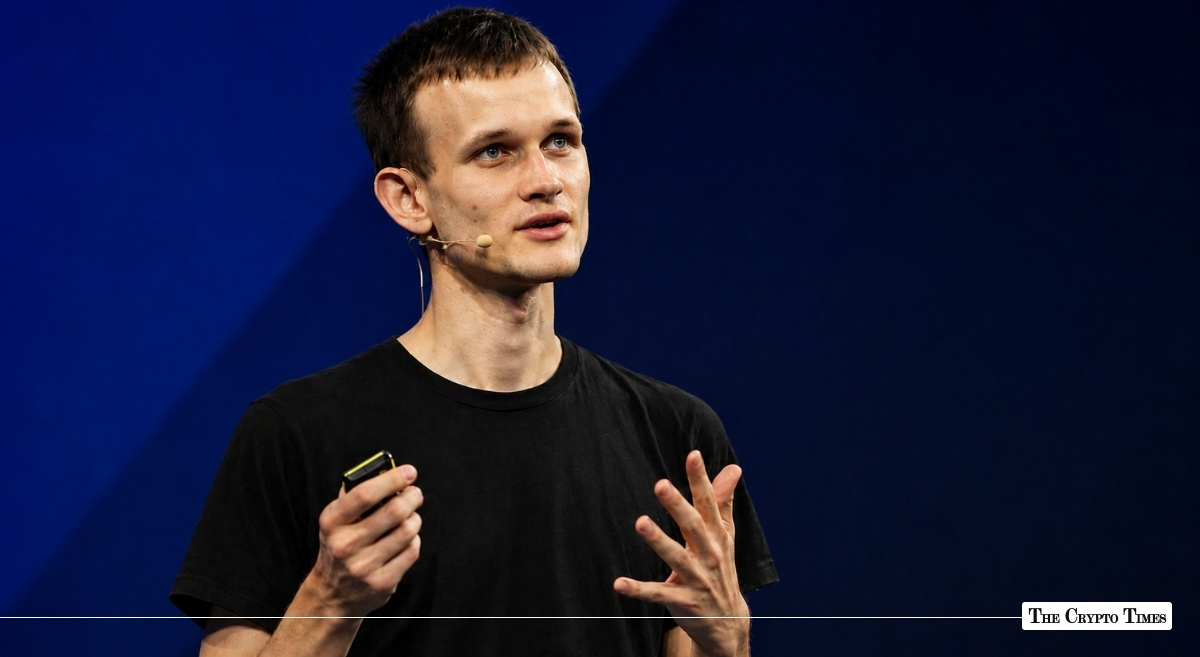
Ethereum co-founder Vitalik Buterin has shared an updated long-term roadmap for the blockchain, describing “Lean Ethereum” as the network’s next major transformation following the Merge.
In a post on X on Saturday, Buterin said Ethereum researchers met in Berlin two weeks ago to continue refining the protocol’s long-term direction after earlier discussions with client teams in Svalbard. The updated roadmap has been published through Ethereum’s public “strawmap.”
According to Buterin, Lean Ethereum will not arrive through a single network upgrade but instead through a series of protocol improvements introduced over the next three to four years.
He described the initiative as Ethereum’s “third major iteration,” comparing its significance to the Merge, which he called the network’s second major evolution.
Ethereum’s core architecture faces comprehensive overhaul
The roadmap outlines a sweeping overhaul of Ethereum’s core protocol, proposing changes across nearly every major layer of the network to improve scalability, efficiency, and long-term resilience.
Planned upgrades include replacing direct transaction re-execution with recursive STARK-based verification, introducing quantum-resistant cryptography, redesigning the consensus mechanism with one- or two-round finality, implementing multidimensional gas pricing, adopting new state architectures for greater scalability, and simplifying client architecture through broader protocol cleanup.
Despite the scope of the proposed changes, Buterin said the transition would be rolled out gradually while minimizing disruption for existing applications, adding that Ethereum’s successful transition through the Merge demonstrates the network’s ability to execute major protocol upgrades.
Privacy and quantum security become core priorities
One of the most significant shifts in the roadmap is Ethereum’s treatment of privacy.
Rather than viewing privacy as an application-layer feature, Buterin said future protocol upgrades will be designed with privacy built into their architecture.
“Privacy is no longer an afterthought; it is a first-class goal.”
He explained that developers are now evaluating new protocol components—including Frames, the mempool, and future state structures—by asking how they can support intermediary-free, quantum-safe privacy protocols while keeping overhead low.
Buterin also revealed that quantum resistance has moved significantly higher on Ethereum’s development priorities.
According to him, work on quantum-safe blob designs has already been underway for several months as Ethereum prepares for long-term cryptographic security.
New state design could dramatically improve scalability
Perhaps the most far-reaching proposal involves Ethereum’s state model.
Instead of simply expanding today’s dynamic state indefinitely, developers are exploring multiple new state types optimized for scalability.
Under one possible vision outlined by Buterin, Ethereum in 2030 could support roughly 2 TB of today’s dynamic state alongside 100 TB of newer, more scalable state designed for applications such as ERC-20 tokens, NFTs, and many DeFi use cases.
Complex protocols such as decentralized exchanges and on-chain order books would continue using the existing dynamic state. The redesign would not require developers to rewrite existing applications but would make migration financially attractive.
Ethereum may eventually move beyond the EVM
Looking further ahead, Buterin suggested Ethereum could eventually move beyond the Ethereum Virtual Machine (EVM) by adopting a new execution environment such as RISC-V or leanISA. He said these alternatives could improve recursive proof generation, privacy, and overall protocol efficiency.
While describing such a transition as a long-term goal, Buterin said he ultimately envisions the EVM serving primarily as a compiler target, with Ethereum executing directly on a more efficient virtual machine.
The proposal also builds on Buterin’s broader vision for Ethereum’s future. Earlier this year, he argued that artificial intelligence (AI) could eventually improve Ethereum governance by helping communities process complex governance decisions more efficiently, while cautioning that excessive delegation risks concentrating power.
The Lean Ethereum roadmap extends that long-term thinking to the protocol itself, prioritizing simplification, scalability, security, and privacy as the foundation for Ethereum’s next decade of development.
Ethereum throughput set to increase gradually
Buterin also said Ethereum’s transaction capacity will continue improving through a series of incremental protocol upgrades rather than a single performance overhaul.
Future updates are expected to gradually raise gas limits, expand blob capacity, and reduce slot times as client optimizations make higher throughput safe to deploy. He added that the upcoming Glamsterdam upgrade is already expected to include another increase in Ethereum’s gas limit.
The roadmap signals the beginning of Ethereum’s next long-term development phase following its transition to Proof-of-Stake and the expansion of Layer-2 scaling. Rather than introducing isolated upgrades, Lean Ethereum aims to redesign the protocol itself while maintaining compatibility with the applications and infrastructure already built on the network.
The announcement also coincided with a positive move in Ethereum’s market performance. According to CoinMarketCap data, ETH briefly climbed to an intraday high of around $1,800 before easing to approximately $1,792 at the time of writing, while remaining up more than 3% over the past 24 hours
Also read: Coinbase India Head Addresses Re-Entry Launch Glitches and the 12-Month Roadmap