Crypto Times Logo Black
Google News Follow Banner
  • News
    • Market
    • Bitcoin
    • Ethereum
    • Altcoins
    • Regulations & Policies
    • DeFi News
    • Blockchain News
    • Industry
  • Exclusive
    ExclusiveShow More
    Anthropic’s Claude Fable 5 Crypto Hacks
    Anthropic’s Claude Fable 5: The AI That Could Supercharge Crypto Hacks and Defenses
    CLARITY Act Stalls Why Senate's August Recess Puts US Crypto Rules at Risk
    CLARITY Act Stalls: Why Senate’s August Recess Puts US Crypto Rules at Risk
    Three Stories, One Pattern Why Binance Is Having Its Worst Week Since the Pardon
    Three Stories, One Pattern: Why Binance Is Having Its Worst Week Since the Pardon
    Coinbase India Head Addresses Re-Entry Launch Glitches and the 12-Month Roadmap
    Coinbase India Head Addresses Re-Entry Launch Glitches and the 12-Month Roadmap
    Inside the Trump Family’s $1.2B Crypto Windfall Who Paid the Price
    Inside the Trump Family’s $1.2B Crypto Windfall: Who Paid the Price?
  • Opinion
    OpinionShow More
    The Bitcoin Treasury Blueprint What Stress Testing on Strategy Inc.’s MSTR-STRC Reveals
    The Bitcoin Treasury Blueprint: What Stress Testing on Strategy Inc.’s MSTR-STRC Reveals
    Why Wall Street is Divided Michael Saylor’s Scarcity vs. Tom Lee’s Staking Empire
    Why Wall Street is Divided: Michael Saylor’s Scarcity vs. Tom Lee’s Staking Empire
    The Arthur Hayes Paradox Macro Prophet or Market Opportunist
    The Arthur Hayes Paradox: Macro Prophet or Market Opportunist?
    RBI Denies Gold Sale Amid Oil Crisis: Could It Speed Up India's Digital Rupee Push?
    RBI Denies Gold Sale Amid Oil Crisis: Could It Speed Up India’s Digital Rupee Push?
    The CLARITY Act War Starts Jamie Dimon Vs Armstrong
    The CLARITY Act War Starts: Jamie Dimon Vs Armstrong
  • Learn
    • Explained
    • How To
    • Insights
  • Videos
  • More
    • About Us
    • Our Authors
    • Contact Us
    • Editorial Policy
The Crypto TimesThe Crypto Times
  • All News
  • Market
  • Bitcoin
  • Ethereum
  • Altcoins
  • Regulations & Policies
  • Blockchain
  • DeFi
  • Industry
  • Exclusive
  • Opinion
Search
  • News
    • Market
    • Bitcoin
    • Ethereum
    • Altcoins
    • Regulations & Policies
    • Blockchain
    • DeFi
    • Industry
    • Exclusive
    • Opinion
  • Learn
    • Explained
    • How To
    • Insights
  • Quick Links
    • About Us
    • Our Authors
    • Contact Us
    • Editorial Policy
    • AI Policy
    • Sponsored & Advertorial Policy
  • Videos
  • Glossary
Follow US
© 2026 By Crypto Times. All Rights Reserved.
Ethereum News

Vitalik Proposes an ‘Extremely Lean’ Ethereum That Re-Anonymizes Validators Daily

The proposal would shrink each validator's on-chain footprint to a handful of bytes and give stakers privacy by default, reshuffling every validator's identity each day.

Written By Dhara Chavda Dhara Chavda
Published 1 hour ago
Make The Crypto Times preferred on GoogleGoogle
Share
Vitalik Proposes an 'Extremely Lean' Ethereum That Re-Anonymizes Validators Daily
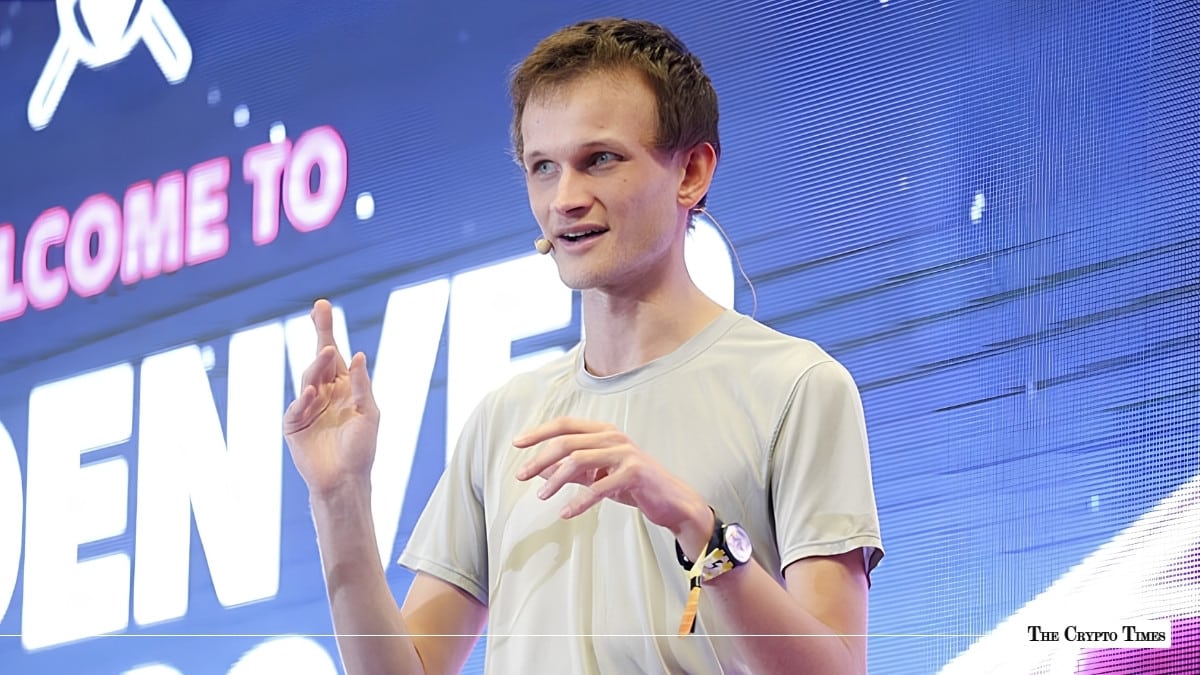
Vitalik Buterin, Ethereum co-founder
Show AI Summary
Ethereum co-founder Vitalik Buterin proposes simplifying the network’s consensus layer, reducing validator data to a few bytes and re-anonymizing validators daily
The redesign shifts work off-chain, having stakers maintain their own accounting and submit daily zero-knowledge proofs, potentially allowing for millions of validators
The proposed architecture incorporates single-secret leader election and re-randomizes validator identities daily, enhancing privacy and quantum resistance

Ethereum co-founder Vitalik Buterin has laid out a path to make the network’s consensus layer dramatically simpler and more private, proposing what he calls an “extremely lean” chain that would shrink each validator’s on-chain data to a few bytes and automatically re-anonymize every validator once a day.

The proposal, and why it’s “lean”

In a research post published July 6 on the Ethereum research forum, Buterin sketched a redesign aimed at two goals at once: letting the network support far more validators and giving those validators strong privacy without extra cost. The proposal is a research idea, not a finished upgrade, and Buterin credited several collaborators for early feedback.

If we want to make the Lean Ethereum consensus chain aggressively more "lean", and add strong validator privacy (ZK-unlink deposit from staking activity from withdrawal, and re-anonymize stakers every day), here is a path:https://t.co/Gdee7tE53R

— vitalik.eth (@VitalikButerin) July 6, 2026

The core move is radical simplification of what the chain stores about each validator. Today, Ethereum’s consensus tracks roughly a dozen fields per validator and performs heavy accounting across the entire validator set at the end of every epoch—a process that grows more expensive as the number of validators climbs and that has become a practical ceiling on how large the set can get.

Buterin’s design reduces each validator’s core state to just two fields: a one-byte effective balance and a five-byte index pointing to their public key, roughly six bytes in total. The trick that makes this possible is shifting work off the chain and onto stakers themselves. Instead of the network processing every validator each epoch, each staker becomes responsible for maintaining their own accounting and submitting a daily zero-knowledge proof—a STARK—attesting that their state transitions are valid.

The chain no longer has to iterate over everyone; it simply verifies compact proofs. Removing that per-epoch bottleneck is what Buterin argues could let Ethereum scale toward millions of validators rather than being capped near its current levels.

Validator privacy, for free

The most eye-catching consequence is privacy, which in Buterin’s framing comes almost as a byproduct of the leaner design. Because stakers prove their own state through zero-knowledge proofs and their identities are indexed rather than exposed, the system can cryptographically “unlink” the three phases of a validator’s life: the deposit that funds it, the day-to-day staking activity, and the eventual withdrawal. No observer would be able to connect those stages to one another.

On top of that, the proposal re-randomizes every validator’s identity each day so that no one but the validator themselves can link their present identity to their past ones. In practice, that means a staker’s validating activity would no longer be traceable back to their funding source or forward to their exit, and their footprint would reshuffle daily.

The design also incorporates single-secret leader election, a long-discussed feature under which the identity of the next block proposer stays hidden until they actually produce a block—closing off a known avenue for targeted denial-of-service attacks against known upcoming proposers. Validator de-anonymization and the surveillance and targeting risks that come with it have been a persistent concern for solo stakers, and Buterin’s pitch is that this architecture addresses them structurally rather than as a bolt-on.

Part of the Lean Ethereum push

The proposal does not stand alone; it feeds into the broader “Lean Ethereum” effort to rebuild the network’s consensus around minimal, future-proof foundations. A central motivation of that work is quantum resistance, and this design fits squarely within it: by leaning on STARK proofs, which are built from hash functions rather than the elliptic-curve cryptography that a future quantum computer could break, the approach aligns with the same industry-wide race to make blockchains quantum-safe that has produced hash-based roadmaps elsewhere. It complements other Ethereum research in the same vein, including efforts to bring affordable post-quantum protection to the network without a disruptive hard fork.

The through-line across all of it is a philosophy of doing less on-chain: a consensus layer small enough to be easy to implement, cheap to run, simple to audit, and resistant to the cryptographic threats on the horizon. Cheaper, simpler validation also has a decentralization benefit, lowering the bar for individuals to stake rather than concentrating the role among well-resourced operators.

Still a proposal

The important caveat is that this remains an early-stage research post, not a scheduled change. It is not an Ethereum Improvement Proposal, carries no timeline, and has not been adopted into any hard-fork plan. Real questions remain—among them the practical burden of requiring every staker to generate a daily STARK proof, the engineering complexity of the redesign, and how the idea would interact with the rest of the Lean Ethereum roadmap, which is itself still taking shape.

Buterin’s post is an invitation to explore a direction, and it will move through the same lengthy research, prototyping, and community-review process that any consensus-level change to Ethereum must clear before it comes close to production.

What it signals, though, is where some of Ethereum’s most consequential thinking is heading: toward a consensus layer that is smaller, private by default, and built to survive the quantum era. Whether the “extremely lean” chain arrives as described or seeds ideas that surface in other forms, it is a clear marker of the design goals now shaping the network’s long-term roadmap.

Also Read: Why Ethereum Foundation Is Pitching Ethereum to Governments

Disclaimer: The information researched and reported by The Crypto Times is for informational purposes only and is not a substitute for professional financial advice. Investing in crypto assets involves significant risk due to market volatility. Always Do Your Own Research (DYOR) and consult with a qualified Financial Advisor before making any investment decisions.

Follow The Crypto Times on Google News to Stay Updated!      Google News
Google News Banner

TAGGED:Vitalik Buterin
Share This Article
Whatsapp Whatsapp LinkedIn Telegram Copy Link

Latest News

Hyperliquid Open Positions Top 305K as Traders Strategize Around Major Crypto Breakout
South Korea Mandates New Court Rules for Crypto Seizure by October
Crypto Markets Live: Bitcoin Reclaims $63K Ahead of Weekly Open in U.S. Markets
Bitcoin’s Greatest Evolution Comes From Changing Less, Not More — Michael Saylor
Coinbase Stock Price Prediction July 2026 When Will COIN Rise
Coinbase Stock Price Prediction July 2026: When Will COIN Rise?

Find Us on Socials

You may also like

Vitalik Buterin Unveils Lean Ethereum Roadmap for Next Era

Vitalik Buterin Unveils Lean Ethereum Roadmap for Next Era 

Why Ethereum Foundation Is Pitching Ethereum to Governments

Why Ethereum Foundation Is Pitching Ethereum to Governments

Ethereum Institutional Debuts as Neutral Gateway for Enterprises

Ethereum Institutional Debuts as Neutral Gateway for Enterprises

Can Ethereum Price Recover in July 2026 After Historic Red Streak

Can Ethereum Price Recover in July 2026 After Historic Red Streak?

The Crypto Times Logo PNG

Providing real-time, accurate Crypto reporting. Your trusted source for Crypto News and Research.

Stay Updated

All News
Exclusive
Opinions
Learn
Videos
Glossary

Company

About Us
Our Authors
Editorial Policy
AI Policy
Advertorial Policy

Get In Touch

Contact Us
Career

Find Us on Socials

X-twitter Linkedin Telegram Youtube Instagram

© 2026 The Crypto Times | A BITROCK TECHNOLOGIES L.L.C. Company.

DMCA.com Protection Status
  • Terms and Conditions
  • Disclaimer
  • Privacy Policy
  • Cookie policy
Do Not Sell or Share My Personal Information