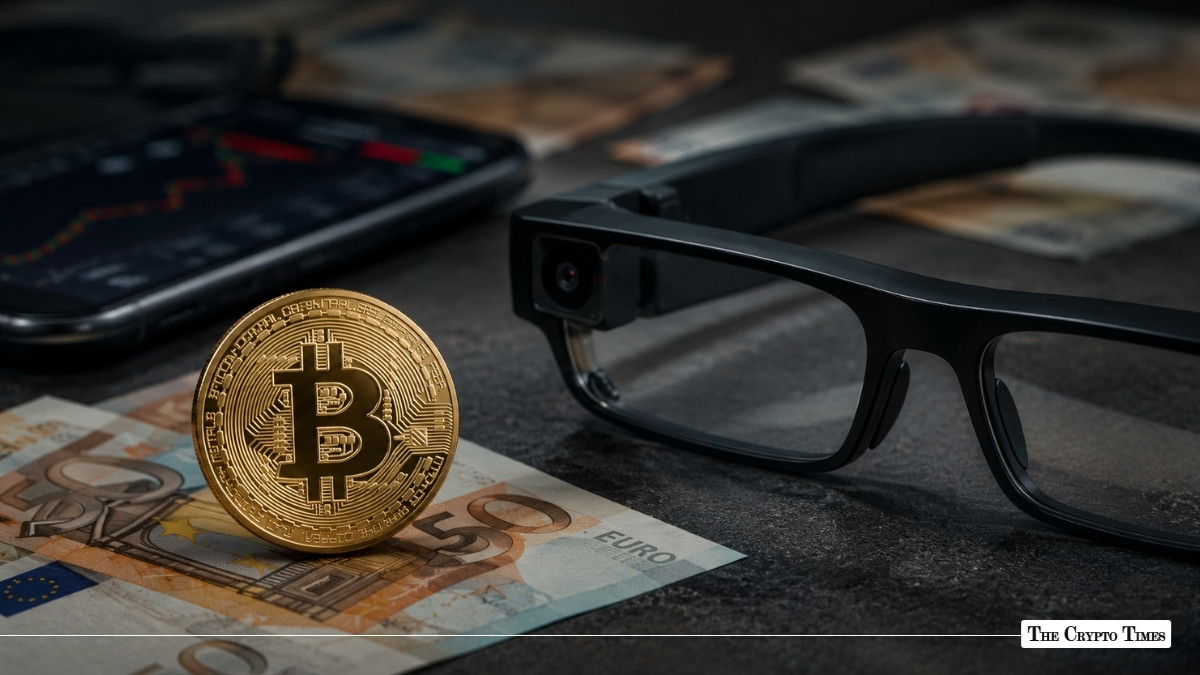
A wealthy couple in the Gulf of Saint-Tropez lost €1.5 million (~$1.71 million) in cryptocurrency to fraudsters who used cameras hidden in a pair of glasses to capture their account keys, French authorities say — an elaborate “rip deal” that has led to two arrests and a trial set for September.
A sale that was never real
The scheme began, according to French media reports citing investigators, with the couple’s attempt to sell a luxury property on the Côte d’Azur. A prospective buyer surfaced: a mysterious Italian who arranged to meet not on the Riviera but at a hotel in Milan, lending the transaction an air of discreet, high-value dealmaking.
Over the course of the meetings, the “buyer,” in reality one of two fraudsters operating under false identities, persuaded the sellers that the deal required them to demonstrate liquidity through cryptocurrency. The couple was convinced to open a crypto account and deposit the €1.5 million (~$1.71 million) sum into it, a maneuver dressed up as a routine step in an unconventional but legitimate-seeming sale. It was, investigators say, the entire point of the con: getting the victims to gather a large sum in one place, under credentials the scammers could reach.
The scheme is a known one, recognized by French police under the names “rip deal” or “fausse vente,” a fake sale. Such frauds typically target sellers of high-value assets, luring them into a bogus transaction engineered to separate them from money or, increasingly, digital assets.
The glasses that emptied the account
The decisive moment came at the second Milan meeting. The fraudsters told the sellers they wanted to confirm the funds were real and asked them to show that the account had genuinely been created and funded. As the couple pulled up the account, the scammers were wearing glasses fitted with concealed cameras, which they used to record the account number and its security keys.
That was all they needed. Access to an account’s keys is, in the crypto world, access to the funds themselves, and shortly after the meeting the account was emptied. The €1.5 million (~$1.71 million) vanished in a matter of minutes. What made the theft possible was not a software exploit or a hacked exchange but old-fashioned observation, turned into a weapon by a pair of camera-equipped glasses and a victim persuaded to reveal what should never be shown.
A year on the trail
The victims filed a complaint with the gendarmerie, and the case was handed to the research brigade of the Gassin-Saint-Tropez company, working under the authority of the Draguignan prosecutor’s office. The investigation was, by authorities’ account, long and delicate, taking more than a year to identify the professionals behind the complex scheme.
The suspects were eventually traced to a villa they had rented in Cavalaire-sur-Mer, on the Var coast. Domiciled in the Paris region but described as highly mobile and already known to police for fraud, the couple, both in their thirties, were arrested on June 25 in an operation involving roughly 20 gendarmes.
Taken into custody, they denied the allegations and were subsequently placed under judicial supervision. They are due to stand trial on September 1 on charges of organized-gang fraud and failure to justify their resources. A financial investigation into their assets found that the alleged scammers owned three properties on the Côte d’Azur, worth a combined €1.9 million (~$2.17 million). As the case has not been tried, the pair are presumed innocent.
The lesson for anyone holding crypto
Stripped of its Riviera glamour, the case is a stark reminder of how crypto’s core security principle can be defeated without any technical sophistication at all. The keys or credentials that control a crypto account are the account; anyone who sees them, records them, or is shown them can take everything, instantly and irreversibly, in a way no bank transfer allows.
That is precisely why they should never be displayed on a screen in front of others, entered where a camera might capture them, or shared under any pretext, however convincing the counterparty.
The episode also fits a broader pattern of social-engineering fraud that has increasingly targeted crypto holders through deception rather than hacking, and it comes as France contends with a wider surge in crypto-related crime. Victims of such thefts should also be wary of a common follow-on trap: “recovery” operators who promise, for an upfront fee, to retrieve stolen crypto. These are almost always a second scam preying on the first, and legitimate recovery does not begin with a stranger demanding payment. For anyone approached with an unusual, high-value deal that hinges on moving money into crypto or revealing account access, the safest assumption is the one this couple learned too late: if a sale requires you to expose your keys, it was never a sale at all.