Key Highlights
- Patrick Witt praised Open USD as an example of regulatory clarity supporting innovation.
- Open USD launched with backing from more than 140 financial, technology, and crypto companies.
- The stablecoin is designed for enterprise use with collaborative governance.
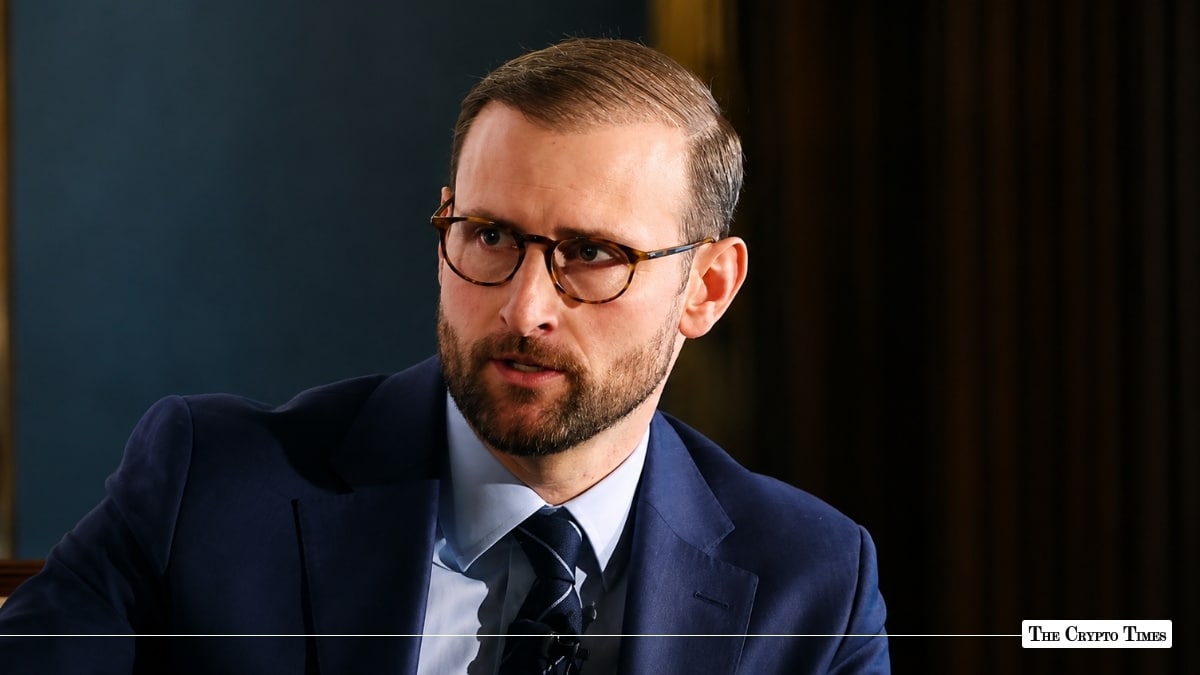
Patrick Witt, Executive Director of the President’s Council of Advisors for Digital Assets, has praised the launch of Open USD, an enterprise-focused stablecoin introduced by Open Standard, describing it as an example of how regulatory clarity can support innovation in digital assets.
In a post on X, Witt said Open USD demonstrates how clear rules, including those established under the GENIUS Act for stablecoins, can encourage new products and institutional participation. He added that he expects the CLARITY Act to have a similar effect across the broader digital asset ecosystem.
What Open USD brings to the market
Open USD, announced earlier today, is designed as a stablecoin for enterprise use and the broader internet economy.
Backed by over 140 major partners spanning payments, banking, technology, and crypto sectors, including Visa, Stripe, Mastercard, BlackRock, BNY, Shopify, Coinbase, Ripple, and many others, the initiative addresses longstanding pain points in existing stablecoins.
Key design features include zero-cost minting and redemption with no volume caps, default revenue sharing from reserves (minus a modest operational fee), and collaborative governance through Open Standard, an independent entity with a board representing partner interests. This structure aims to create neutral, scalable infrastructure rather than issuer-centric models.
Parallel between GENIUS Act and CLARITY Act
Witt’s comments drew a comparison between the GENIUS Act (Guiding and Establishing National Innovation for U.S. Stablecoins), which established a federal framework for payment stablecoins, and the anticipated impact of the Digital Asset Market Clarity Act (CLARITY Act).
According to Witt, the GENIUS Act provided regulatory certainty that enabled projects such as Open USD to launch with institutional backing. He said he expects the CLARITY Act to extend similar clarity to the broader digital asset market by helping define the regulatory treatment of securities and commodities.
Witt continues backing the CLARITY Act
Momentum behind the Digital Asset Market Clarity Act has continued to build in recent weeks, with Witt commenting publicly on ongoing negotiations. He said key differences have narrowed since the Senate Banking Committee markup, with good-faith proposals advancing and time becoming critical for resolution. He described it as a “big week ahead for Clarity.”
At the time, more than 200 industry groups urged Senate leadership to bring the bill to the floor, reinforcing the growing consensus that clear rules are essential for responsible growth in the sector.
Supporters view Open USD as a virtuous cycle
Supporters of the CLARITY Act, including Witt, argue that Open USD illustrates how clearer regulation can reduce uncertainty, encourage institutional participation, and support the development of new financial products.
The CLARITY Act, which aims to create a comprehensive market structure for digital commodities, exchanges, and related activities, is viewed as the next critical step. It would clarify regulatory jurisdiction (primarily between the SEC and CFTC), provide safe harbors for decentralized development, and strengthen protections against illicit finance.
Critics may argue that such frameworks could impose compliance burdens or favor incumbents, but proponents like Witt counter that predictable rules attract capital, talent, and legitimate activity while marginalizing bad actors. With Open USD set to launch later in 2026, the coming months will test whether this model can capture meaningful market share and deliver on its promises of neutrality and scale.
Also Read: MetaMask Launches Money Account With Up to 4% APY on Stablecoins