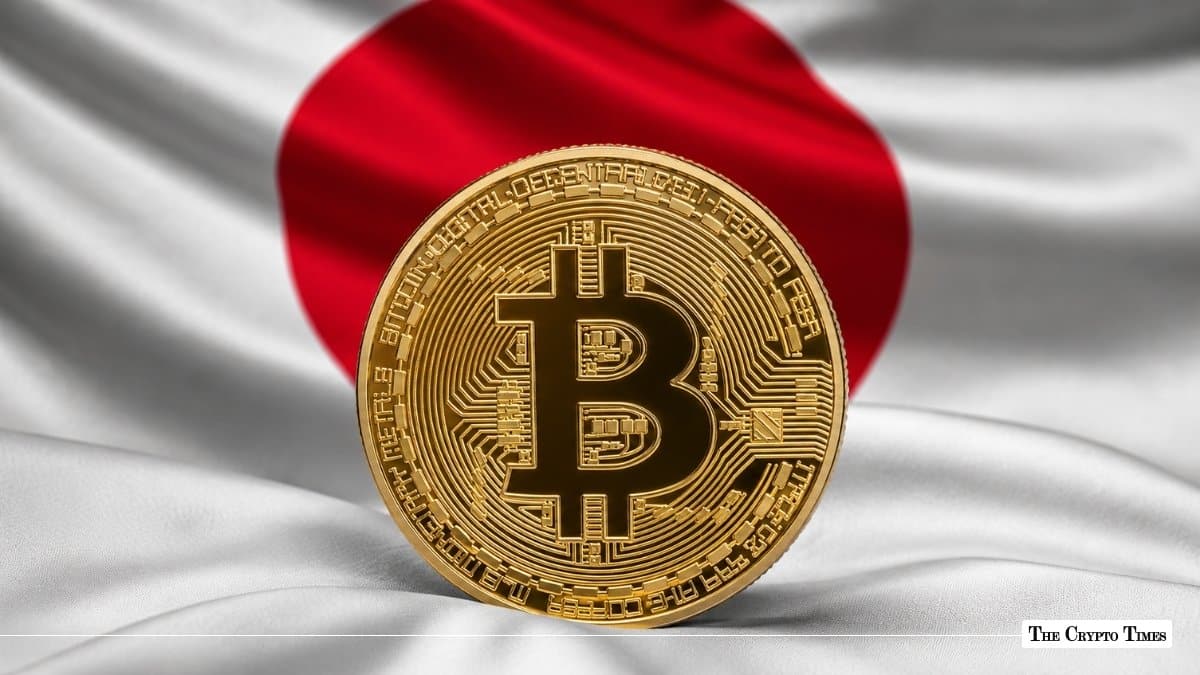
Japan’s lower house of parliament passed a landmark bill on Thursday that reclassifies cryptocurrencies as financial instruments, clearing the legal path for the country’s first spot Bitcoin and XRP exchange-traded funds.
The bill amends the Financial Instruments and Exchange Act (FIEA) to place crypto under the same framework that governs stocks and bonds, moving it out of the looser Payment Services Act. It now heads to the Upper House and is expected to take effect next year. The vote turns a reform approved by Japan’s Cabinet in April into imminent law, and with it, a structurally new market for regulated crypto products.
A Legal Gateway for Bitcoin and XRP ETFs
The most consequential effect is what the reclassification unlocks: by treating crypto as a financial instrument rather than a payment tool, the law makes spot and derivative crypto ETFs legally viable, managed by licensed financial instrument operators. The operator of the Tokyo Stock Exchange has signaled crypto-tracking ETFs could list as early as next year once the framework is finalized.
Issuers are already positioning. SBI Holdings has filed for Bitcoin and XRP ETF products for the Tokyo Stock Exchange, pending regulatory approval, while Nomura’s digital-asset arm Laser Digital and Mitsubishi UFJ Trust and Banking have been piloting tokenized fund structures under existing FIEA rules. The reference point throughout is the United States, where spot Bitcoin ETFs approved in early 2024 drew billions in institutional inflows within weeks.
The ETF path also carries a catch for Japan’s crypto-treasury firms. Until now, local stock investors seeking crypto exposure have leaned on listed proxies such as Metaplanet, which holds more than 40,000 Bitcoin. Direct ETF access would force those digital-asset treasuries to compete with fund providers head-on.
From 55% to 20%, in Line With Stocks
The bill pairs the regulatory shift with a long-sought tax overhaul. Capital gains on tokens like Bitcoin and Ether would fall from a current maximum of 55% to a flat 20% rate, matching the treatment of stocks and bonds, with investors able to carry losses forward for up to three years. The flat individual rate is expected to apply from 2028.
For an industry that has called Japan’s tax regime punitive for years, the change is as much about clarity as relief. Koichi Kano, Japan head of crypto market maker QCP Group, likened the old system to a sport that everyone interpreted differently, adding that participants now at least know they are all playing the same game by the same rules. The reform also fits Finance Minister Satsuki Katayama’s stated goal of shifting Japan from a savings economy to an investment-led one, with digital assets part of the mix.
Tougher Rules and a Looming Exchange Shakeout
The favorable tax treatment comes with heavier obligations. The bill tightens crypto insider-trading restrictions, with fines and imprisonment comparable to those for listed securities, and raises the maximum penalty for unregistered crypto sellers to 10 years from three. An FSA representative, Masato Yoshizawa, framed the goal as creating a sound trading environment, saying the agency is “not necessarily giving crypto a stamp of approval” but aiming for healthy market growth.
Those demands are likely to thin a crowded field. Japan is home to 27 registered crypto exchange providers, including Binance Japan, Coincheck, and bitFlyer, and the stricter disclosure and auditing requirements will weigh far more heavily on smaller operators than large institutions. A Pacific Meta executive told Bloomberg it would not be surprising if around half of Japan’s exchanges disappeared under the tighter regime, pointing to a consolidation that could reshape the domestic market even as it opens to institutional capital.
Part of Japan’s Broader Digital-Asset Push
The vote lands amid a wider acceleration. Three of Japan’s megabanks are jointly developing a stablecoin for issuance by 2027; the country approved its first yen-backed stablecoin, JPYC, in autumn 2025; and the ruling party has pressed for faster ETF legalization. Notably, the new financial-instruments framework will not apply to stablecoins, which remain regulated as payment services.
Institutional appetite has been building as Japan emerges from decades of ultralow rates and investors hunt for yield. The reform is widely read as a bid to make Japan competitive with hubs like Singapore and Hong Kong, though the 2028 timeline for the individual tax rate has drawn industry criticism for leaving traders under the old regime in the interim. For now, the Lower House vote moves Japan a decisive step closer to a regulated market where Bitcoin and XRP ETFs sit alongside stocks.