
The U.S. Bureau of Labor Statistics released its May 2026 Consumer Price Index (CPI) data on June 10, revealing headline inflation rising to 4.2% year-over-year, up from 3.8% in April and matching economist forecasts.
Core CPI, stripping out food and energy, edged higher to 2.9% YoY from 2.8%. This marks the highest headline reading since April 2023 and signals a clear pause in the disinflationary progress observed earlier in the year.
On a monthly basis, the all-items index advanced 0.5%, driven largely by a sharp 23.5% YoY surge in energy prices amid ongoing geopolitical tensions, particularly around Iran. Food prices increased 3.1% YoY, while core monthly inflation printed at a softer 0.2%, below some expectations and hinting at moderating underlying pressures.
The data presents a mixed picture for Federal Reserve policymakers. Under new Chair Kevin Warsh, the FOMC must navigate sticky headline inflation while weighing softer core readings. Markets are now pricing in delayed rate cuts or even heightened risks of tightening, with the next policy meeting closely watched.
Market Reactions and Crypto Resilience
Financial markets reacted cautiously to the news. Cryptocurrency markets defied initial bearish expectations by posting a slight spike in the immediate aftermath of the release. Bitcoin, trading around the $61,000–$62,000 zone prior to the print, saw short-term buying interest push prices modestly higher, with the broader crypto market following suit in a relief move.
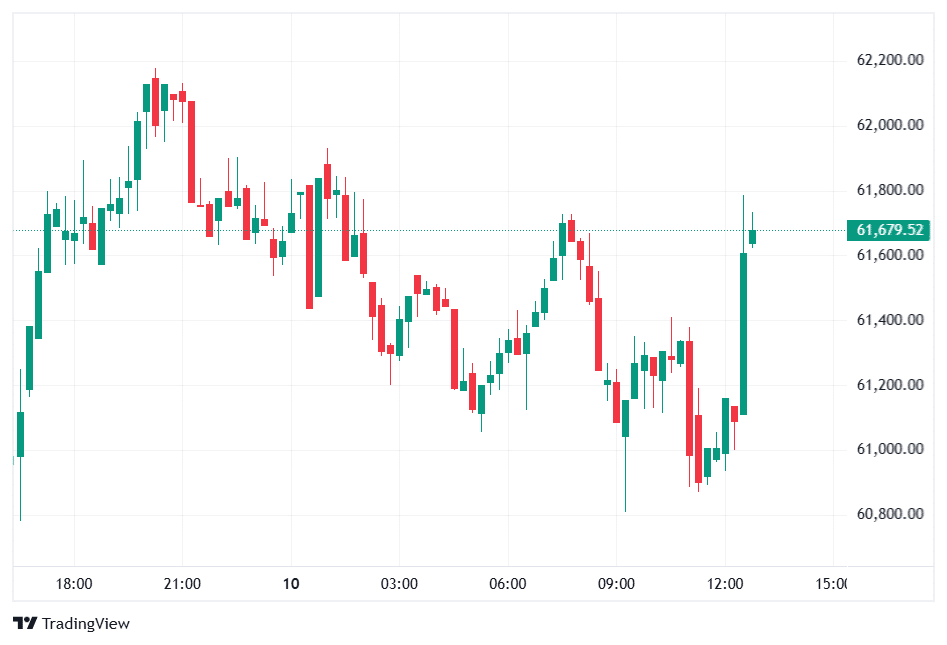
At this time, traders appear to have focused on the in-line nature of the headline figure and the cooler core MoM reading rather than the energy-driven top-line jump. This has provided temporary breathing room, as the absence of a major upside surprise avoided triggering aggressive risk-off flows.
Impact on Cryptocurrency Markets
Despite the modest rebound, the CPI print still carries downside risks for crypto, particularly as U.S. cash markets open. Higher inflation reinforces a “higher for longer” rate environment, which can squeeze liquidity and weigh on high-beta risk assets like Bitcoin and altcoins. Historically, such data has pressured crypto through stronger USD and elevated yields.
Yet the slight spike observed so far highlights crypto’s resilience in this cycle, supported by institutional ETF inflows and the persistent narrative of Bitcoin as a long-term inflation hedge. Ethereum, Solana, and other major altcoins mirrored the initial upside but remained vulnerable to amplification when traditional markets opened fully.
The softer core details have tempered some fears of immediate aggressive Fed action, allowing for this early positive reaction. Prediction markets reflect ongoing uncertainty, with traders positioning for volatility around upcoming releases.
Broader Economic and Policy Implications
This CPI report underscores the challenges facing the post-pandemic economy, where external shocks like energy volatility continue to complicate the path back to 2% inflation. For crypto participants, it reinforces the asset class’s sensitivity to macro developments even as adoption matures.
Looking ahead, attention turns to retail sales data, June CPI, and the FOMC meeting. A sustained crypto rebound would require dovish signals from the Fed or cooling energy prices, while persistent headline pressures could extend consolidation or downside tests.
While the May CPI data paused disinflation hopes and set up potential larger moves with U.S. market opening, the initial slight spike in crypto demonstrates measured optimism. Investors should monitor real-time flows closely, as volatility around these events often creates both risks and tactical opportunities.
Also read: New York Moves to Align Stablecoin Rules Under the GENIUS Act