Key Highlights
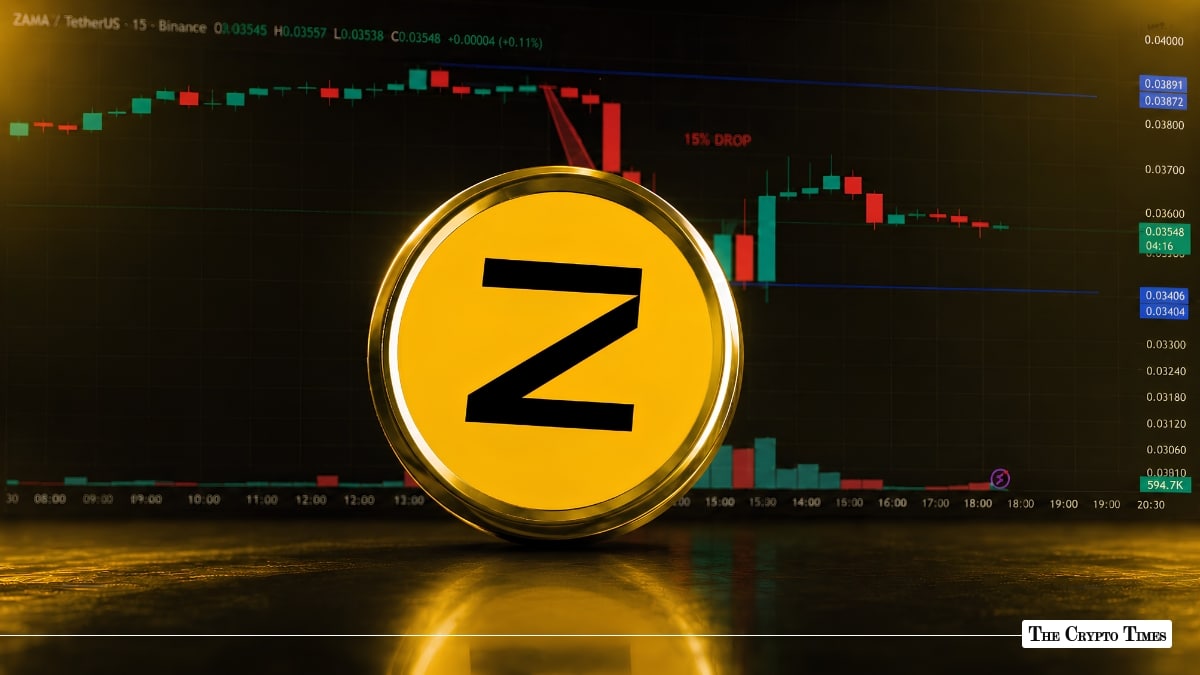
- ZAMA dropped more than 18% intraday after Circle blacklisted Zama’s confidential USDC contract on Ethereum.
- The blacklist froze around $12.6 million in cUSDC-linked USDC following suspicious Overnight Finance-linked fund movement.
- The sell-off shows traders pricing in reputational and liquidity risk around Zama’s privacy infrastructure, even as the team said the issue was not caused by its technology. broader sentiment, Dogecoin’s structure remains intact with potential for a breakout above $0.16.
Zama’s native token ZAMA came under sharp selling pressure on Saturday after Circle blacklisted the protocol’s confidential USDC contract on Ethereum, freezing roughly $12.6 million in funds.
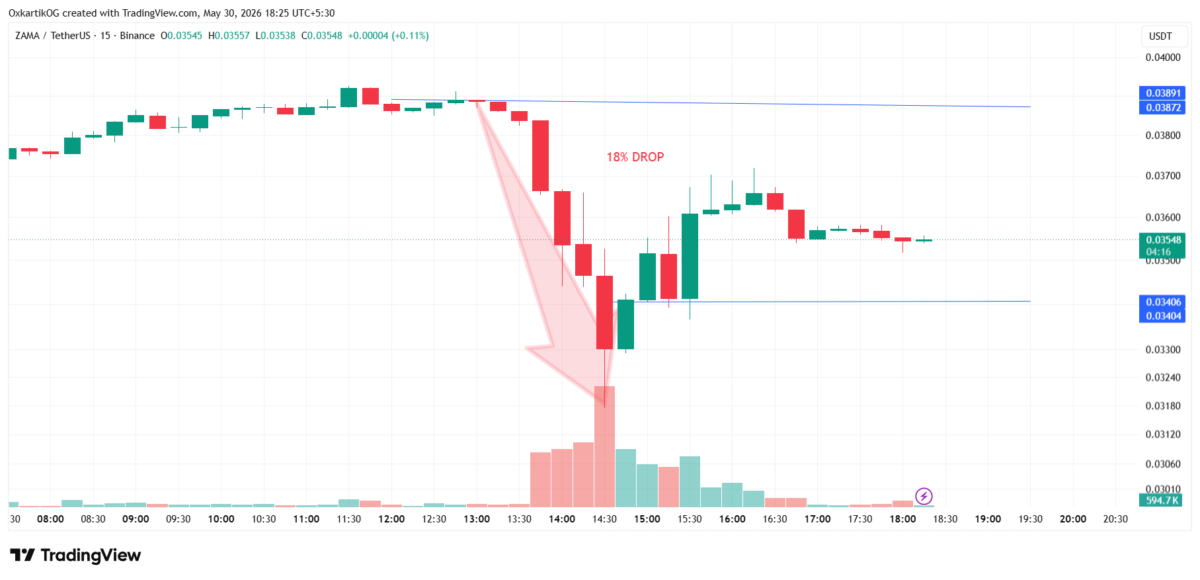
The token dropped from around $0.0389 to nearly $0.0318 on the intraday chart, marking an 18.28% fall over 22 candles, or about five and a half hours. The decline came with a volume reading of 328.5 million ZAMA during the move, showing that the sell-off was backed by heavy market activity rather than a thin-liquidity wick.
According to CoinMarketCap data, ZAMA was trading near $0.03524 after the crash, down 0.27% over 24 hours. The token’s 24-hour trading volume stood at $73.88 million, up 61.08%, while its market cap was $77.54 million.
The volume-to-market-cap ratio reached 95.53%, showing unusually high turnover for the token as traders reacted to the Circle freeze and the uncertainty around Zama’s cUSDC product.
At the time of the chart reading, ZAMA had recovered slightly to around $0.0353, but it remained below the earlier intraday range and under short-term moving averages. The drop also pushed momentum indicators lower, with MACD still showing a bearish setup after the sell-off.
ZAMA Market Data Shows Heavy Turnover
CoinMarketCap data showed ZAMA’s market cap at $77.54 million and unlocked market cap at $82.67 million. The token’s fully diluted valuation stood at $387.7 million.
The project’s total value locked was listed at $31.37 million, giving ZAMA a market cap-to-TVL ratio of 2.46. The token had a total supply of 11 billion ZAMA and a circulating supply of 2.2 billion ZAMA.
ZAMA also had about 6,920 holders, showing that the token remains relatively early compared with larger DeFi and privacy-focused assets. That smaller holder base can make market reactions sharper during sudden risk events.
The 61.08% jump in 24-hour volume is one of the most important parts of the price action. It shows that traders were actively repositioning after the freeze rather than ignoring the incident. With volume nearly matching market cap, ZAMA saw a full-scale turnover event during the news cycle.
Circle Freeze Triggers Market Reaction
The sell-off followed reports that Circle had blacklisted Zama’s cUSDC contract on Ethereum. The action froze about $12.6 million worth of USDC held inside the confidential USDC contract.
The issue was flagged by on-chain investigator ZachXBT, who linked part of the frozen funds to Overnight Finance. The funds reportedly entered the cUSDC contract after Overnight Finance became involved in a dispute over alleged rug-pull activity.
This created a difficult market signal for Zama. While the freeze did not appear to come from a failure in Zama’s privacy technology, it still affected a major contract associated with the protocol. For traders, that was enough to trigger a sharp risk-off move in ZAMA.
Why ZAMA Fell Despite No Direct Tech Failure
Zama’s case is different from a normal exploit or smart-contract hack. The core issue is that cUSDC still depends on Circle-issued USDC, which carries blacklist and freeze controls at the stablecoin level.
That means the market reaction was not only about the frozen funds. It was also about whether confidential DeFi products built on centralized stablecoins can face sudden disruptions if the underlying issuer acts against a contract.
This is why ZAMA sold off even though the reported problem was connected to external fund movement and not necessarily to Zama’s encryption layer. Traders appear to be pricing in three risks at once: frozen liquidity, compliance exposure, and uncertainty over whether users can freely move in and out of cUSDC.
ZAMA Price Levels to Watch
ZAMA’s chart now shows immediate resistance around the $0.0371 to $0.0389 zone, where the token was trading before the sell-off deepened. A move back above this range would suggest that buyers are trying to absorb the panic selling.
On the downside, the $0.0318 level has become the key support after the sharp intraday wick. If ZAMA loses that level again, the market may treat the freeze event as a larger confidence shock rather than a short-term reaction.
For now, the token’s recovery depends on whether Zama can restore user confidence, clarify the status of affected funds, and show that compliant users can regain access without wider disruption to its confidential USDC product.
What Happens Next?
The next major trigger will be communication from Zama, Circle, or Overnight Finance-linked parties. If the freeze is resolved quickly and legitimate users regain access, ZAMA may stabilize above the lower range.
However, if the blacklist remains in place or more funds are found to be linked to disputed activity, the market may continue to treat ZAMA as exposed to regulatory and stablecoin-control risk.
The incident has also opened a larger debate across DeFi: privacy protocols can hide transaction details, but when they rely on centralized stablecoins, issuers like Circle can still freeze the underlying asset.
Also Read: Circle Blocks Zama Confidential USDC Contract Freezing $12.6M in User Funds