Key Highlights
- Faisal Monai is pushing Saudi Arabia toward a blockchain-based financial system by turning real-world assets and payments into digital tokens.
- Saudi Arabia’s digital payment system has already scaled massively, handling over 14.5 billion transactions worth about $250 billion by 2025.
- The country is now testing tokenization in real assets like property, with transactions reduced from days to seconds.
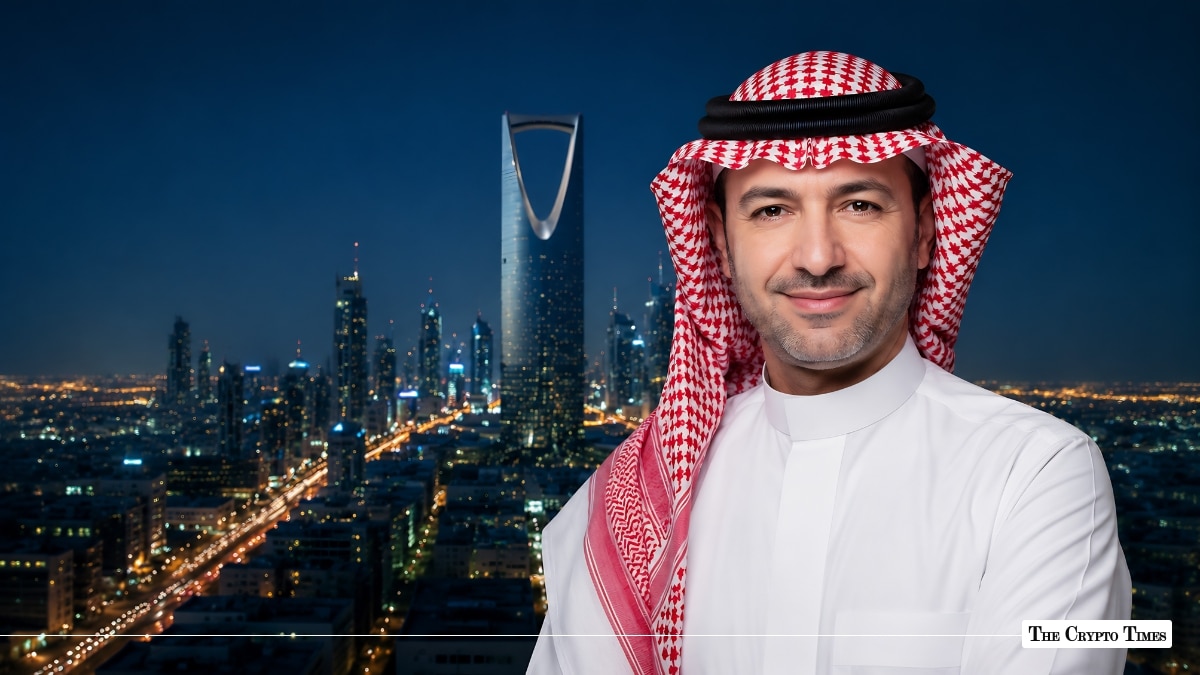
Faisal Monai, chair of Saudi Arabia’s largest tokenization platform, is reportedly leading a push to rebuild parts of the country’s financial system on blockchain technology.
According to a report, this idea is focused on moving the country’s real-world assets and payments into digital tokens that can move through secure and regulated systems much faster than today.
Life Before SADAD System
Monai is not new to this space. Years before Bitcoin was created in 2009, he was already working on digital payments in Saudi Arabia. Back in 2004, before the SADAD system was reportedly introduced, most people in the country still paid bills in cash.
Around 70% of payments were done physically at bank branches, and people often had to wait in long queues just to pay simple bills like electricity or water. Monai reportedly helped build a system that changed this by connecting banks and billers into one digital network. This made payments faster, easier, and more organized across the country.
By 2007, Saudi Arabia had already started moving away from cash-heavy systems into digital payments at a large scale. This early work became the base for today’s system, which is now one of the biggest in the region.
By 2025, the payment network reportedly handled more than 14.5 billion transactions, worth about $250 billion.
Now, Monai is reportedly focusing on a new step called droppRWA, which is a platform that brings real-world assets onto blockchain systems. He believes Saudi Arabia can show the world how national-level tokenization works.
Future of sovereign blockchain finance
In a statement, he said “By 2030, Saudi Arabia will have demonstrated something the rest of the world is still debating: that sovereign-grade tokenization can function as core national financial infrastructure.”
In simple terms, he is saying Saudi Arabia could become one of the first countries where blockchain is not just used for trading or crypto, but for running real parts of the national financial system.
One of the first real steps in this direction was a tokenized property deal completed on February 4. In this system, ownership of property was transferred using blockchain. Instead of taking days, the process was completed in seconds.
This model is expected to expand across Saudi Arabia’s large real estate sector, including major investment zones, and later into industries like energy and manufacturing.
Monai also points out that the global market is already moving in this direction. For instance,
big financial firms like JPMorgan and BlackRock are testing tokenization systems.
In December last year, JP Morgan launched JPM Coin (JPMD) on Coinbase’s layer-2 blockchain to bring bank deposits to the public blockchain. In March 2026, it also filed with the SEC to launch other tokenized products, trading under the ticker JLTXX.
At the same time, tokenized U.S. government bonds have reached $15.3 billion, According to data from RWA.xyz, indicating that large investors are starting to trust these systems.
Monai also noted the growth in Stablecoin. According to data from CoinMarketCap, Stablecoins have reached over $300 billion in value, with over $105 billion in transactions. Monai expects that stablecoin use in real estate payments could go live in Saudi Arabia within four years, under strict rules from regulators.
Trust, stability, and market Safety
He explains that tokenization is not just about turning assets into digital form. It is about building trust and certainty into the system. He said that what matters most is clear ownership, fast transfer, and safe settlement.
In his view, tokenized systems can work better in both calm markets and during financial stress because they stay active and reduce delays.
Monai also said Saudi Arabia is not trying to replace the U.S. dollar. Instead, he describes a “multi-rail” system where traditional banking and new blockchain systems work together. He also warned that stablecoins must stay focused on safety, not profit-making, because using them for yield could weaken trust.
Also Read: Gold Rush or Landmine? DWF Labs Exposes Risks in Tokenized Pre-IPO Market