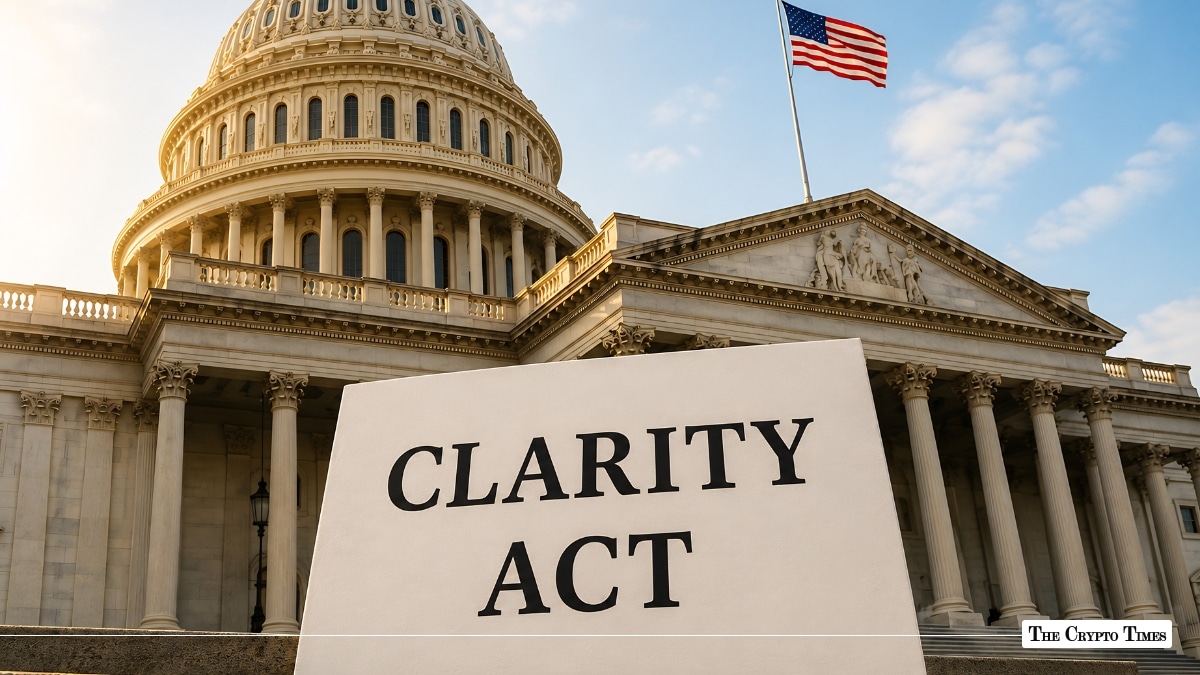
The Digital Asset Market CLARITY Act appeared headed for a party-line vote until a last-minute agreement among senators in a side room of the Senate Banking Committee helped secure Democratic support and send the bill to the full Senate.
The legislation advanced on May 14 in a 15-9 vote, with Sens. Angela Alsobrooks and Ruben Gallego joining all Republicans on the committee. Talks between Republicans and Democrats had stretched late into the previous evening without a final agreement.
According to a Crypto in America report, senators and staff were still negotiating as the committee convened for the markup. Roughly 10 minutes into the hearing, a small bipartisan group met in the committee’s ante room to work through remaining issues.
The group included Sens. Thom Tillis, Cynthia Lummis, Alsobrooks, and Gallego. Their goal was to revise several pending amendments in a way that would make the broader bill acceptable to at least some Democrats.
Amendment changes opened the door to bipartisan support
The compromise focused on the five amendments offered by Lummis. One of the most notable changes removed language tying Section 301 of the bill to the Blockchain Regulatory Certainty Act, a proposal designed to clarify that non-custodial software developers are not treated as money transmitters.
Other revisions addressed banks’ authority to engage in digital asset activities, tokenization, insider trading involving ancillary assets, and language preserving state consumer protection laws. Once the deal was reached, committee staff reportedly rushed to rewrite amendment text and distribute updated materials to senators while the hearing was still underway.
Gallego and Alsobrooks cast key votes
The revised amendments helped secure support from Gallego and Alsobrooks, providing the bipartisan backing supporters had been seeking. Both senators said their committee votes should not be interpreted as firm commitments to support the bill on the Senate floor.
Gallego said lawmakers still needed to resolve several outstanding issues, particularly ethics provisions aimed at preventing elected officials from profiting from crypto ventures while in office. Alsobrooks similarly said further changes would be necessary before she could support the final legislation.
Ethics provisions remain unresolved
Negotiations over conflict-of-interest rules were among the main sticking points throughout the talks. Democrats, led by Sen. Elizabeth Warren, have pushed for stronger guardrails that would apply to the president, members of Congress, and senior federal officials.
The issue has taken on greater significance because of President Donald Trump’s ties to crypto ventures, including World Liberty Financial. Gallego said after the vote that discussions on ethics language were at the “99-yard line,” suggesting negotiators were close to an agreement.
What comes next
The Senate Banking Committee’s approval sends the CLARITY Act to the full Senate, where lawmakers are expected to reconcile it with legislation being developed by the Senate Agriculture Committee.
The bill would establish a market structure framework for digital assets, including jurisdictional boundaries between the SEC and the Commodity Futures Trading Commission.
Its progress marks one of the most significant advances for crypto legislation in Congress, but negotiations over ethics, banking rules, and law enforcement concerns are expected to continue before a final floor vote.
Also Read: CLARITY Act Timeline: From 15-9 Senate Win to July 4 Signing, Here Is Every Step Ahead