The U.S. House Committee on Agriculture has formally urged President Donald Trump to nominate a full, bipartisan slate of Commodity Futures Trading Commission (CFTC) Commissioners. The Committee warned that the derivatives regulator is preparing to take on a sweeping new crypto oversight mandate while operating with only one confirmed official in place.
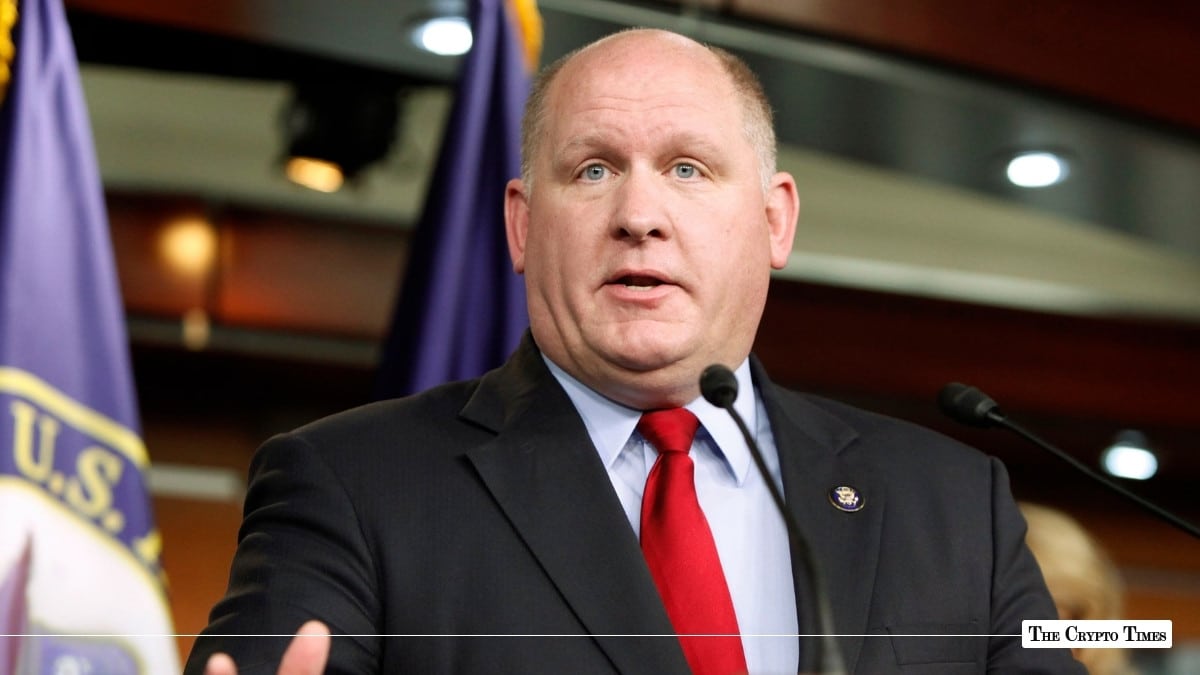
In a letter dated May 15, 2026, Committee Chairman Glenn “GT” Thompson (R-PA) and Ranking Member Angie Craig (D-MN) wrote to the President that “the public, the markets, and the agency itself will be best served by a full five-member commission.” The Committee framed the request as a means to deliver “better regulations, more durable rules, and more sensitivity to the divergent views of key derivatives market stakeholders.”
The bipartisan nature of the letter is itself notable. In a Washington environment where crypto regulation has frequently split along party lines, a jointly signed appeal from both the Republican chairman and the senior Democrat of a major House committee carries unusual weight; and signals that the under-staffing of the CFTC is a concern shared across the aisle.
The CFTC’s Vacancy Problem
The CFTC is, by statute, designed to operate as a five-member commission: traditionally composed of two Democrats, two Republicans, and a chair from the President’s party. Today, it has just one.
Chairman Michael S. Selig was sworn in as the agency’s 16th Chairman in December 2025 after being confirmed by the Senate on December 18, 2025. His predecessor, Acting Chairman Caroline Pham, departed shortly afterward to join crypto payments firm MoonPay, leaving Selig as the sole sitting commissioner of a five-seat agency, with four vacancies.
Unlike the Securities and Exchange Commission, the CFTC’s governing statute, the Commodity Exchange Act, does not define a minimum quorum for agency action, which has allowed the Commission to continue functioning with a single commissioner. But that legal workability does not resolve the structural concern the Committee raised: a single-commissioner agency concentrates enormous regulatory discretion in one official, with no internal debate, no minority-party input, and no institutional check on rulemaking.
The Committee’s letter directly addresses this, noting that a full commission would bring “more sensitivity to the divergent views of key derivatives market stakeholders” — language that implicitly acknowledges the risk of rules being written without the friction that a balanced panel provides.
Why the Timing Matters: The CLARITY Act Mandate
The letter is explicit about what is driving the urgency: the CFTC is about to get significantly bigger responsibilities.
“Congress and your Administration are also working together to add to the Commission’s work through the adoption of legislation that significantly expands the CFTC’s mandate to bring spot digital commodity transactions under federal oversight,” the letter states, noting that this “would require a significant rulemaking process.”
That legislation is the Digital Asset Market Clarity Act. As The Crypto Times has extensively reported, the CLARITY Act would grant the CFTC primary jurisdiction over spot digital commodity markets; a substantial expansion of the agency’s authority that would require it to write an entirely new body of rules covering exchanges, custodians, brokers, and dealers in the digital asset space.
The letter’s timing is pointed. It is dated May 15, 2026 — one day after the Senate Banking Committee’s scheduled CLARITY Act markup on May 14. The Committee referenced the legislative progress directly: “Last year, the House passed the CLARITY Act with strong bipartisan support.”
The implication is structural: if the CLARITY Act becomes law on the administration’s July 4 timeline, the agency tasked with writing the most consequential crypto rules in U.S. history would currently be doing so with one commissioner — and the resulting regulations, the Committee warns, would be less durable for it.
The April 16 Hearing and Selig’s Agenda
The letter also referenced the Committee’s own recent engagement with the CFTC. “The U.S. House Committee on Agriculture was pleased to have the opportunity to host Chairman Michael S. Selig in a hearing on April 16, 2026, to discuss your Administration’s priorities for the CFTC,” Thompson and Craig wrote.
The Committee acknowledged that Selig “has outlined a full agenda for the Commission that will entail significant, consequential work,” citing “volatility across derivatives markets, rapid technological innovation, and evolving market structures” as urgent regulatory issues. The letter’s argument is not a criticism of Selig — it is an argument that the chairman should not have to carry that agenda alone.
The Budget Pairing
The letter ties the staffing request to a second issue: funding.
A full commission, the Committee wrote, “will complement your Administration’s request for an increase in the Commission’s budget, making a welcome pairing of bipartisan leadership and essential financial resources.”
This framing addresses a long-running concern about the CFTC’s capacity. The agency has historically operated with a small workforce, far smaller than the SEC, even as both chambers of Congress have advanced legislation that would dramatically expand its jurisdiction. The CFTC has also experienced significant staff departures over the past year. The Committee’s letter effectively argues that new authority, new funding, and a full commission should arrive together rather than piecemeal.
The Democratic-Vacancy Sticking Point
The letter touches, without naming it directly, on one of the most persistent friction points in the broader crypto market-structure debate.
Senate Democrats have repeatedly raised concerns about the absence of minority-party commissioners at both the CFTC and the SEC — the SEC is itself currently composed entirely of Republican members following the departure of its last Democratic commissioner. For some Senate Democrats, filling those vacancies has been a precondition tied to their support for the crypto market-structure bill, on the argument that permanent crypto rules should not be written exclusively by one party’s appointees.
By calling specifically for a “bipartisan” panel, the House Agriculture Committee’s letter aligns with that concern — and offers the administration a bipartisan, bicameral path to resolving an issue that has complicated the CLARITY Act’s negotiation in the Senate.
What Comes Next
The letter is a request, not a binding action. The power to nominate CFTC Commissioners rests solely with the President, and the Senate must confirm any nominees. The administration has not, to date, signaled whether it intends to fill the four vacant seats, or on what timeline.
But the letter sharpens the political pressure. With the CLARITY Act advancing through the Senate and the administration targeting July 4 for passage, the question of who will actually write and vote on the resulting digital-commodity rulebook is now squarely on the table. The House Agriculture Committee, which holds primary jurisdiction over the CFTC, has made its position clear: the agency should not enter the most consequential rulemaking period in its history with four empty chairs.
Also Read: Behind Closed Doors, Lawmakers Cut Developer Safeguards From Crypto Bill