Key Highlights
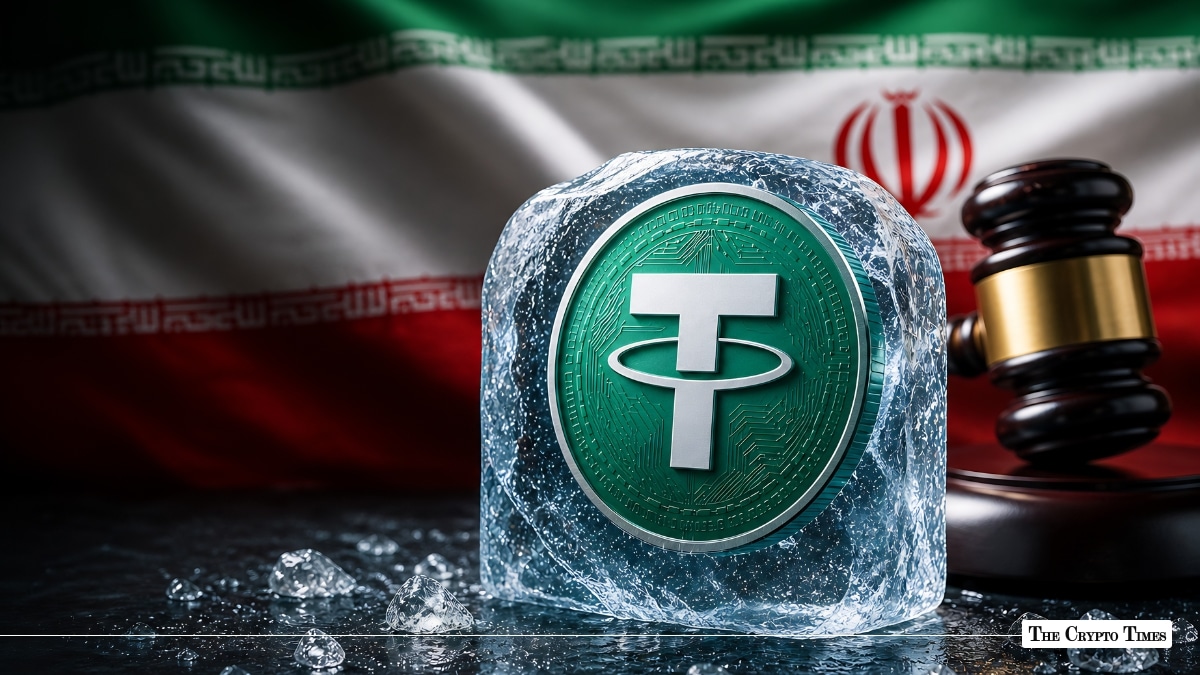
- Victims of terrorism-related court cases are asking a U.S. court to force Tether to transfer over $344 million in frozen USDT linked to Iran’s IRGC.
- The funds are stored in two Tron wallets frozen by OFAC, and the plaintiffs want Tether to wipe the balances.
- The case centers on whether Tether’s control over USDT makes it legally responsible to hand over frozen assets to satisfy unpaid court judgments.
Families of terrorism victims who won U.S. court judgments against Iran have asked a Manhattan federal court to force Tether to turn over more than 344 million frozen USDT tied to two blocked Tron addresses.
The motion was filed on May 14 in the U.S. District Court for the Southern District of New York against Tether International S.A. de C.V., listed as the garnishee in a group of related cases involving Iran.
The plaintiffs are seeking an order requiring Tether to turn over property in its control belonging to Iran, its agencies, instrumentalities, or controlled entities, including the Islamic Revolutionary Guard Corps.
The plaintiffs describe themselves as victims of acts of terrorism committed or facilitated by Iran. In the filing, they say they have collectively won judgments worth $552.3 million in compensatory damages and $1.86 billion in punitive damages, but Iran has paid nothing toward those awards.
OFAC sanctions trigger the freeze
According to the filing, the wallets were blocked in April after being connected to the IRGC, a group the U.S. classifies as linked to terrorism. Based on the blockchain data referenced in the case, the wallets received large inflows across thousands of transactions before being frozen, and the assets have remained largely inactive since late 2023.
The plaintiffs argue that because U.S. authorities already labeled the wallets as belonging to a sanctioned group, the assets inside are considered blocked property under U.S. law. They believe this makes it legally possible for a court to order the funds to be handed over to them.
Why USDT control matters in court
A central point in the case is Tether’s technical structure. Unlike Bitcoin or Ether, USDT is issued and controlled by a company, Tether. This means the company can freeze wallets, block transactions, and even reissue tokens when required by law enforcement or sanctions rules.
The victims’ lawyers say this control is the key point. They argue that since Tether already froze the wallets under OFAC orders, it clearly has the power to move or reissue the tokens again if a court tells it to do so.
In the filing, attorney Charles Gerstein said Tether should be required to turn over any property it can control to help satisfy unpaid judgments. The motion asks the court to reduce the frozen wallet balances to zero and create an equal amount of USDT in a wallet chosen by the victims’ legal team.
Bigger legal push against crypto platforms
Meanwhile, this lawsuit is not an isolated case. It is part of a wider legal push led by Gerstein, who is trying to use crypto platforms’ control systems to recover money from digital assets linked to crimes or sanctions cases.
He has also filed similar arguments in other cases involving alleged North Korea-linked hacks and privacy protocols. In those cases, the main question is whether frozen or controlled crypto assets can be treated like property that can be taken and given to victims through court orders.
If a stablecoin issuer can freeze money, can a court also force it to move that money to victims who already won cases? The court in New York has not yet made a decision. The case is still ongoing, and both sides are waiting for the judge’s ruling.
Also Read: HypurrFi Announces Wind Down as Euler Finance Takes Over