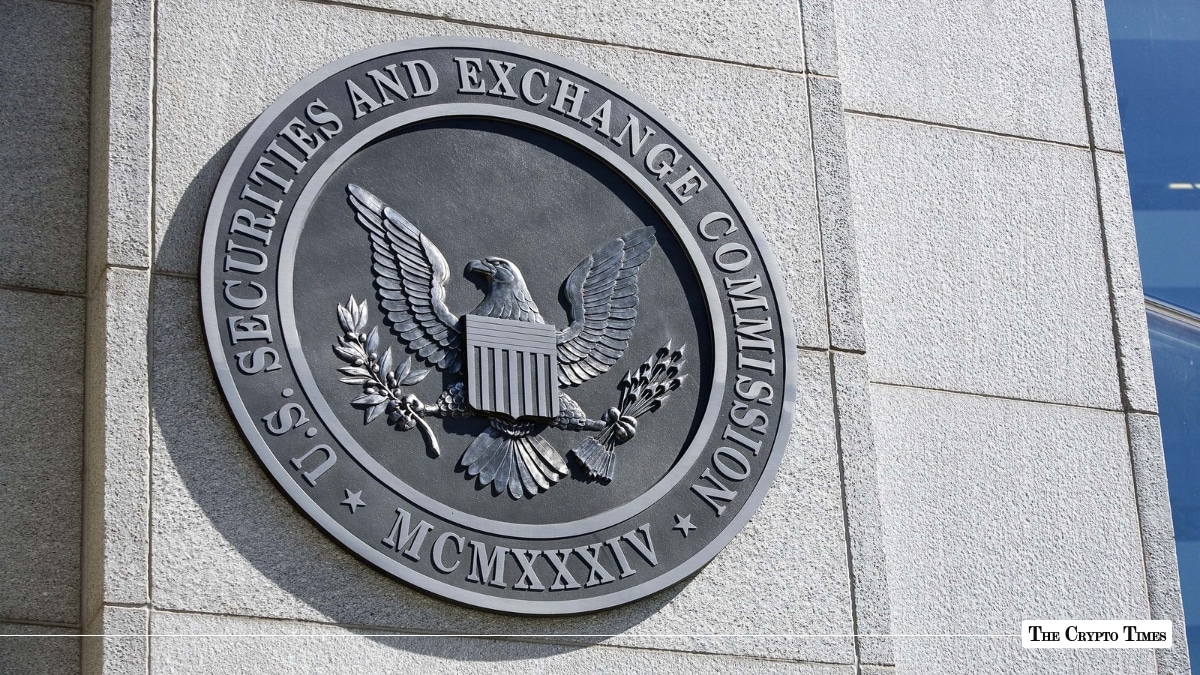
The U.S. Securities and Exchange Commission’s Crypto Task Force held separate meetings on May 13 with the Wall Street Blockchain Alliance (WSBA) and Copper Technologies, signaling continued engagement with industry groups on how digital asset markets should be regulated.
According to meeting logs published by the SEC, both sessions focused on regulatory issues affecting crypto trading, custody, collateral management, and the growing use of tokenized assets in institutional markets.
The meetings come as regulators and lawmakers weigh broader crypto legislation, including the CLARITY Act, which would divide oversight responsibilities between the SEC and the Commodity Futures Trading Commission.
WSBA pushes for clear registration pathways
During its meeting, WSBA outlined areas where members believe additional SEC guidance would help institutional firms operate in digital asset markets.
Topics included the classification of securities and non-securities tokens, custody rules, broker-dealer obligations, tokenized securities, and the use of payment stablecoins for settlement. The group also raised questions about how the SEC and Commodity Futures Trading Commission would coordinate under a joint regulatory framework.
WSBA’s agenda emphasized the need to reduce duplicative requirements and establish practical registration pathways for trading platforms and intermediaries.
Copper focuses on custody and collateral mobility
Copper’s presentation centered on the infrastructure needed for institutions to trade and finance blockchain-based assets. The company described its ClearLoop platform, which allows firms to post and move collateral without prefunding assets on exchanges. Copper said the system supports third-party margin segregation and automated variation margin transfers as often as 24 times per day.
Copper CEO Amar Kuchinad and consultant Alan Sobba discussed how blockchain-based assets could be used as initial and variation margin in regulated markets. The presentation also examined whether SEC-regulated clearinghouses and security-based swap dealers could accept tokenized deposits, stablecoins, or other digital assets as collateral.
Copper’s materials highlighted regulatory questions tied to different settlement methods, including delivery-versus-payment and delivery-versus-delivery transactions. The company asked how capital requirements should be applied when transactions are settled using fiat currency, stablecoins, or digital assets.
It also sought clarity on whether the legal structure of a tokenized asset would affect its eligibility as collateral.
SEC guidance on covered user interfaces
Copper also raised questions related to the SEC’s April 2026 staff statement on “covered user interface providers,” which allows certain wallet-based interfaces to operate without registering as broker-dealers.
The company asked whether registered investment advisers using qualified custodians to access those interfaces could affect the exemption. This issue is increasingly relevant as institutions explore tokenized securities and decentralized trading applications.
Institutional interest in tokenized markets grows
The two meetings underscore how industry participants are pressing the SEC for more detailed guidance as traditional financial firms expand into tokenized funds, digital custody, and blockchain-based settlement.
WSBA focused on policy and regulatory coordination, while Copper emphasized operational questions around custody and collateral. Together, the discussions reflect the practical issues institutions want addressed as digital asset markets move closer to established financial infrastructure.
Also Read: CLARITY Act Talks Collapse: Sen. Lummis Says 99% is Settled Before Senate Markup