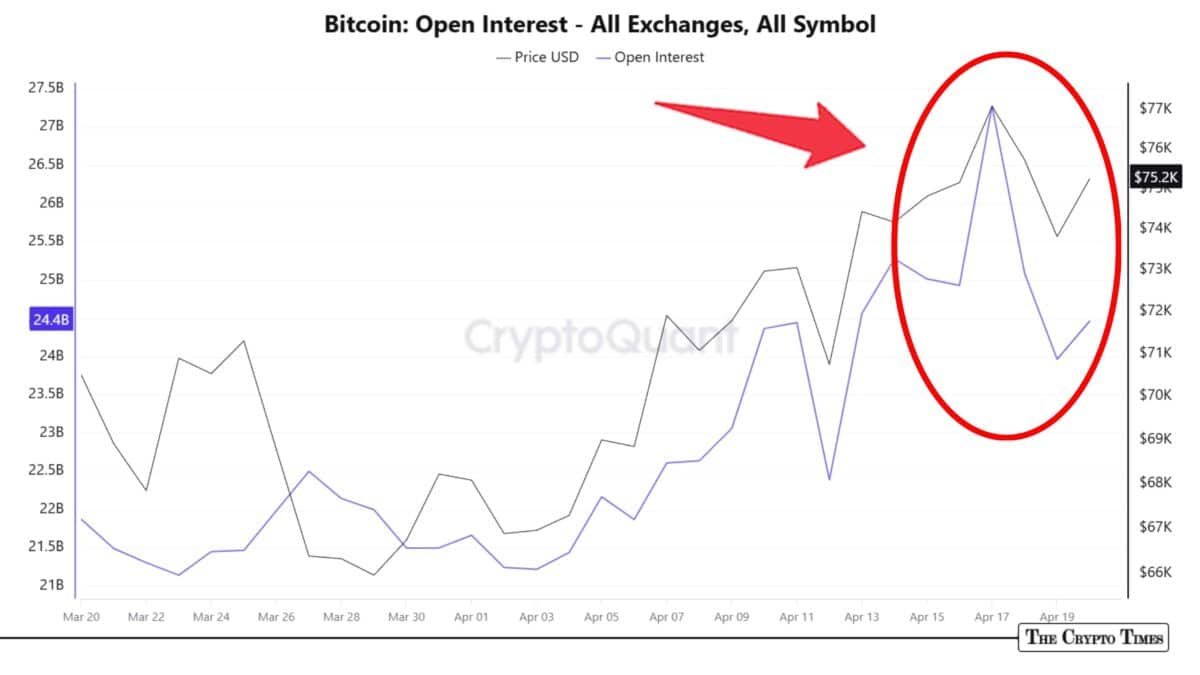
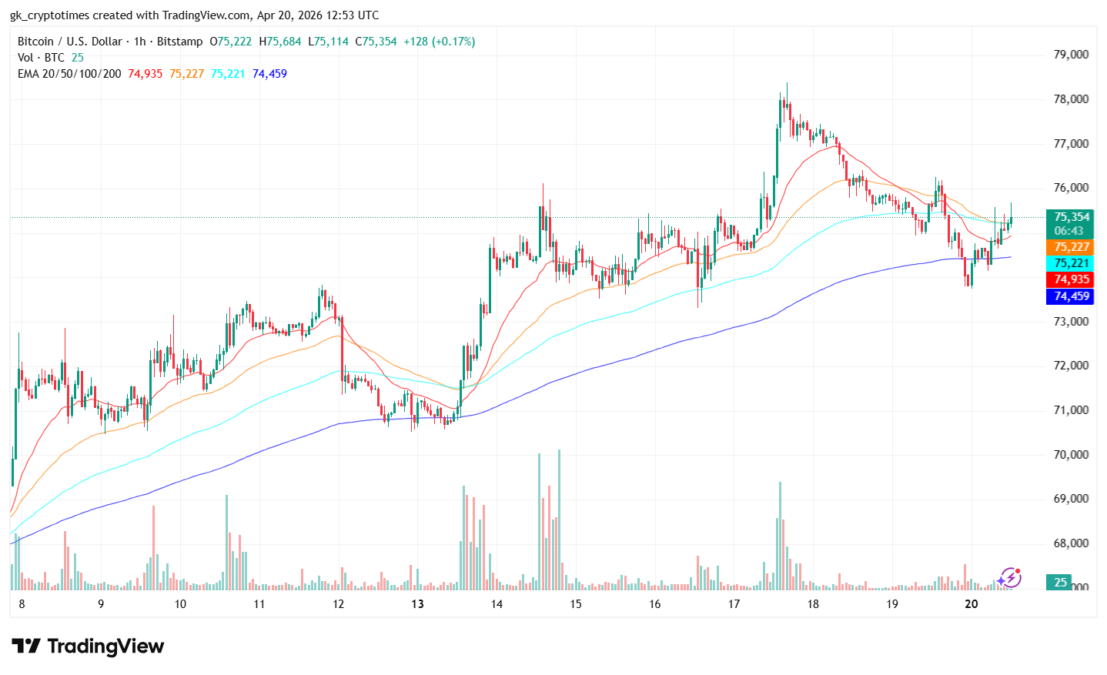
Bitcoin has spent much of April 2026 wandering in a narrow trading band, caught between roughly $72,000 and $77,000.
After opening the month near $74,000, the cryptocurrency climbed toward $77,000 earlier in the period on steady ETF inflows and easing global tensions, only to slip back and hover around $74,500 to $75,500 in recent sessions.
As of Monday, it trades near $75,000, up modestly over the past week but showing little conviction on a daily basis. That leaves Bitcoin about 40% below its late-2025 peak near $126,0198—testing the patience of both traders and long-term holders.
A quiet market hiding potential energy
The subdued price action has drawn fresh attention from on-chain analysts. A new QuickTake from CryptoQuant argues that the current lull near the psychologically significant $80,000 zone may mask building tension.
According to the analyst, exchange reserves continue their long-term decline, with Bitcoin balances on centralized platforms sitting at multi-year lows as investors move coins into cold storage or long-term wallets. That gradual drain of available supply has often preceded sharper rallies in past cycles by limiting immediate selling pressure.
Other metrics reinforce the sense of restrained positioning. The Market Value to Realized Value (MVRV) ratio sits in a neutral band, meaning most holders are neither sitting on outsized gains that tempt heavy profit-taking nor deep in the red and prone to panic sales.
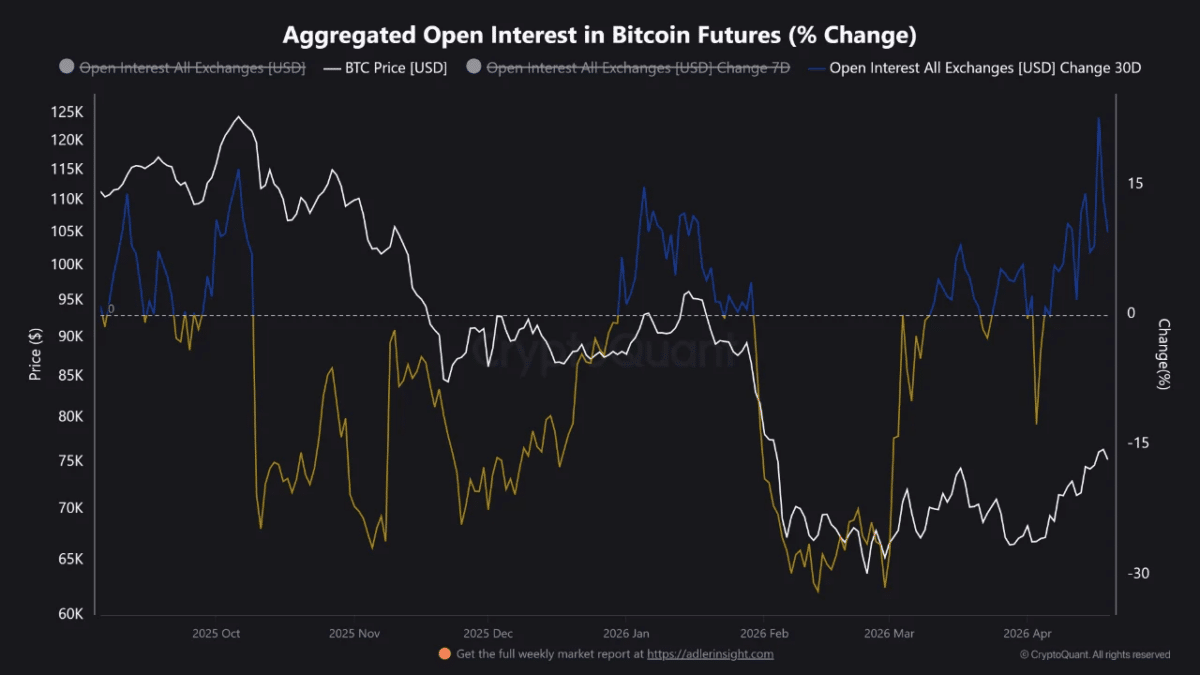
In addition, whale activity points to quiet accumulation in the background, while retail participation has cooled. Notably, implied and realized volatility have dropped to levels last seen before some of Bitcoin’s strongest historical runs, including the powerful recovery from below $30,000 in 2023.
What could spark the next move
With Bitcoin steadily recovering, several outside forces are now in focus. Spot Bitcoin ETFs have recorded intermittent inflows this year, with March marking the first monthly net positive since late 2025 and April still following the in green numbers.
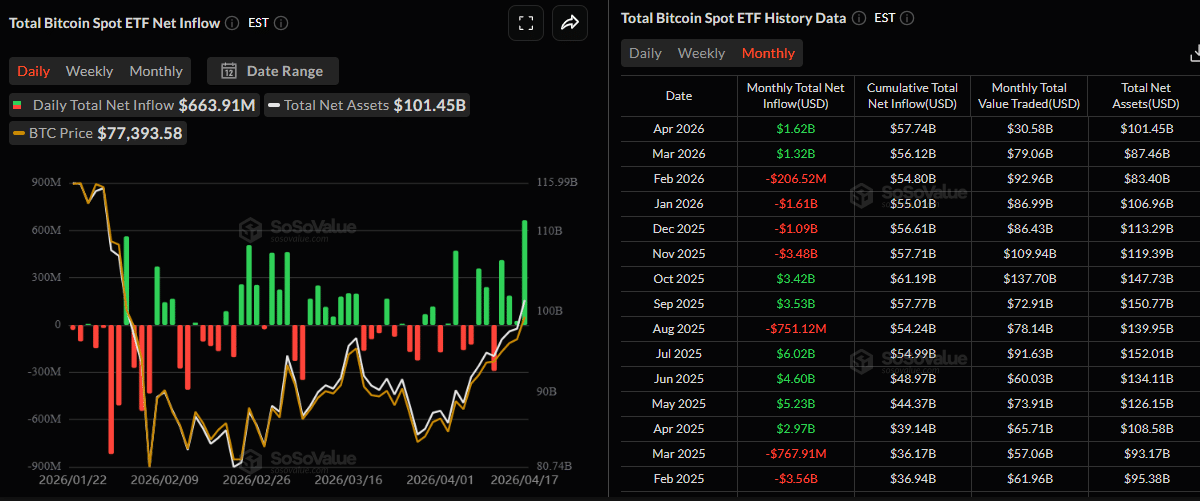
BlackRock’s iShares Bitcoin Trust and other major funds have led the way at times, though overall flows have yet to match the frenzy of 2025. Corporate buyers, including heavyweights like Strategy, keep adding to their holdings, steadily pulling more Bitcoin off the open market.
Read: Strategy Shatters Records with a Massive 34,164 Weekly Bitcoin Haul
Moreover, macro factors—interest rate expectations, dollar movements, and the lingering shadow of earlier geopolitical flare-ups—could also tip the balance.
Still, the picture is not uniformly bullish. CryptoQuant analysts and other observers note that a decisive push into the $76,000–$78,000 resistance zone could trigger profit-taking from holders finally reaching breakeven.
A rejection there might send prices back toward firmer supports around $71,000–$73,000, with some longer-term cycle models even flagging a possible deeper low in the $55,000–$60,000 range later in 2026 before the next sustained uptrend.
History suggests patience pays
On-chain veterans have seen this script before as periods of low volatility and sideways grinding have repeatedly acted like a compressed spring in Bitcoin’s history. When the calm eventually breaks—whether triggered by fresh ETF momentum, regulatory clarity, or a shift in global risk sentiment—the resulting move can be swift and sizable.
For now, the data suggest smart money is positioning rather than fleeing, with declining exchange balances and muted derivatives activity pointing to accumulation over distribution.
Also read: Crypto Inflows Hit $1.4B as Bitcoin Leads Global Recovery Wave