Key Highlights
- South Korea set the first dark coin guidelines to manage anonymous crypto and prevent asset losses.
- New rules require software wallets and professional custody for safer handling of seized dark coins.
- Authorities combine internal rules and private oversight as crypto crimes and high-value seizures rise.
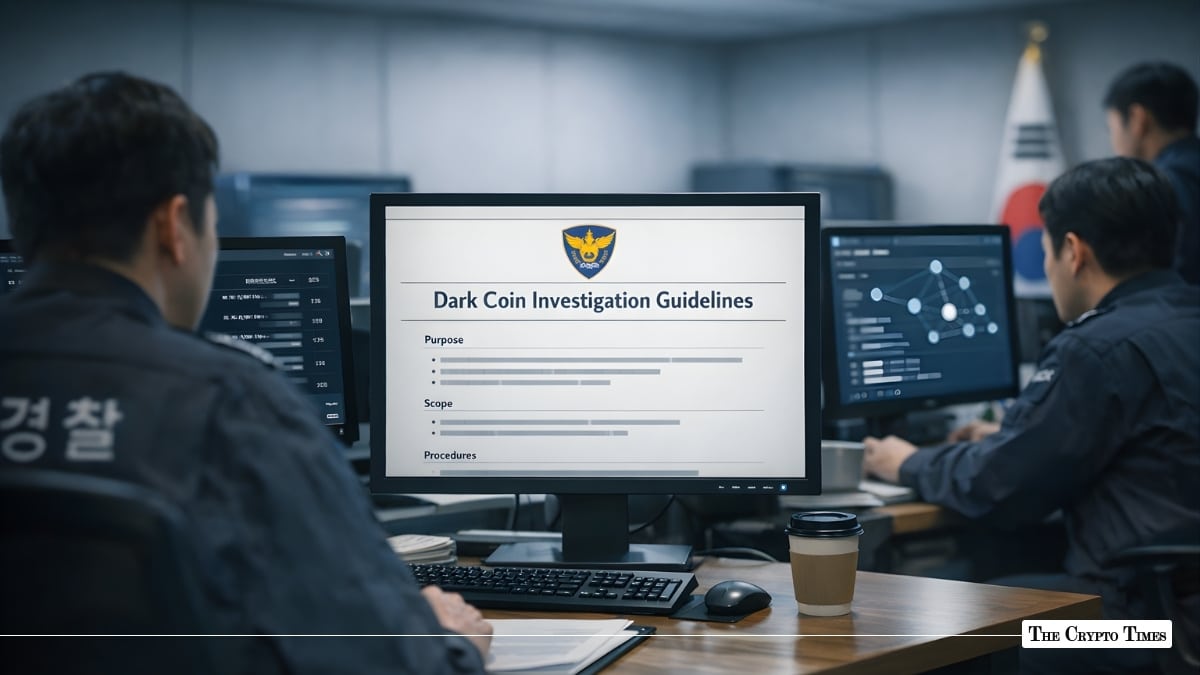
South Korea’s National Police Agency has rolled out its first internal guidelines for handling “dark coins,” following repeated losses of seized virtual assets. Unlike regular cryptocurrencies, dark coins hide transaction details, making them extremely hard to trace.
As per a local report, authorities are facing mounting challenges as criminals increasingly use these anonymous coins in high-profile cases, including the notorious “Nth Room” scandal. To address this, the police have drafted rules covering every step of seizing and managing these digital assets.
The new framework also introduces software-based wallets, moving away from the traditional hardware storage used for Bitcoin and other common cryptocurrencies.
The Asiae reported that the draft requires dedicated hot wallet management for dark coins. A police official said, “Whereas in the past, seized assets were stored in warehouses, now we are in an era where we must manage wallet addresses and secret keys.”
Until now, investigators often had to store dark coins on software wallets without clear guidelines. The new rules aim to reduce confusion and improve security for all confiscated virtual assets.
Managing dark coins and security challenges
Dark coins are designed to be highly anonymous, hiding who sends and receives them, as well as transaction amounts. Criminals use them for organized crime, money laundering, and even in schemes by North Korea to bypass sanctions.
Unlike Bitcoin or Ethereum, which are usually stored in secure hardware wallets, dark coins require specialized software on PCs or servers. Investigators must create wallets within these programs and store secret keys as digital files or strings instead of physical devices. This makes professional oversight essential.
Experts stress the importance of government-led custody systems. Hwang Sukjin from Dongguk University warned, “If each police station manages wallets individually, it can lead to gaps, and if a mnemonic code is leaked, personal keys can be deduced and hacked from transaction records.”
Likewise, Kim Hyungjoong of Korea University said, “Virtual assets carry a high risk of theft and place a heavy management burden due to price volatility. Professional firms or authorized exchanges should handle custody.”
Expanding oversight and legal measures
Beyond updating internal rules, South Korea is boosting protections for crypto users. Exchanges now have to monitor transactions for suspicious activity and help victims recover losses under the revised Telecommunications Fraud Damage Refund Act.
Authorities also plan to appoint private custodians to handle high-value assets, since smaller domestic companies cannot manage the risks. Over the past five years, the National Police estimates that finalized seizures totaled around 54.5 billion won, including 5.07 billion won in Bitcoin and 180 million won in Ethereum.
With the aim of regulating the increasingly booming virtual asset sector, it is expected that the new regulations will be accompanied by professional custody services. In the Indian context, there have also been similar trends in the country, with the police recently dismantling darknet drug networks and crypto scams.
Also Read: Crypto Exchanges Breathe Easy as SEC Narrows Rule 15c2-11 Scope