Key Highlights
- South Korea forces crypto exchanges to monitor scams and help victims recover lost assets.
- Stablecoins face corporate restrictions as authorities tighten crypto investment rules.
- Recent phishing and public sector losses push the government to strengthen crypto security.
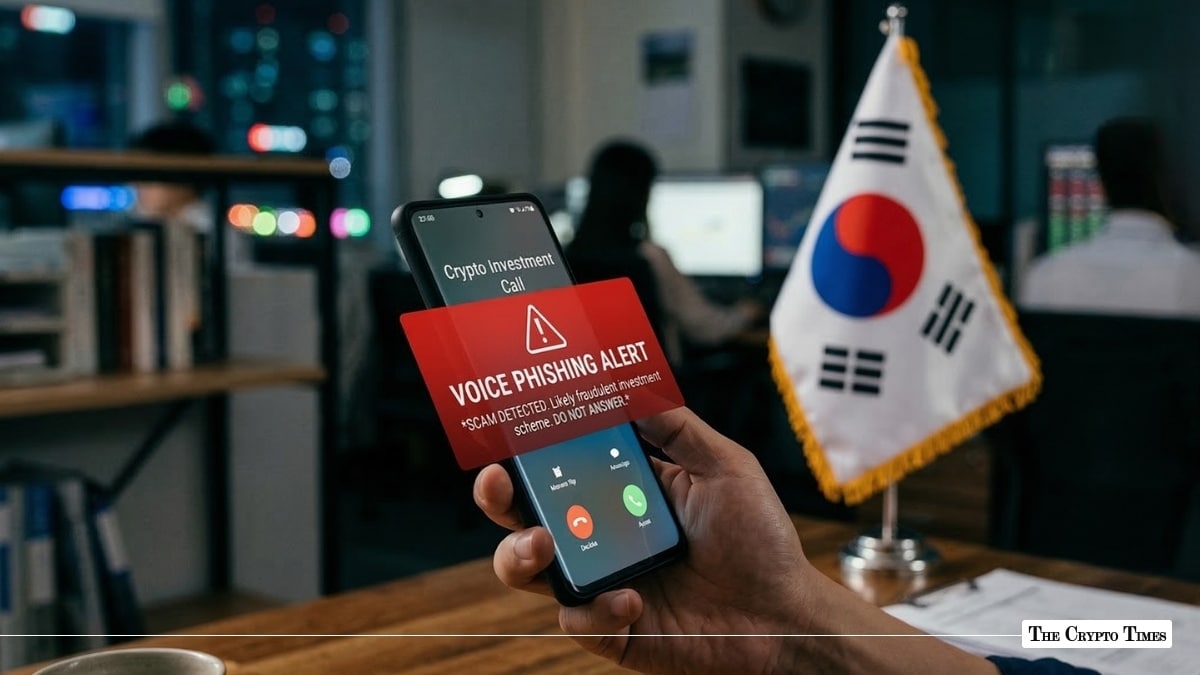
South Korea is cracking down on scams targeting cryptocurrency users. Starting this October, crypto exchanges must closely watch all transactions for suspicious activity. If they spot anything unusual, they have to stop the payment and help victims get their money back.
As per a local report, the Financial Services Commission (FSC) confirmed that the National Assembly passed an amendment to the Telecommunications Fraud Damage Refund Act, aligning virtual asset exchanges’ responsibilities with those of traditional financial institutions.
Besides monitoring, exchanges must verify transaction purposes and ensure that lost virtual assets can be recovered efficiently. The amendment expands eligible assets from traditional money to include cryptocurrencies, making relief accessible for victims inexperienced in crypto trading.
“We are introducing procedures to support victims when requesting a refund for virtual assets. We’ve established a basis for virtual asset exchanges to sell the virtual assets and provide cash compensation if the victim so desires,” authorities said. Additionally, exchanges will share data on suspected fraud with ASAP, enhancing cooperation between financial institutions and investigative agencies.
Regulatory push and stablecoin challenges
At the same time, South Korea is tightening the rules for companies investing in crypto. The Financial Services Commission plans to stop firms from using dollar-backed stablecoins like USDT and USDC. Officials want to reduce risky investments and make the rules clearer for listed companies and professional investors.
Stablecoins also face legal challenges because current law doesn’t recognize them for international payments. A proposed amendment to allow stablecoins for payments is still under review.
On another front, the government is reshaping ownership rules for major crypto exchanges. The ruling Democratic Party and FSC agreed to limit major shareholders to 20%, though exceptions up to 34% may be allowed. This step aims to prevent a few individuals from controlling exchanges and to make the market more stable.
Security incidents spur action
Recent events have made stronger crypto rules a concern. Prosecutors recovered 320.8 BTC, worth about 22 million USD, stolen in a phishing scam linked to an illegal overseas gambling ring.
In another case, the National Tax Service lost almost 7 billion won, or 4.8 million USD, in cryptocurrency due to security breaches after sensitive information was leaked. This prompted Deputy Prime Minister Koo Yun-cheol to instruct all public institutions to undergo an audit on their virtual assets and strengthen security measures.
The new laws, regulations, and enforcement actions are all geared towards protecting crypto users and clarifying investment regulations. It is also important to prevent similar security breaches from happening in the future and ensure that those who have been victimized are able to get refunds. This is why the government is cracking down on these issues in October.
Also Read: JPMorgan Sued in Federal Class Action Over $328M ‘Goliath’ Crypto Ponzi Scheme