Key Highlights
- SEC limits Rule 15c2-11 to equities, ending confusion over fixed-income and crypto assets.
- Clarifying equities boosts OTC market confidence and eases compliance for broker-dealers.
- Crypto exclusion gives brokers clarity, while SEC guidance signals future regulatory direction.
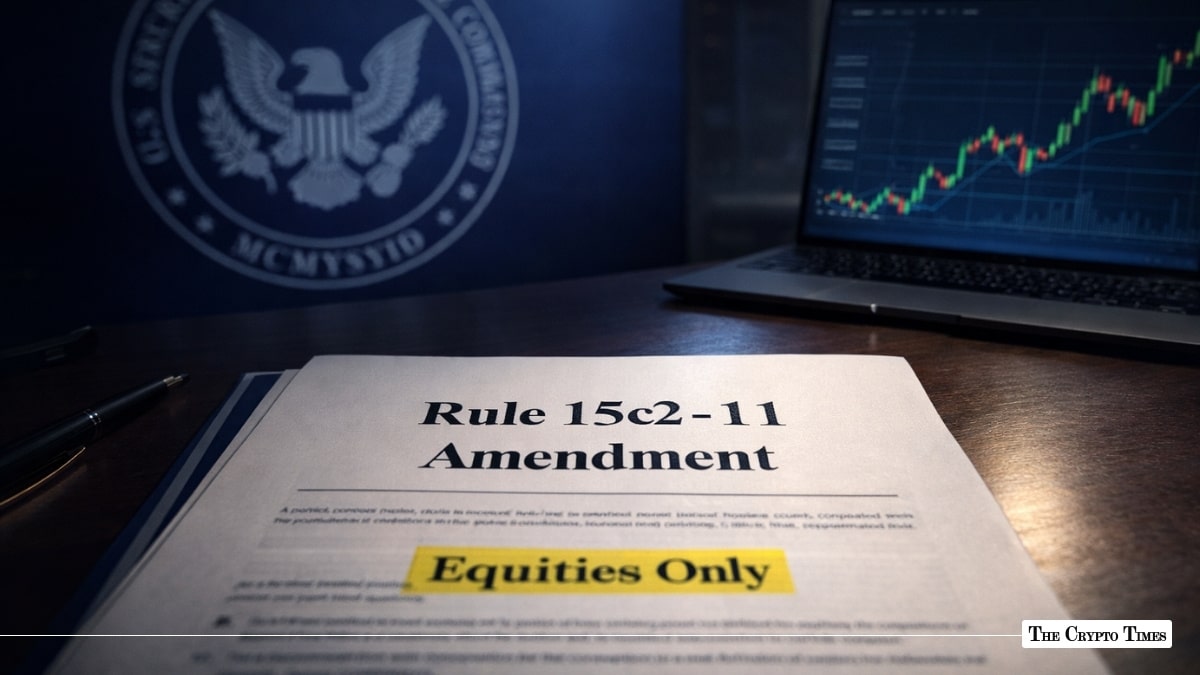
The U.S. Securities and Exchange Commission (SEC) has proposed changes to Exchange Act Rule 15c2-11 to clarify its scope for over-the-counter (OTC) trading. The amendments make clear that the rule applies only to equity securities, ending years of uncertainty over whether it could affect other types of assets.
SEC Chairman Paul S. Atkins emphasized, “Regulations should be appropriately tailored to fit the asset class to which they apply.” The proposal follows concerns from market participants that the 2020 amendments might have stretched the rule to fixed-income securities and even some crypto assets.
Since it was introduced, Rule 15c2-11 aimed to prevent manipulative and fraudulent activity in OTC equity markets. However, the 2020 changes prompted warnings that the rule could disrupt fixed-income markets and affect certain crypto tokens.
Commissioner Hester M. Peirce noted, “While I am pleased to support these amendments, I regret the protracted and unnecessarily burdensome process that led us here.” She highlighted that the rule historically applied to OTC equities and that its expanded interpretation had caused confusion and compliance challenges for the industry.
Clarifying the equity focus
The proposed amendments are intended to address the long-standing expectations of the market. For long, the rule has been applicable mostly to common and preferred stocks.
However, the amendments introduced in 2020 have raised questions regarding the applicability of the rule. Commissioner Peirce noted that the SEC has provided limited no-action relief and exemptions for fixed income securities.
There has been confusion regarding the application of the rule. The SEC hopes that by clarifying the application of the rule as being relevant only to equity securities, they will provide more confidence for firms operating in the OTC markets.
Implications for crypto markets
The changes are also applicable to cryptocurrencies. The disclosure structure for tokens is not as clear as that of public companies, which makes it difficult for brokers to comply with the requirements of Rule 15c2-11.
As a result, there are brokers that have withdrawn from the trade of these assets as they are perceived as risky from a legal perspective. The exclusion of cryptocurrencies gives brokers clarity regarding the support of secondary trade without the disclosure standards that are not applicable to these assets.
The commission recently issued guidance on how federal securities laws apply to certain crypto tokens. Chairman Atkins suggested developing a “token taxonomy” to outline regulatory responsibilities and bring more clarity to the market. Journalist Eleanor Terrett noted on X that the SEC issuing this guidance, rather than staff-level advice, signals its importance for market participants.
Also Read: Buenos Aires Court Blocks Polymarket Over Unauthorized Betting