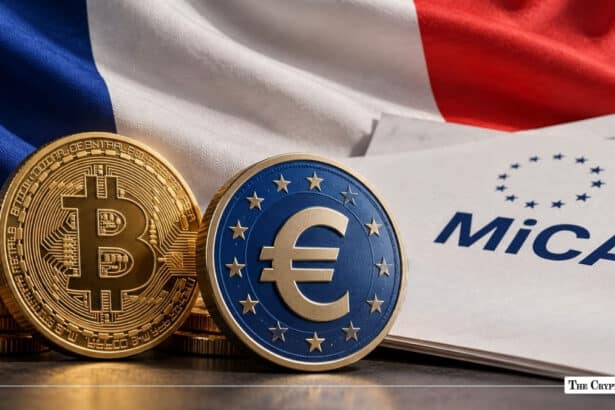
Banca Sella has announced that it has completed the regulatory notification process with the Bank of Italy, clearing the path to become the first Italian bank to offer cryptocurrency-related services under the EU’s Markets in Crypto-Assets Regulation.
According to an Italian crypto media outlet report, the bank said it plans to launch custody and transfer services for digital assets before the end of 2026. The services will initially be available to specific client categories, though the bank did not limit its future crypto ambitions to custody and transfers alone.
Andrea Tessera, Managing Director of Digital Banking at Banca Sella, framed the move as part of a broader shift in European financial infrastructure. He said the evolution of payments toward instant, interoperable, and programmable models — driven by the tokenization of money and assets — is “redefining financial infrastructures at a European and global level.”
Years in the Making
The announcement did not come out of nowhere. Banca Sella has been one of Italy’s most active traditional banks in the digital asset space for several years.
The bank participated in the Fintech Milano Hub experimentation program promoted by the Bank of Italy starting in 2022. In July 2025, it began an internal pilot program testing crypto custody using Fireblocks’ infrastructure, initially allowing a small group of employees to hold digital assets including stablecoins. The pilot covered custody only—not trading—and executives would decide afterward whether to extend the service to its 1.4 million customers, who collectively hold over €66 billion (~$76.6 billion) in assets under custody.
Banca Sella is also a founding member of the Qivalis consortium, which now includes 37 European banks—among them ING, UniCredit, CaixaBank, KBC, Danske Bank, DekaBank, SEB, and Raiffeisen Bank International. Qivalis, headquartered in Amsterdam and led by former Coinbase Germany CEO Jan-Oliver Sell, is building a MiCA-compliant euro-denominated stablecoin expected to launch in the second half of 2026, pending an e-money institution license from the Dutch central bank.
The Qivalis stablecoin is designed to offer near-instant cross-border payments, lower costs, 24/7 operations, and programmable settlement—capabilities that Europe’s existing banking infrastructure does not provide natively.
Italy’s Banks Are Moving Fast
Banca Sella is not the only Italian bank deepening its crypto exposure. Intesa Sanpaolo, Italy’s largest bank, now holds over €200 million (~$232 million) in Bitcoin, Ripple, Ethereum, and Solana after opening a spot Bitcoin desk in January 2025 with an initial €1 million (~$1.16 million) purchase. UniCredit has explored capital-protected notes linked to BlackRock’s spot Bitcoin ETF and is also a Qivalis founding member.
Under MiCA, credit institutions like Banca Sella can enter certain crypto-asset services through a notification process with their national regulator — a lighter path than the full CASP licensing required for non-bank entities. Banca Sella’s completion of this process positions it ahead of other Italian banks that may still be working through the same steps.
Europe vs. the US: A Regulatory Gap
While European banks are moving forward under a clear MiCA framework, most US banks remain in a holding pattern.
The CLARITY Act — the most comprehensive proposed federal crypto framework in the US — remains stalled outside Congress, with growing doubts about its passage in 2026. Outside of a handful of Wall Street investment banks with limited crypto exposure, the US banking sector still lacks the regulatory clarity needed to offer custody, transfer, or stablecoin services at scale.
ECB President Christine Lagarde warned earlier this month that stablecoins could disrupt the EU banking system if left unregulated, but the practical effect of MiCA has been the opposite: by providing a clear licensing path, the regulation has pulled traditional banks into the crypto ecosystem rather than keeping them out.
The EU now has 17 authorized electronic money token issuers across 10 countries, with 25 regulated stablecoins approved under MiCA. Banca Sella’s entry adds one of Italy’s most technologically active banking groups to that expanding list.
Also Read: The US CLARITY Act vs. MiCA: Which Framework Actually Protects DeFi?