Key Highlights
- Ten major European banks formed Qivalis to launch a regulated euro stablecoin by 2026, aiming to reduce reliance on dollar-backed tokens.
- Former Coinbase Germany CEO Jan-Oliver Sell will lead Qivalis, reflecting banks’ shift toward crypto-native expertise.
- Qivalis will seek an EMI licence in the Netherlands and operate under MiCA rules that set strict standards for reserves and governance.
- Euro stablecoins remain small, with EURCV and EURC far behind USDT, underscoring the market gap Qivalis aims to close in Europe.
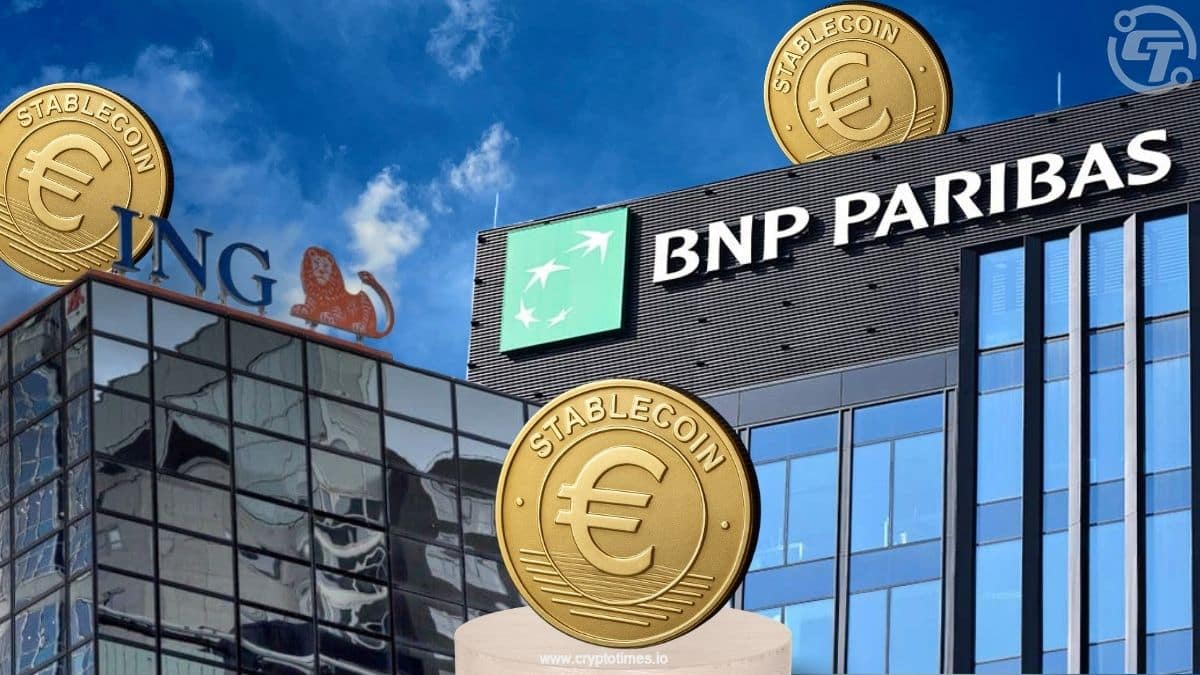
A group of 10 major European banks is moving ahead with plans to create a euro-backed stablecoin, aiming to offer a homegrown alternative to the fast-expanding, dollar-dominated digital payments market. The banks have created a new company, Qivalis, headquartered in Amsterdam, with the goal of issuing the token in the second half of 2026, pending regulatory approval.
The consortium includes BNP Paribas, ING, UniCredit, CaixaBank, Danske Bank, DekaBank, SEB, KBC, Raiffeisen Bank International, and Banca Sella.
The project shows a common worry among European lenders. They fear that the fast growth of stablecoins, especially those based on the U.S. dollar, could make Europe more dependent on foreign digital payment systems. Dollar-backed tokens like Tether’s USDT lead in global crypto trading and on-chain settlements, while euro-denominated stablecoins are still small in comparison.
Qivalis’ leadership and structure
Qivalis will be led by Jan-Oliver Sell, the former CEO of Coinbase Germany who also previously worked at Binance. His appointment signals a shift as banks tap crypto-native expertise to build regulated blockchain infrastructure.
Howard Davies, former Chair of NatWest, will serve as chair of the board. The company plans to hire 45–50 employees over the next two years, with roughly a third already in place.
To issue its stablecoin, Qivalis is applying for an Electronic Money Institution (EMI) licence from the Dutch central bank. The licensing process is expected to take six to nine months after the formal application.
The token will be structured to comply fully with the Markets in Crypto-Assets (MiCA) regulation, the EU’s comprehensive rulebook governing digital assets, covering reserves, disclosures and governance.
Why banks are taking this step
European banks have been closely watching the expansion of global stablecoins, which now underpin large volumes of crypto trading and are beginning to be used for on-chain payments.
Many lenders see this as both a technological shift and a competitive threat: if transactions increasingly occur through privately issued, foreign-controlled tokens, Europe could lose influence over its own payment networks.
Floris Lugt, ING’s Digital Assets Lead and the incoming CFO of Qivalis, said the group has been in “ongoing contact” with the European Central Bank (ECB).
While the ECB has repeatedly warned about the risks posed by privately issued stablecoins, it has shown openness toward regulated, euro-backed versions issued within Europe’s banking system. The ECB continues to work on a potential digital euro, although no official rollout timeline has been set.
Why it matters for the European market
Despite the consortium’s size, euro stablecoins remain a niche market. Société Générale’s token EURCV, launched in 2023, holds roughly €64 million, around $670 million, in circulation, while Circle’s EURC is the largest euro stablecoin but remains overshadowed by dollar-pegged counterparts.
Qivalis expects most early demand to come from crypto exchanges and institutional users seeking a regulated euro token for settlement. Wider adoption will depend on how quickly European companies, payment networks, and financial institutions embrace on-chain settlement technologies.
For now, the initiative highlights how Europe’s traditional banks, long cautious about crypto, are increasingly stepping into digital asset infrastructure in an effort to shape, rather than follow, the next phase of payments and financial technology.
Also Read: FDIC Prepares GENIUS Act Framework to Regulate Stablecoin Issuers