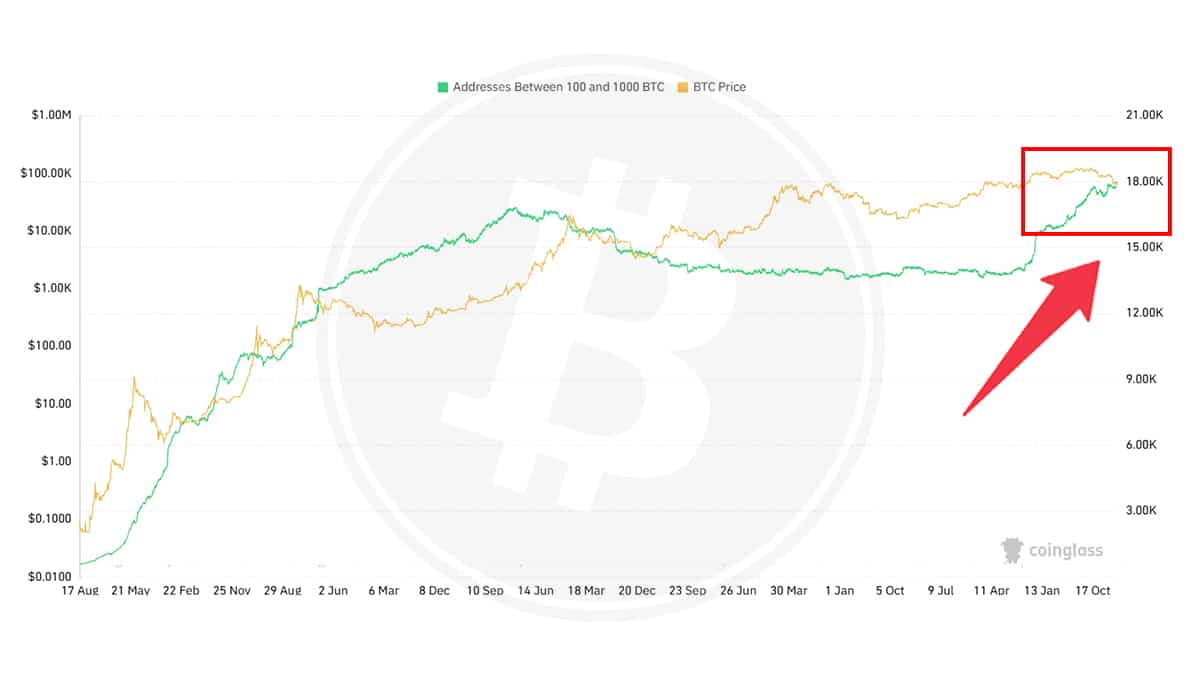
Key Highlights
- The 100–1,000 BTC cohort stands at 17,970 addresses, up +189 weekly and +220 monthly, with +1,998 (+11.12%) over the past year.
- While sharks expand, whales (1K–10K BTC) dipped by -36 monthly to 1,921 addresses, humpbacks (>10K BTC) rose modestly by +3 in February, and shrimps (<1 BTC) surged +264,524 monthly, highlighting redistribution from weaker to steadier hands.
- Sharks control ~5.13 million BTC, with opportunistic additions during the $60K–$70K range, contrasting retail exits and pointing to potential longer-term confidence despite macro pressures.
Amid Bitcoin’s volatile February ride, where its price dipped toward $60,000 before stabilizing near $66,000–$70,000, on-chain data reveals a steady build-up among mid-tier holders.
Addresses holding 100 to 1,000 Bitcoin (BTC), commonly dubbed “sharks,” continue showing resilience and gradual growth, even as retail sentiment sours and larger whales display mixed behavior. Fresh figures from multiple trackers place the current count of shark addresses (100–1,000 BTC) near 17,970 as of early March 2026.
Shark addresses hover near record highs
Data from Newhedge, showing Bitcoin address distribution, lists 17,970 shark addresses, up +189 over the past week and +220 over the past month. Over the longer term, the cohort has added nearly 2,000 addresses in the past year, a solid +11.12% increase.
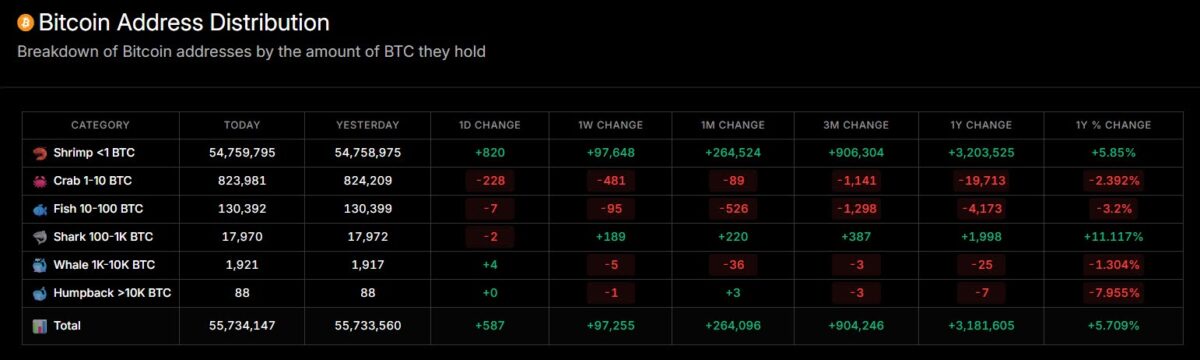
Meanwhile Whales (1K-10K BTC) have declined by 36 and Humpback ( >10K BTC) have remained decent, seeing merely an increase of 3 in February. The Shrimp (holding less than 1 BTC) addresses, however, have increased by 264,524 during the period.
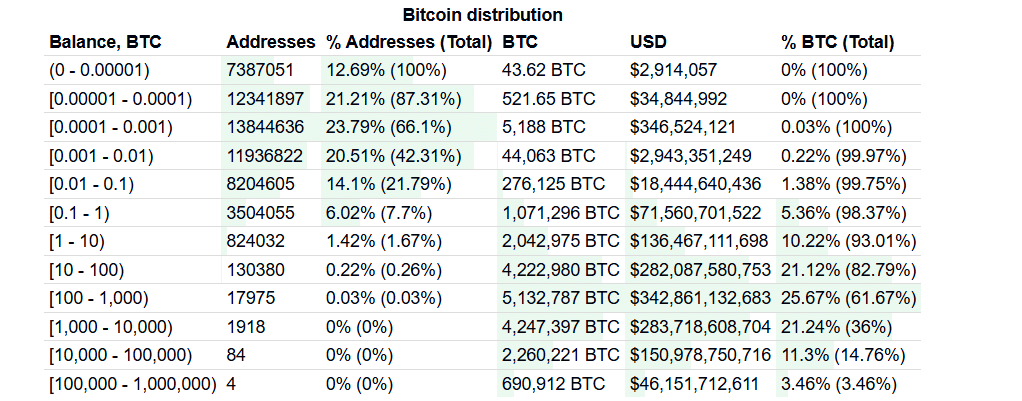
BitInfoCharts’ rich list distribution band aligns closely, reporting that Bitcoin Shrimps control approximately 5,132,686 BTC, equating to roughly 25.67% of Bitcoin’s total supply. This hefty slice underscores the influence of these sophisticated participants.
Earlier reports from late February highlighted the cohort pushing toward or hitting around 18,000 addresses, described as a new all-time high for the specific 100–1,000 BTC band. While the exact peak figure varies slightly by source and snapshot timing, the trend points to consistent expansion through February’s market turbulence.
Accumulation signals amid redistribution
The shark cohort’s address growth contrasts with flatter or declining trends in larger whale bands. Newhedge data shows the 1,000–10,000 BTC group at 1,921 addresses, with minor weekly and monthly losses. Humpback holders (>10,000 BTC) remain stable at low double digits.
Broader context from on-chain commentary suggests February saw mid-tier sharks and some whales opportunistically adding during dips. Certain 30-day windows reportedly featured the 100–1,000 BTC group adding tens of thousands of BTC, as per Coinglass data.
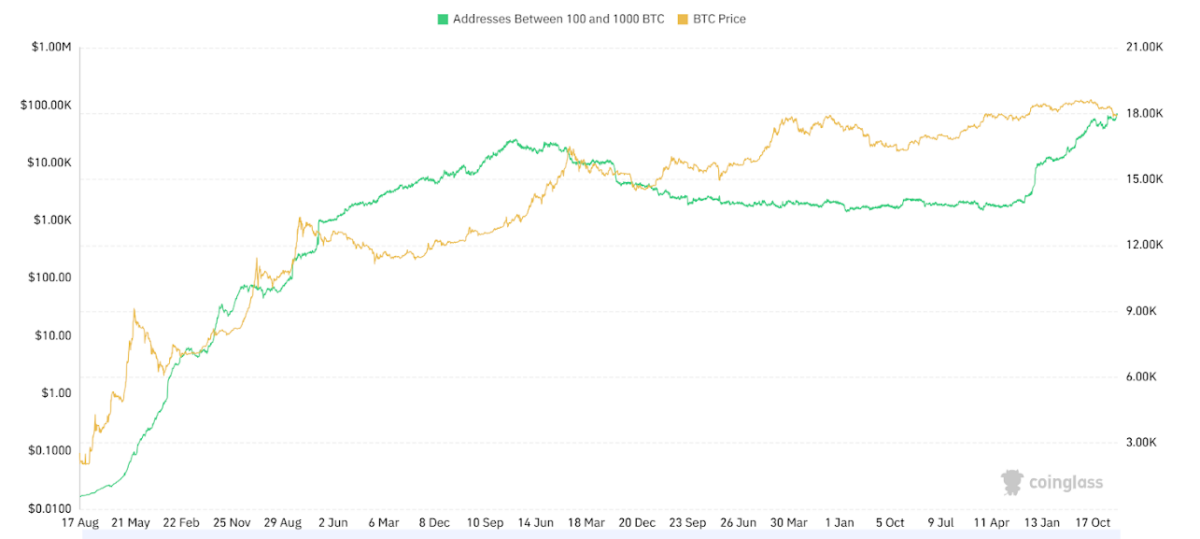
This pattern fits a classic narrative: weaker hands distribute during fear, while experienced mid-to-large holders accumulate quietly, often shifting supply to cold storage and tightening available spot liquidity over time.
What it means for Bitcoin’s path ahead
The growing Sharks participation, especially nearing or touching record address counts, is frequently viewed as bullish by analysts. These holders tend to exhibit strong conviction, rarely panic-selling, and their increasing numbers can signal confidence in longer-term value despite short-term price pressure.
At the time of publishing, Bitcoin was trading near $67,100—up decently 1.2% in the past 24 hours.
With Bitcoin still consolidating and geopolitical/macro headwinds lingering, the quiet stacking by sharks offers a counterpoint to retail exits. If this trend holds and larger players join more aggressively, it could likely lay groundwork for renewed upward momentum later in the cycle.
For now, the data paints February as a period of redistribution to steadier hands. Whether that translates to price strength depends on sustained inflows, reduced leverage, and easing external risks.
Also read: Bitcoin ETFs Snap Losing Streak, $458M Inflow Ignites March Rally