Key Highlights
- Ukraine has restricted access to Polymarket, classifying it as unlicensed gambling.
- The ban follows controversy over war-related bets tied to the Russia–Ukraine conflict.
- The move adds to growing global pressure on prediction markets operating in legal gray zones.
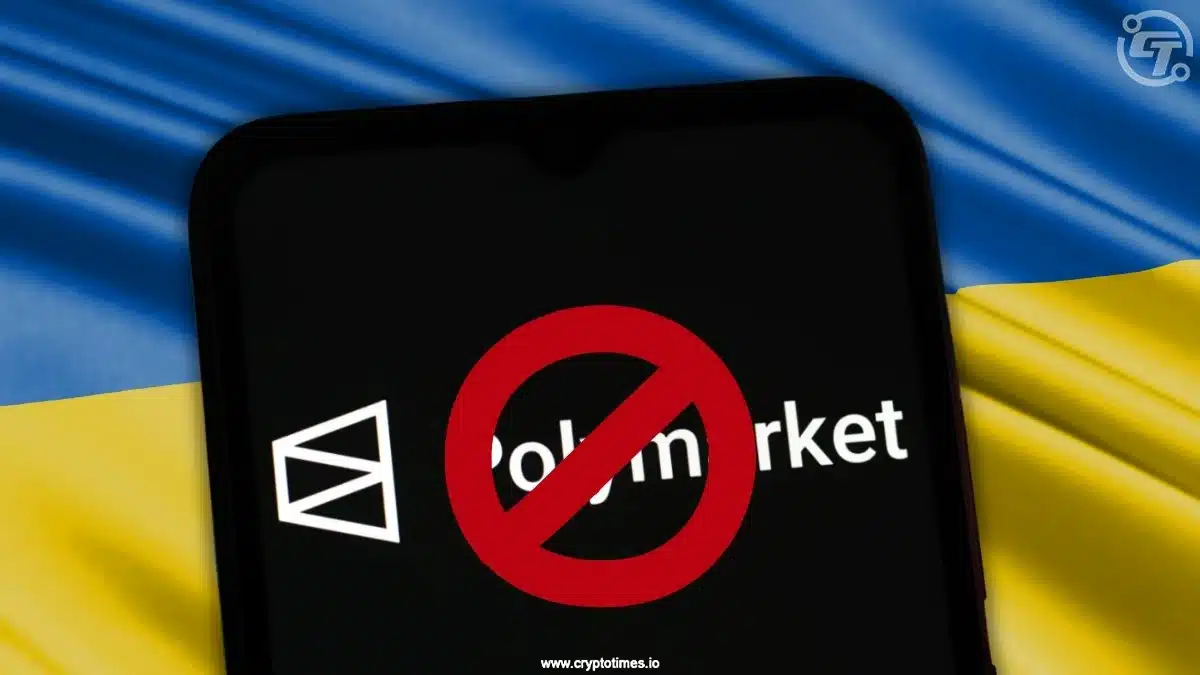
Ukraine has moved to restrict access to prediction market platform Polymarket, adding the high-profile forecasting site to its official list of banned online resources. The decision follows a ruling by the country’s telecom regulator, which treated the platform as unlicensed gambling.
The measure was enacted under Resolution No. 695 by the National Commission for State Regulation of Electronic Communications (NCEC), though enforcement has been inconsistent so far. While some Ukrainian users report that the site is already inaccessible, others can still reach Polymarket without apparent restrictions, highlighting the uneven rollout of the ban.
Gambling laws shape the decision
Ukraine’s stance is shaped by regulatory history. Gambling was outright banned in 2009 after a deadly fire in a gambling hall, pushing both offline and online betting underground. That ban only eased in 2020, when Ukraine reopened the market under tight control, with heavy licensing, age restrictions, and capital hurdles designed to keep operators on a short leash.
Since re-legalization, regulators have had little tolerance for platforms playing regulatory limbo. Prediction markets like Polymarket sit right in that gray zone, and in Kyiv’s view, betting on future outcomes is still gambling unless a license says otherwise.
War-related bets fuel backlash
Polymarket’s problems in Ukraine are not purely technical. The platform recently drew criticism from local media and lawmakers for allowing bets tied to the Israel-Iran strike, including speculative markets on military outcomes and the occupation of cities in eastern regions.
By late 2025, more than 240 Ukraine-related markets had reportedly been settled on Polymarket, with volumes exceeding $270 million. Another 120 active markets tied to the conflict reportedly carried over $140 million in open interest.
A global platform meets local limits
Founded in 2020 by Shane Coplan, Polymarket lets users trade “yes” or “no” shares on real-world events, with prices reflecting collective probabilities rather than bookmaker odds.
But that same model has repeatedly put Polymarket at odds with regulators worldwide. Authorities in several jurisdictions argue that peer-to-peer structure does not exempt the platform from gambling laws, especially when markets touch elections, wars, or law enforcement actions.
Pressure builds on prediction markets
Ukraine’s move adds to a broader reckoning for prediction markets as they grow in size and influence. Regulators are far less willing to look the other way when an unlicensed platform is packaging wars, elections, and crises as tradable assets.
For Ukrainian users, access is already fading in real time. The signal from Kyiv is clear that, without a gambling license, even crypto-flavored prediction markets are out.
Also read: Crypto Firm BitGo Plans US IPO Valued Up to $1.96B