Key Highlights
- Do Kwon gets 15 years as Terraform’s $40B crypto collapse exposes fraud, market manipulation, and risks in algorithmic stablecoins.
- The ruling shows regulators will hold crypto founders accountable when innovation crosses into deception and investor trust is broken.
- Terraform’s collapse highlights how misrepresented technology and secret market manipulation can devastate investors in decentralized finance projects.
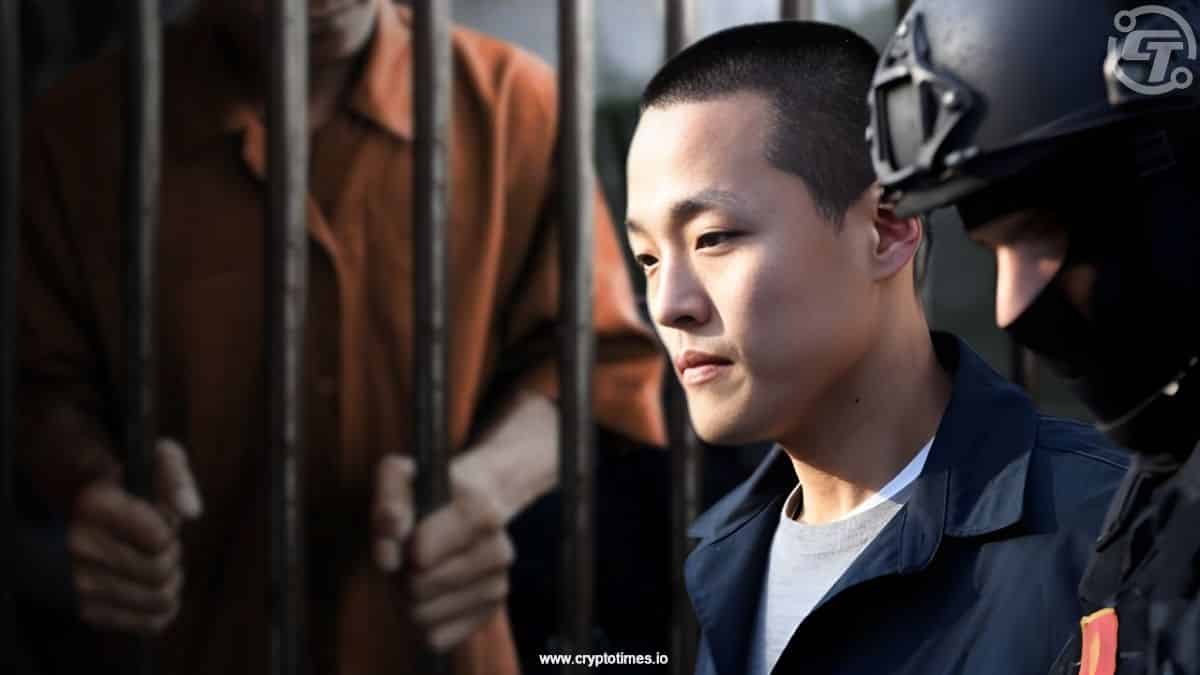
Do Kwon, the Co-Founder of Terraform Labs, has been sentenced to 15 years in prison for running one of the biggest cryptocurrency frauds ever. The ruling, issued by U.S. District Judge Paul A. Engelmayer in New York, comes after the collapse of Terraform Labs and its digital currencies, TerraUSD (UST) and LUNA, which wiped out around $40 billion in investor money.
Kwon, who started Terraform Labs in 2018, pled guilty in August 2025 to wire fraud and conspiracy to commit securities and commodities fraud, after being extradited from Montenegro on December 31, 2024.
According to a press release from the U.S. Attorney’s Office, Southern District of New York, Kwon misled investors about how Terraform’s stablecoins worked. He claimed the Terra Protocol could keep UST at $1 automatically and that Terraform was fully decentralized. In reality, the products didn’t work as promised, and Kwon manipulated the market to boost cryptocurrency values for his own gain.
The mechanics of the Terraform fraud
Kwon employed various trickery tactics to deceive the investor audience as he created an impression of stability. First, he misrepresented facts about the Terra Protocol as having single-handedly guaranteed UST at $1 following its drop below 92 cents in May 2021.
However, he had secretly conspired with a high-frequency trading house to prop up UST. Therefore, the story about algorithmic stability was completely a product of deception.
Secondly, Kwon misrepresented the Luna Foundation Guard (LFG) as an independent organization whose role it was to protect UST’s peg. However, Kwon still controlled LFG and stole hundreds of millions worth of assets.
It laundered these money proceeds via intricate money transfers aimed at obscuring ownership, position, and source. Furthermore, Kwon manipulated a Terra-based investment app named Mirror Protocol with manipulated user statistics and automated trading bots influencing synthetic asset prices.
Moreover, Kwon misleadingly asserted that there were billions of dollars worth of transactions taking place on the Terra blockchain supporting the Korean payment service Chai. It is noteworthy that Chai relied on conventional payment systems, and Terraform solely replicated these on its blockchain. Moreover, Kwon funded this deception with Genesis Stablecoins at the inception of Terraform.
Collapse and legal pursuit
By May 2022, UST’s peg broke again, and both UST and LUNA collapsed, resulting in over $40 billion in losses. Despite claiming cooperation with regulators, Kwon secretly sought political protection abroad.
In March 2023, authorities arrested him in Montenegro for attempting to use a fraudulent passport. In addition to prison, Kwon, 34, must forfeit more than $19 million in proceeds from his schemes, including Terraform-related assets.
U.S. Attorney Jay Clayton praised the coordinated effort between the FBI, the Department of Justice, and foreign justice ministries, noting, “Fraud is fraud whether it takes place on our streets, in our securities markets, or in digital asset ecosystems.” Prosecutors initially requested a 12-year sentence under Kwon’s plea deal, but the judge imposed a 15-year term, reflecting the “epic” scale of his fraud.
Reactions from the crypto community
The case has caused a stir on social media. Dippy.eth pointed out implications with regards to LUNA tokens, some even expecting an uptick in market value should Kwon be pardoned. In defense of Kwon, Moosa Pir Akhunzada said, “Every investor knew the risk of investing in innovative technologies like LUNA… In the crypto world he is totally innocent.”
At the same time, TM expressed concern about what message it might send to crypto entrepreneurs, stating, “Most great founders broke rules, but it’s clearly visible today that there’s a line between innovation and fraud.”
Do Kwon’s prison term emphasizes challenges within cryptocurrencies and involving regulators. The collapse of Terraform Labs illustrates that algorithmic stablecoins and DeFi projects might end up failing because they are apparently not well-regulated. It acts as a warning that innovation should not be associated with disregarding rules and ethics.
Also Read: Belarus Bans Citizens From Accessing Foreign Crypto Exchanges