In the growing digital ecosystem, having reliable blockchain data is very important for decentralized applications. As the crypto ecosystem is expanding, the need for fast and trustless data retrieval tools has grown.
Old methods of gathering blockchain data involve centralized intermediaries, which are against the principles of decentralization. Hence, The Graph (GRT) was introduced, which is a decentralized protocol developed to index and query blockchain data.
In this article, we will go through the basics of the Graph protocol, which includes what it is, how it works, who the key participants are, and the recent developments in the protocol.
What is Graph (GRT) Protocol?
The Graph is an open-source decentralized protocol that enables the indexing and querying of blockchain data, making it available for developers to build decentralized applications. The protocol was founded by Yaniv Tal, Brandon Ramirez, and Jannis Pohlmann in 2018.
They identified the challenges faced by developers in accessing blockchain data and hence created the Graph protocol to simplify data querying for decentralized applications (dApps).
The protocol allows for the creation of subgraphs, which are open APIs that define how to index and query data from a specific blockchain ecosystem. These subgraphs can be queried using GraphQL, the query language for computer APIs, enables efficient data retrieval.
How Does The Graph (GRT) Work?
The Graph works by indexing blockchain data and organizing it into subgraphs and developers have the option to create their own subgraph by specifying the data they want to index and how it should be stored. Once the specified data of subgraph is indexed, it can be queried using GraphQL which helps decentralized applications to retrieve the necessary data.
The process involves the following steps:
- Data Sources: The graph supports indexing data from various blockchain ecosystems like Ethereum, BNB, Solana, etc.
- Subgraphs Development: Developers can build subgraphs manifests that define the smart contracts, events, data, etc. to be indexed.
- Indexing: After the development of Subgraphs, the Graph nodes process the subgraphs manifest and index the data and events mentioned in the subgraphs from the specified blockchain ecosystem.
- Querying: Once the data is indexed, decentralized applications can query the index data using GraphQL and use the information needed for their functioning.
Who are the Key Participants of the Graph Protocol?
Below are the six major participants in the Graph protocol:
- Indexers: These are the Node operators who are tasked with indexing and querying the signaled subgraphs’ data. They stake GRT tokens to provide services and earn rewards.
- Delegators: They support Indexers by delegating their GRT tokens, contributing to network security and earning rewards.
- Curators: These developers identify high-quality subgraphs to be included in The Graph’s index.
- Fishermen: They are the participants who validate the accuracy of query responses in the network.
- Arbitrators: They help in managing the security of the network by determining whether or not an Indexer has engaged in malicious activity.
- Consumers: These are developers and applications that use data extracted by The Graph protocol, paying query fees in GRT tokens.
Graph Protocol Use Cases
The Graph protocol supports more than 70 blockchain networks whose data can be used in various sectors of the blockchain ecosystem, which are as follows:
- DeFi Use: The DeFi ecosystem uses The Graph protocol as a real-time data provider to facilitate indexing for platforms that track metrics such as token prices, liquidity pools, and trading volumes more efficiently.
- NFT Domain: The Graph protocol is used by NFT platforms for metadata indexing and querying. Metadata items, the token history, and transaction details are all recorded on the blockchain. A good example here is that, with the help of subgraphs, OpenSea monitors all transactions: changes in ownership, price histories, and collection statistics.
- Integrating Off-Chain Data: The Graph protocol via subgraphs also allows developers to integrate off-chain data sources. This feature is of much help to the app developers who desire the same end as they are able to create serverless applications capable of connecting and processing data from different sources such as IPFS and other decentralized storage networks.
- Indexing on Various Blockchains: The Graph protocol provides support for indexing on a wide range of blockchain networks like Ethereum, NEAR, Arbitrum, Optimism, Polygon, Avalanche, Celo, Fantom, and Cosmos. Thus, being able to work on different chains simultaneously, developers can build applications that are able to receive and combine data from totally different blockchain systems.
GRT Token and its Utility
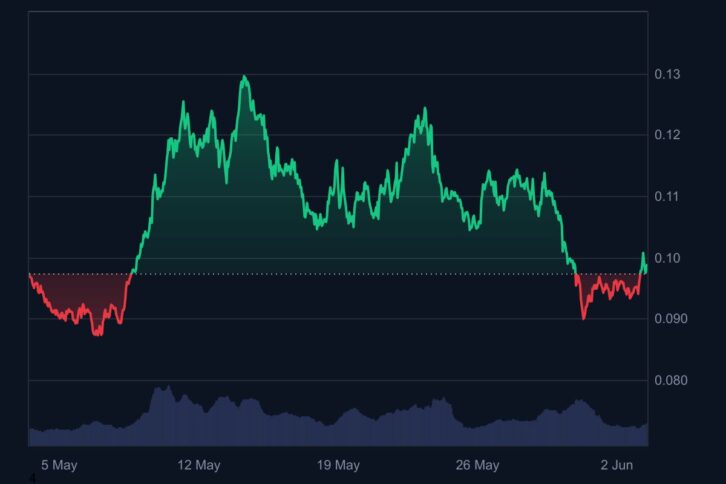
GRT is the native token of the Graph protocol, was priced at $0.09874 at press time with a market cap of $972.64 million, according to CoinMarketCap. It boasted a circulating supply of 10.8 billion GRT tokens. It has various utilities within the ecosystem, which are as follows:
- GRT Tokens are used by Indexers to stake tokens to provide indexing and query services which ensure data integrity and earning rewards.
- Delegators delegate their GRT tokens to support indexers in contributing to network security and earning a share of the fees in GRT.
- The GRT tokens are deposited by Curators to signal the value of a particular subgraph, thus guiding Indexers on which data should be indexed.
- The Consumers pay GRT tokens to use the indexed data as well as compensate Indexers for their services.
- GRT token holders can participate in the protocol’s governance, thus impacting decisions and future developments.
Conclusion
The Graph (GRT) protocol can be regarded as a foundational pillar for Web3, which helps developers to access blockchain data and build powerful decentralized applications (dApps). Its decentralized indexing model ensures transparency and scalability across multiple blockchain ecosystems. As blockchain adoption rises, tools on The Graph protocol will be essential in bridging data accessibility with trustless infrastructure.
Also Read: What is EOS in Crypto? Explore EOS Blockchain and Its Use Cases
Disclaimer:
Some elements of this content may have been enhanced with the help of our artificial intelligence (AI) assistants for purposes such as basic refinement, review, image generation, and translation to deliver high-quality news in a shorter time frame. However, all AI-assisted content is reviewed and approved by our team to ensure accuracy, fairness, and editorial integrity.