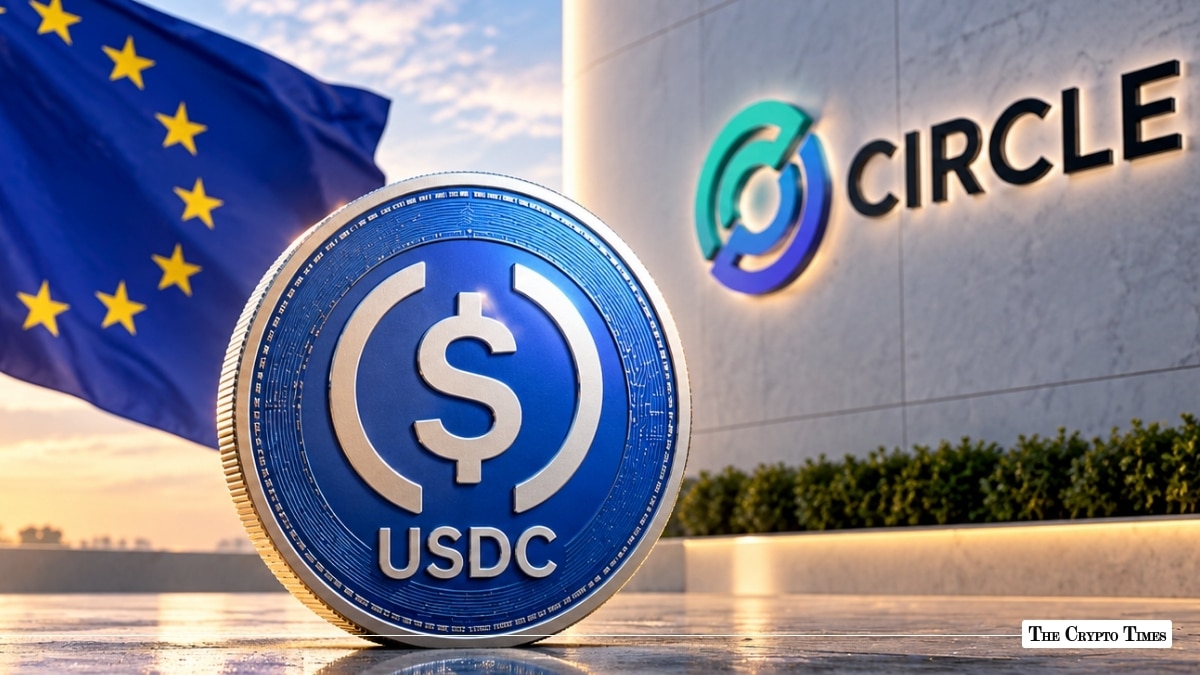
Circle’s USDC has become the first stablecoin to receive the European Union’s significant e-money token (EMT) classification under the Markets in Crypto-Assets Regulation (MiCA), bringing specified aspects of its financial supervision under the European Banking Authority (EBA).
The EBA announced the classification on October 14 after assessing USDC against the criteria established under MiCA. The designation will trigger a change in supervisory responsibilities from November 12. The EBA said that 45 e-money tokens have been notified under MiCA, with USDC the first to be classified as significant.
The new arrangement will divide supervisory responsibilities between the EBA and France’s Autorité de Contrôle Prudentiel et de Résolution (ACPR), which currently oversees Circle’s regulated activities in the country.
EBA Takes Charge of USDC Reserves
From November 12, the EBA will supervise Circle Internet Financial Europe SAS’s compliance with requirements covering own funds, reserve assets, liquidity, and recovery and redemption plans for USDC. These safeguards are intended to ensure that the issuer maintains the required financial resources, manages the assets supporting its stablecoin and can meet redemption obligations under applicable regulations.
The ACPR will retain responsibility for other areas, including corporate governance, qualifying ownership interests, assessments of management suitability, outsourcing arrangements and conflicts of interest.
Both regulators will work together to manage the transition and share information where needed. The EBA has also signed a memorandum of understanding with the New York State Department of Financial Services (NYDFS) to support cooperation on cross-border stablecoin activities.
The agreement will help the authorities coordinate their oversight of USDC, which is issued through separate entities in Europe and the United States. Both regulators will continue to handle their own responsibilities.
The division of supervisory duties follows Article 117 of MiCA, which sets out the EBA’s role in overseeing significant e-money tokens while allowing national regulators to retain their responsibilities.
The decision does not transfer all supervision of Circle to the EBA. Instead, the European authority will focus on specific financial requirements, while the ACPR continues overseeing other areas of Circle’s European operations.
Circle’s Earlier MiCA Approval
Circle already had approval to issue stablecoins in Europe before the latest decision. In July 2024, its French subsidiary received an electronic money institution (EMI) license from the ACPR, allowing it to issue USDC and its euro-backed stablecoin, EURC, under EU rules.
Circle was the first global stablecoin issuer to receive this type of approval under the new European framework. Its French subsidiary issues USDC in the EU, while a separate Circle entity handles issuance in the United States.
The new classification does not give Circle a new license. Instead, it brings additional supervision because USDC has been designated as a significant token.
However, the EBA’s latest decision does not change the existing rules or adopt Circle’s proposals. It classifies USDC as a significant e-money token under the current MiCA framework and sets out how the token will be supervised.
Circle Pushes for MiCA Changes
The classification also comes as Circle pushes for changes to parts of the EU’s stablecoin framework. Earlier in October, Circle asked European policymakers to review the rules requiring stablecoin issuers to keep part of their reserves in bank deposits. The company said these requirements could expose issuers to risks if their banking partners face financial trouble.
Circle pointed to the 2023 collapse of Silicon Valley Bank when around $3.3 billion of USDC reserves became temporarily inaccessible. The company wants reserve rules to focus more on liquidity instead of fixed bank deposit requirements.
The EBA’s latest decision does not change the existing rules or adopt Circle’s proposals. It applies the current MiCA framework to USDC following its significant-token classification.
What Happens Next?
The EBA will assume its designated supervisory responsibilities for USDC on November 12, 2026, while the ACPR continues overseeing governance and other areas of Circle’s European operations.
The EBA will also continue assessing whether e-money tokens meet the criteria for significant classification under MiCA. The outcome of future assessments could determine whether other tokens are brought under the same supervisory framework.
For Circle, the change means closer direct oversight of USDC’s financial safeguards in Europe, alongside continued supervision by French authorities in their respective areas of responsibility.
Also Read: Qivalis Secures Dutch Approval for Euro Stablecoin Backed by 37 European Banks