TeleMoney (TM), a new cryptocurrency built on Solana, surged 4,896% in 24 hours. According to data from CoinGecko (at 18:08 UTC), TM traded at $0.02579, up 4,896.1% in the past 24 hours, making it the top gainer in the crypto market
The surge has pushed its market cap to around $24.79 million, with its trading volume reaching $62.87 million.
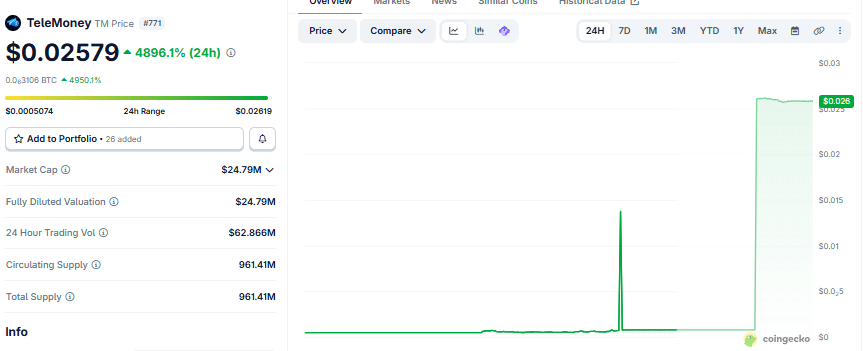
The sharp rally has drawn attention to the project’s connection with Telegram and its reported platform activity. However, its short trading history and concentrated token holdings raise questions about market liquidity and the potential for sharp price swings.
Why is the token surging?
TeleMoney’s connection with Telegram and its GRAM token has drawn attention to the project. However, some market participants appear to have associated TM with Telegram itself. There has been no indication or announcement from Telegram establishing TM as an official Telegram token.
TeleMoney aims to connect token launches on pump.fun with payments through Telegram usernames. In its first post on X on October 10, the project’s official account said creators could launch coins on pump.fun and redirect creator fees to any Telegram username. The project also pointed to Telegram’s GRAM feature, which allows users to send GRAM tokens using a username.
On October 12, TeleMoney reported that 108 coins had been launched through its platform, generating 262.8 SOL in creator fees. It also said that 17,411.2 GRAM tokens had been paid out. Recent additions include Meteora launches, private launches, channel payouts, and referral features.
Crypto commentator Mando Maxel also discussed the project on X. He noted that TeleMoney says it uses platform revenue to buy back and burn TM tokens. However, he said adoption and steady platform activity would be important tests for the project.
These updates provide details about TeleMoney’s features and reported activity. However, they do not independently establish what caused TM to surge 4,896%.
What buyers should know before investing
According to Solscan data (at 18:08 UTC), the number of TM holders increased from 3,340 on October 11 to 3,370 on October 12, a net increase of 30 holders over 24 hours.
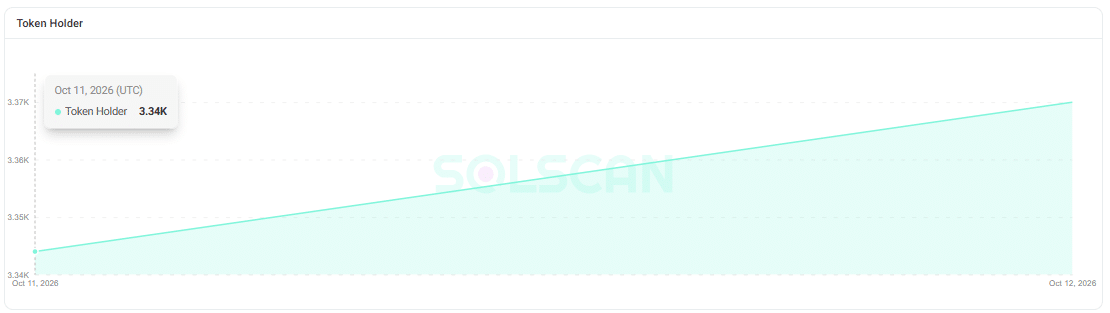
An increase in holder numbers can indicate that more wallets are holding a token, but it does not necessarily mean every additional wallet purchased TM. Some wallets may have received tokens through transfers, so this increase alone does not explain the rally.
Token distribution is another factor to watch. Solscan data shows that the top 10 holders control approximately 24.21% of TM’s circulating supply, while the top five account for 18.01%. This means a relatively small group of wallets controls a substantial share of the reported supply. If some of these holders sell large amounts, the additional selling pressure could affect the token’s price, particularly if available liquidity is limited.
Why does concentrated ownership matter?
Consider a trader buying TM at $0.02579 after its 4,896% rally, expecting the price to continue rising.
Some early holders may have bought the token at a much lower price. If they decide to sell large amounts to take profits, the additional supply could push the price down. If there are not enough buyers to absorb those sales, later investors could be left holding TM at a much lower price than they paid. In this situation, new buyers could effectively provide exit liquidity for earlier holders. Their purchases create demand that allows existing holders to sell their positions.
A pump-and-dump happens when a token’s price is driven up to attract buyers before holders sell into the demand, leaving later buyers with losses when the price falls.
However, concentrated ownership alone does not establish that a token is being manipulated. The key question is whether major holders are selling into market demand and whether the available liquidity can absorb those transactions.
Could TM be a pump-and-dump?
The token’s short trading history adds to the uncertainty. According to Solscan, TM launched on October 10, leaving only two days of trading history as of October 12. This provides limited information about how the token may behave if buying demand weakens or early holders begin selling.
The available data does not confirm that TM is part of a pump-and-dump scheme. However, its rapid price appreciation, concentrated ownership, and limited trading history warrant caution.
Traders assessing the token can monitor whether large holders are transferring or selling their positions, who controls the largest wallets, and whether sufficient liquidity is available to absorb large orders.
Also Read: GRAM Rises 8.7% as Telegram Expands Money Wallet Access