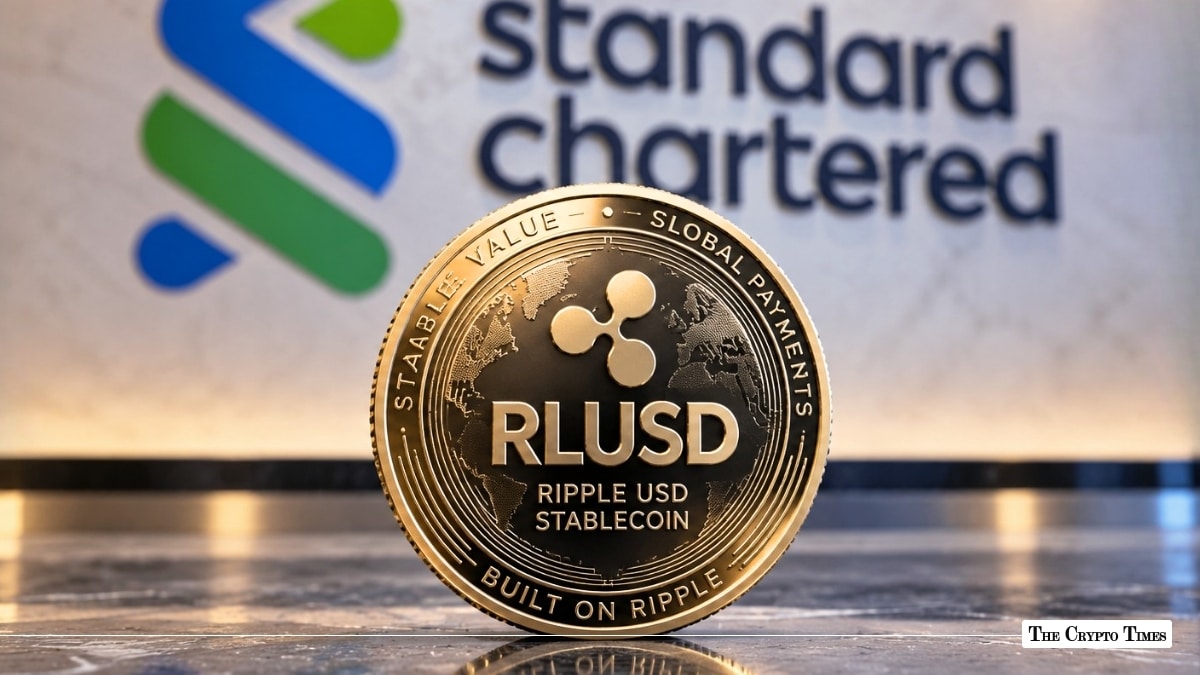
Global bank Standard Chartered has launched institutional custody for Ripple USD (RLUSD), the U.S. dollar stablecoin issued by blockchain firm Ripple, on the XRP Ledger (XRPL). The bank also said it is working with Ripple and LMAX Group to let institutional clients use RLUSD as trading collateral without moving the tokens out of bank custody.
Standard Chartered announced the launch on Monday, October 12, 2026, in a statement issued from Singapore. The service is available through Standard Chartered Bank’s Dubai International Financial Centre (DIFC) Branch, which is regulated by the Dubai Financial Services Authority (DFSA). Eligible clients now have access to the bank’s digital asset custody infrastructure for RLUSD.
A stablecoin is a cryptocurrency designed to hold a steady value by tracking a reference asset, in this case the U.S. dollar. Custody refers to the safekeeping of assets by a regulated third party. Standard Chartered describes the XRPL as a public blockchain built for fast, low-cost settlement that provides the underlying infrastructure for RLUSD to move between institutional counterparties.
How the RLUSD Collateral Plan Would Work
Under the planned integration, the three firms intend to enable RLUSD as eligible collateral for agreed LMAX Group products and solutions across trading and collateral management. Collateral is the asset a trader pledges to secure open positions. LMAX Group is a global cross-asset marketplace for foreign exchange (FX) and digital assets.
The plan rests on Standard Chartered’s collateral mirroring model, which LMAX Group has agreed to adopt. Clients would keep RLUSD with the bank while the value of eligible collateral is mirrored to LMAX for trading. According to the bank, the arrangement is expected to reduce transfer-related operational risk, optimize counterparty exposure and improve capital efficiency. Counterparty risk is the risk that the other side of a trade fails to meet its obligations.
Standard Chartered first rolled out collateral mirroring with crypto exchange OKX on April 10, 2025, as a pilot within the Dubai Virtual Asset Regulatory Authority (VARA) framework. In that programme, the bank acted as independent custodian in the DIFC, and Franklin Templeton was named the first money market fund offered.
What Standard Chartered, LMAX, and Ripple Executives Said
Waqar Chaudry, Global Head of Digital Assets, Securities Services, Transaction Services at Standard Chartered, said: “Institutional clients want to participate in digital asset markets without compromising on how their assets are safeguarded or how risk is managed. The ecosystem must therefore make it easier for clients to hold assets securely, access liquidity and deploy collateral efficiently within trusted frameworks. By integrating our capabilities with Ripple and LMAX, we can help clients incorporate digital assets more confidently into their broader financial activities.”
Luke Dorney, Head of Custody, Digital Assets at LMAX Group, said: “RLUSD is an increasingly important component of institutional digital asset markets. By agreeing to adopt Standard Chartered’s collateral mirroring model, we are providing clients with greater flexibility in how they hold and deploy RLUSD across our cross-asset marketplace, while supporting the custody and risk management standards institutions expect.”
Jack McDonald, Senior Vice President (SVP), Stablecoins at Ripple, said: “RLUSD was built for exactly this kind of institutional use case. Our customers want the efficiency of a regulated stablecoin without giving up the custody standards they already trust. Bringing together RLUSD on the XRP Ledger, Standard Chartered’s custody capabilities and LMAX Group’s institutional trading infrastructure creates a practical path for institutions to put stablecoins to work across global markets.”
Ripple and LMAX Build on January Partnership
The bank described the move as the next phase of a collaboration to support institutional RLUSD adoption. Ripple and LMAX Group announced a multi-year partnership on January 15, 2026, under which LMAX agreed to integrate RLUSD as core collateral across its institutional trading infrastructure. As part of that agreement, Ripple committed $150 million in financing to support LMAX’s cross-asset growth strategy. The same announcement said LMAX Group recorded $8.2 trillion in institutional exchange volumes in 2025.
LMAX Group operates LMAX Exchange, LMAX Global and LMAX Digital, serves clients in over 100 countries and runs matching engines in London, New York, Tokyo and Singapore. Ripple, founded in 2012, holds over 85 licenses and offers payments, custody, prime brokerage and treasury management services, per the same release.
RLUSD has also featured in a Monetary Authority of Singapore (MAS) BLOOM initiative pilot focused on programmable cross-border trade settlement.
Standard Chartered Widens Its Crypto Footprint
Standard Chartered is an international banking group present in 55 markets, and Standard Chartered PLC is listed on the London and Hong Kong stock exchanges. The bank has steadily expanded its digital asset services, including spot Bitcoin and Ethereum trading for institutional clients. It has also been reported to be preparing a crypto prime brokerage under its venture arm, SC Ventures.
What Comes Next
The RLUSD custody service is live, but the collateral integration with LMAX Group has not yet launched. The bank said the agreed future capabilities remain subject to final documentation, successful testing, applicable laws and regulations, internal approvals and jurisdictional readiness. No launch timeline was disclosed, and the bank said further details will be shared as implementation progresses.
Also Read: Ripple Weighs Fairshake Funding After Chris Larsen Donates $4M to Sherrod Brown