Key Highlights
- Ripple has joined BLOOM, the MAS’s initiative to extend settlement capabilities in tokenized bank liabilities and regulated stablecoins, partnering with Unloq.
- The pilot uses Unloq’s SC+ platform to integrate trade obligations, settlement conditions, and financing workflows into a unified execution layer.
- The BLOOM participation signals that MAS considers the RLUSD-on-XRPL stack credible enough for regulated experimentation.
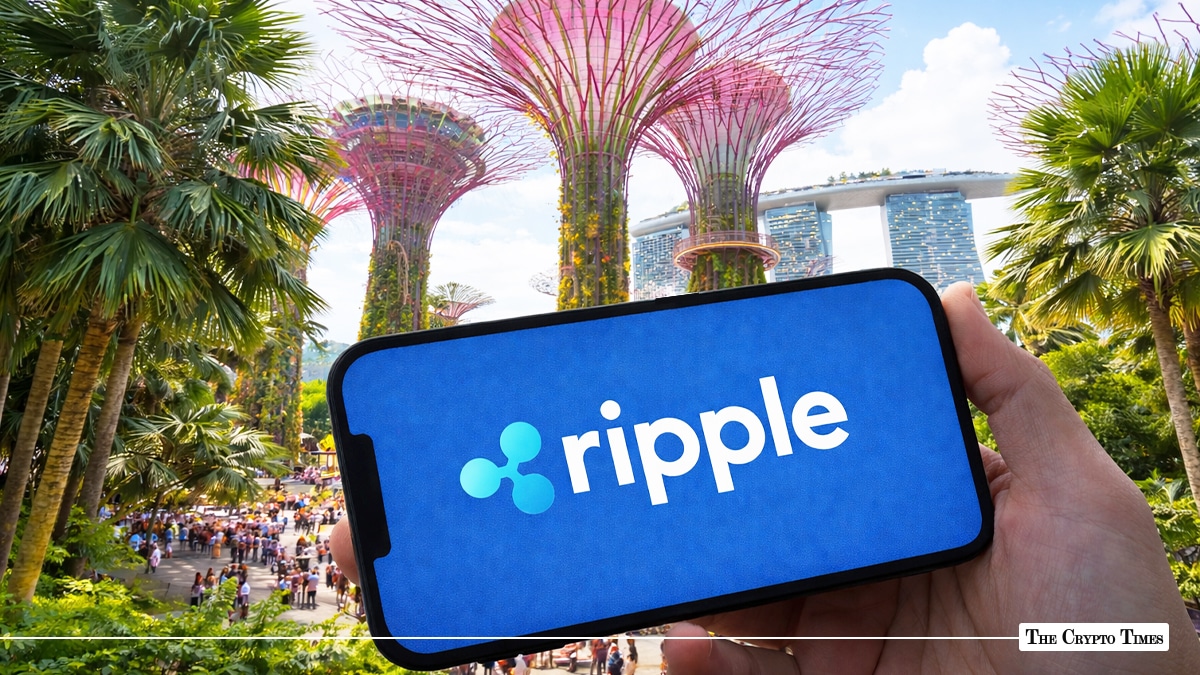
Ripple has joined BLOOM, the Monetary Authority of Singapore’s (MAS) flagship initiative for advancing settlement infrastructure using tokenized bank liabilities and regulated stablecoins, marking a significant step in the company’s push to position RLUSD as an institutional-grade programmable settlement asset.
Announced on March 25, the collaboration pairs Ripple with Unloq, a leading supply chain finance technology provider, to pilot a use case aimed at transforming cross-border trade settlements. The project will use Unloq’s SC+ trade finance infrastructure, which integrates trade obligations, settlement conditions, and financing workflows into a unified execution layer, with Ripple’s XRP Ledger (XRPL) and Ripple USD (RLUSD) stablecoin handling the actual money movement.
Fiona Murray, Managing Director of Asia Pacific at Ripple, said, “Ripple is incredibly excited to be part of BLOOM, an initiative that perfectly aligns with our commitment to compliant, real-world utility for blockchain technology.”
Payments that think for themselves
The core innovation in the Ripple-Unloq pilot is programmable settlement—payments that are released only when predefined commercial conditions are met, such as shipment verification. This structure eliminates the layers of manual verification, documentary credits, and correspondent banking relationships that currently slow cross-border trade to a crawl.
In traditional trade finance, an importer in one country and an exporter in another rely on a chain of banks, letters of credit, and manual document checks to ensure goods are shipped before payment is released. This process can take days or weeks and is a particular burden for small and medium-sized enterprises that lack the banking relationships and credit profiles to access affordable trade financing.
Unloq’s SC+ platform bundles these workflows into a single smart-contract-driven execution layer. Built on XRPL, the system uses RLUSD to automatically trigger payments the moment shipment is verified. This structure enhances risk transparency — both parties can see exactly what conditions must be met — and supports improved access to financing for SMEs by providing lenders with real-time visibility into the trade flow.
“BLOOM represents an important step toward modernising trade finance infrastructure in a controlled and regulated environment,” said Letitia Chau, President and Chief Risk Officer of Unloq. “Through SC+, we are demonstrating how digital settlement rails can be integrated into existing trade and financing workflows without disrupting commercial relationships.”
What is BLOOM
BLOOM — Borderless, Liquid, Open, Online, Multi-currency — was launched by MAS in October 2025 to enable settlement in tokenized bank liabilities and well-regulated stablecoins. The initiative builds on Project Orchid, which explored use cases for a digital Singapore dollar through more than 10 successful trials since 2021, and complements MAS’s Project Guardian for asset tokenization and the Global Layer One initiative for foundational digital infrastructure.
BLOOM encompasses multiple currencies, including G10 and Asian currencies; domestic and cross-border payments; and wholesale use cases such as corporate treasury management, trade finance, and agentic payments. Its initial focus areas include distribution and clearing of settlement assets, programmable controls to automate compliance checks, and seamless automated transactions.
Initial BLOOM members include global players like Circle, Stripe, DBS, OCBC, Partior, UOB, Ant International, and StraitsX. Ripple’s addition to this roster places it alongside some of Asia’s largest banks and payment infrastructure providers — a credibility signal that matters more for its enterprise pipeline than any exchange listing.
Getting into the program signals that MAS considers the RLUSD-on-XRPL stack credible enough for regulated experimentation, which is significant given Singapore’s position as arguably the most sophisticated regulatory sandbox for institutional digital asset use cases globally.
RLUSD’s growing institutional footprint
The BLOOM pilot is the latest in a rapid sequence of institutional milestones for RLUSD, which has grown from a $132 million market cap at launch in December 2024 to approximately $1.56 billion today. RLUSD is backed by U.S. dollars, short-term treasuries, and other cash equivalents, with monthly third-party audits.
In January 2026, RLUSD went live on Binance with XRP and USDT trading pairs and portfolio margin support. The same month, Ripple partnered with LMAX Group for a multi-year collaboration to integrate RLUSD collateral across institutional trading infrastructure, with Ripple providing $150 million in financing. Mastercard added Ripple to its Crypto Partner Program in March alongside 85+ firms, including Binance, Circle, and PayPal, building on a November 2025 pilot test of RLUSD settlement for credit card payments via Gemini and WebBank.
Ripple’s broader enterprise strategy extends beyond RLUSD. The company completed a $1.25 billion acquisition of prime broker Hidden Road to move post-trade activity onto the XRP Ledger. It received conditional approval for a national trust bank charter from the Office of the Comptroller of the Currency (OCC). And on March 18, Ripple-backed Evernorth Holdings filed its S-4 with the U.S. Securities and Exchange Commission (SEC) for a $1 billion+ SPAC merger targeting a Nasdaq listing under the ticker XRPN—the most ambitious institutional commitment to XRP to date.
A $32T problem looking for a solution
The choice of trade finance as the BLOOM pilot’s use case is strategically deliberate. Global trade finance volumes exceed $32 trillion annually, yet the underlying infrastructure has barely evolved in decades. Letters of credit, bills of lading, and correspondent banking chains create friction that particularly disadvantages developing-economy exporters and small businesses.
The World Trade Organization has estimated the global trade finance gap at approximately $2.5 trillion. Much of this gap exists because traditional trade finance instruments are too expensive, too slow, and too documentation-heavy for smaller transactions.
Programmable settlement using stablecoins and blockchain rails addresses all three bottlenecks simultaneously: cost drops because intermediaries are reduced, speed increases because settlement is near-instant, and documentation becomes automated through smart contract conditions. If the Ripple-Unloq pilot demonstrates this at scale within MAS’s regulated sandbox, it provides a template that could be replicated across Asia’s trade corridors—exactly the outcome Singapore is designing BLOOM to achieve.
Also Read: Ripple Targets Brazil Growth With Full Payments VASP License