TRON has launched post-quantum cryptography on its testnet, allowing developers and users to test digital signatures designed to withstand potential attacks from powerful quantum computers.
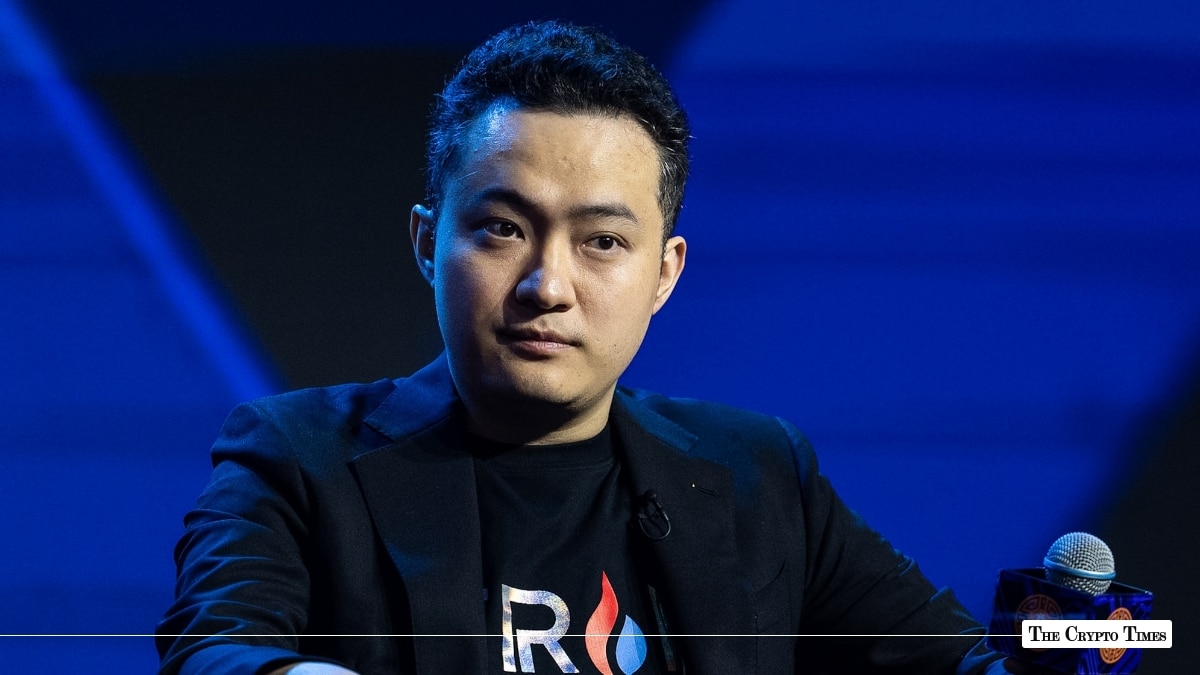
Founder Justin Sun said on October 10 that the network’s post-quantum cryptography was live on testnet and could be brought to mainnet when needed. “We’re closely tracking progress in quantum computing and AI, and we’re ready to bring quantum resistance to mainnet at any time,” Sun said in a post on X.
The announcement signals TRON’s intention to prepare for a potential security problem before it becomes an immediate threat. However, the feature is currently available on testnet, and Sun did not provide a date for its mainnet launch.
TRON Tests Post-Quantum Signatures
According to a technical tutorial shared by X user 0xMoon, the testnet implementation supports two post-quantum signature algorithms: FN-DSA-512 and ML-DSA-44.
The process involves creating a post-quantum wallet, connecting to the Nile testnet and sending test TRX. Developers can then inspect the transaction through a blockchain explorer to see which signature algorithm was used. The raw transaction data also contains a pq_auth_sig field alongside the regular signature, according to the tutorial.
TRON had already activated its post-quantum signature feature on the Nile testnet on July 3, 2026. The launch followed the approval of Committee Proposal No. 20628 on July 2 at 12:10 Singapore time, which enabled FN-DSA-512 as the first supported algorithm.
The July rollout was part of a roadmap Sun outlined in April, which targeted a testnet launch in the second quarter and a potential mainnet rollout in the third quarter of 2026. His October statement indicated that mainnet deployment remained possible, but did not confirm that the upgrade had taken place.
FN-DSA is the standardized name for the Falcon digital-signature scheme, one of three post-quantum signature standards finalized by the U.S. National Institute of Standards and Technology (NIST) in 2024, alongside ML-DSA and SLH-DSA. These algorithms are designed to protect digital signatures against attacks from both classical and quantum computers..
Quantum Risks to Blockchain Security
Today’s blockchain networks rely on cryptography to verify transactions and protect users’ funds. But sufficiently powerful quantum computers could eventually undermine some of the mathematical systems used to secure them.
Shor’s algorithm, for example, could break widely used elliptic-curve cryptography if a large, fault-tolerant quantum computer becomes available. In certain circumstances, that could allow an attacker to derive a private key from an exposed public key and gain control of a wallet.
That threat has not materialized at scale. Existing quantum computers cannot currently break the cryptographic protections used by major public blockchains in this way. Still, preparing for a possible future transition has become an area of focus for blockchain developers.
Blockchain Moves Toward Quantum Safety
TRON is not alone in looking at the issue. Bitcoin developers have discussed possible changes to address quantum-related risks, while Ethereum researchers have explored ways to move accounts toward quantum-resistant cryptography.
Making such a change is not as simple as replacing one algorithm with another. Networks must consider existing wallets, transaction formats, smart contracts and the compatibility of their infrastructure. Moving users to new cryptographic systems could also take time.
For now, TRON’s testnet implementation provides an opportunity to evaluate its approach before quantum computing poses a demonstrated threat to current blockchain security. Further testing and an official mainnet announcement will determine when the new signature capabilities could become available to users on the live network.
Also Read: Polygon Open Money Stack Adds TRON Support for USDT Payments