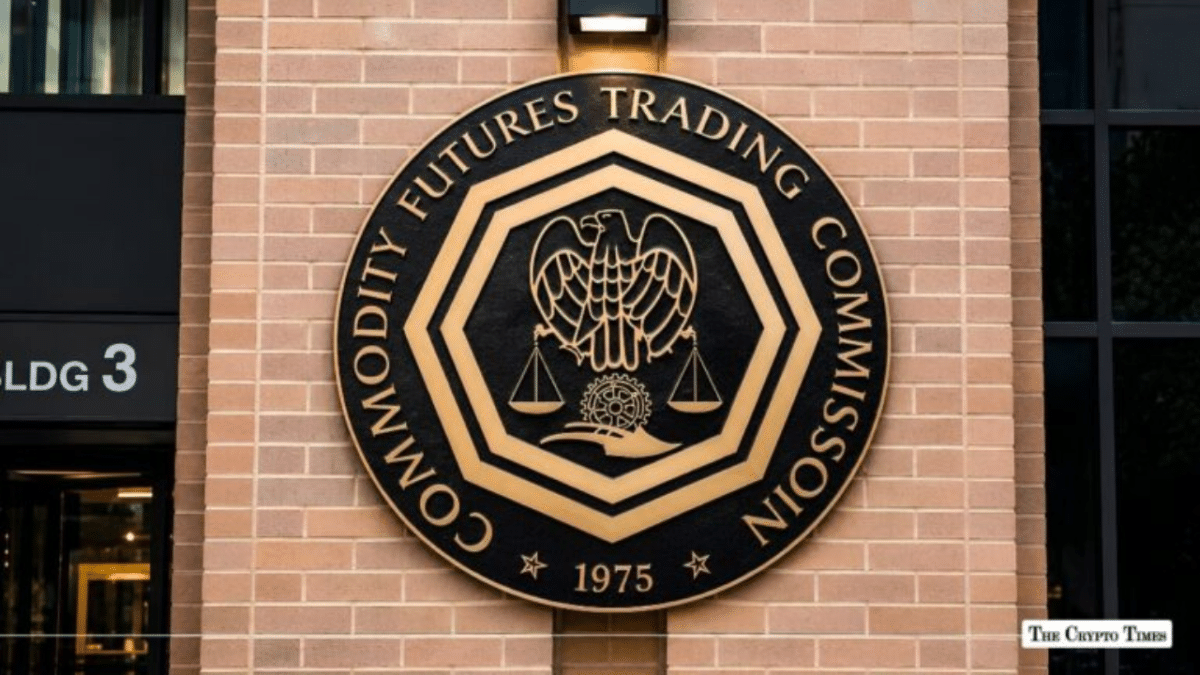
The U.S. Commodity Futures Trading Commission (CFTC), the federal regulator for derivatives and event contract markets, warned regulated exchanges on Tuesday that prediction market contracts tied to what a specific person says or does carry a heightened risk of manipulation and should be listed only in narrow cases.
The guidance is aimed at designated contract markets (DCMs), the CFTC-registered venues that list event contracts for U.S. traders.
In Release Number 9302-26, dated September 22, 2026, the agency’s Division of Market Oversight said the advisory covers event contracts based on whether an individual will say or “mention” certain words, attend or appear at an event, or otherwise interact with another person. Those products are commonly called mention market contracts.
“These contract types present a heightened risk of manipulation because their settlement turns on the discrete conduct of a person that may be neither independently generated nor externally verifiable,” the Commission said.
The advisory does not ban the category outright. Staff outlined limited circumstances in which such contracts may be listed consistent with the Commodity Exchange Act (CEA), and provided non-exhaustive factors that DCMs should weigh when designing and submitting mention market contracts under Commission Regulations 40.2 or 40.3. Staff also reminded exchanges of Core Principle 3, which requires them to list only contracts that are not readily susceptible to manipulation, and stressed the need for complete, contract-specific analysis under Part 40. The document is a Division of Market Oversight staff advisory, not a Commission rule or vote.
What mention markets are
Mention markets are binary event contracts. Traders take yes-or-no positions on whether a named person will use a word or phrase in a speech, earnings call, press conference, or broadcast, or whether that person will attend an event or interact with someone else. Settlement is not based on a price index or a published statistic. It is based on that person’s conduct.
That design is what drew staff attention. If the person whose words or appearance decide the contract can be influenced, or if the record of what was said is difficult to verify independently, the contract can be easier to move than a market tied to an election result, a CPI reading, or a sports score.
CNBC, citing the staff letter sent to regulated entities, said exchanges weighing such products should assess at least four issues: any outside legal, professional, contractual, fiduciary, confidentiality, or organizational obligations on the person whose conduct decides settlement; external pressure that could shape that person’s speech or appearance; whether the words or actions used for settlement are independently verifiable; and whether the exchange has surveillance and controls strong enough to detect manipulation. The public CFTC press release does not enumerate those four factors; it says the advisory provides “non-exhaustive examples of factors.”
Why the CFTC moved now
Prediction markets have grown into a multi-billion-dollar business over the past year across politics, sports, culture, and corporate events. Kalshi, the CFTC-registered exchange that is the most visible U.S. venue in the category, was already processing about $10.19 billion in 30-day trading volume by early July, according to DefiLlama data reported by The Crypto Times on July 5, 2026.
DefiLlama is a market-data aggregator, not an on-chain tracker for Kalshi’s off-chain CFTC books. Later July tallies differ by source: DefiLlama research later put Kalshi’s July monthly volume at $12.37 billion.
The advisory lands after enforcement actions that already used the mention market label. On August 28, 2026, the CFTC ordered Gabriel Perez to pay $172,539.02 in connection with insider trading of mention market event contracts.
Perez, a former White House teleprompter operator, was found to have used advance access to President Donald Trump’s prepared remarks to trade “presidential mention market” contracts on Kalshi between December 2025 and February 2026.
Under the order, Perez agreed to disgorge $107,539.02 in profits, pay a $65,000 civil monetary penalty, and accept a three-year trading ban across CFTC-registered platforms. The $65,000 penalty was described as a substantial discount for “exemplary cooperation.” The CFTC also credited KalshiEX with assisting the inquiry.
A separate CFTC settlement announced July 31, 2026, involved former Representative George Santos, who agreed to pay $35,069.98 — $17,569.98 in disgorged profits and a $17,500 civil penalty and accept a three-year CFTC trading ban over alleged manipulative trading in a Kalshi market on who would attend the 2026 State of the Union. Santos did not admit or deny the findings. Kalshi later imposed a lifetime platform ban and its own $71,356 penalty, according to a late-August company action reported by The Wall Street Journal.
Tuesday’s staff advisory is the first formal, public position from Division of Market Oversight staff on how such contracts should be designed and submitted, following months of scrutiny of the category.
How this sits next to Kalshi and margin trading plans
The advisory is aimed at CFTC-regulated DCMs, not at offshore or fully decentralized prediction venues. On the same day the advisory was released, Kalshi’s clearinghouse, Kalshi Klear, filed a separate Regulation 40.5 request asking the CFTC to allow institutional traders to use margin on certain event contracts. According to CNBC, a Kalshi spokesperson said the company would not offer margin on its sports, culture, or mention market contracts under the proposed framework.
The Crypto Times same-day report said sports contracts are excluded from the filing and that a Kalshi spokesperson told CNBC the firm would also not offer margin on culture and mention markets.
Prediction markets sit close to crypto even when the contracts themselves are dollar-denominated. Kalshi launched a CFTC-approved bitcoin perpetual futures product, BTCPERP, in May, becoming the first federally regulated venue in the United States to list a crypto perpetual as a futures contract. Polymarket remains the main on-chain prediction venue outside the DCM framework. The CFTC announced approval of KalshiEX’s BTCPERP on May 29, 2026 (Release 9240-26).
What the advisory does not do
The document is staff guidance, not a Commission rule. It does not create new statutory obligations by itself. It sets out how staff will read existing Core Principle 3 and Part 40 filing duties when a contract settles on a person’s words or appearance.
It also does not automatically delist mention markets that are already trading. Staff said there are limited circumstances in which such contracts can still be listed. The practical effect is that new or redesigned mention markets will need a tighter submission package: why the person whose conduct decides the market is constrained, how settlement will be verified, and what surveillance the exchange will run.
For prediction market operators and crypto-linked platforms, the near-term watch is whether Kalshi and other DCMs narrow earnings call, speech, and appearance contracts, and whether Congress views the advisory as a sufficient answer on manipulation risk in the event contract category.
Also Read: SEC Moves to Clear Up Crypto Custody Rules