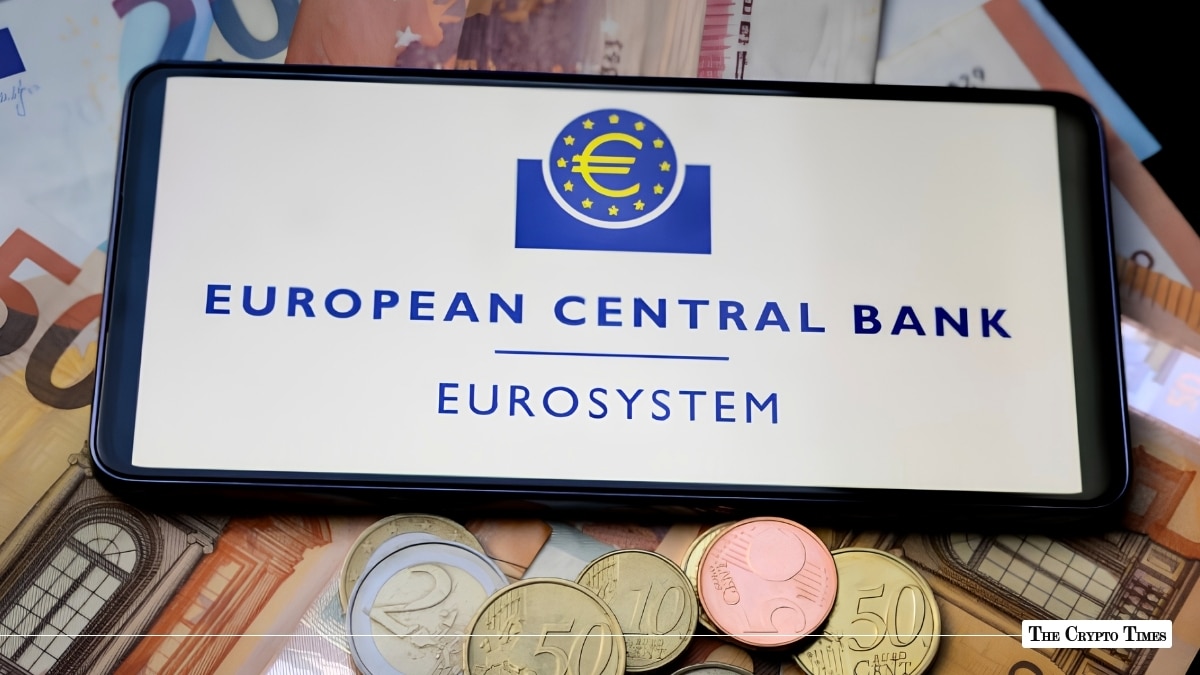
The European Central Bank (ECB) and the national central banks of the European Union have asked Brussels to rewrite how regulated stablecoins hold their reserves.
The request sits in the European System of Central Banks (ESCB) response to the European Commission’s targeted consultation on the review of MiCA, published on 22 September 2026. The ESCB is the body that joins the ECB with the 27 national central banks of EU member states. MiCA is the EU statute, formally Regulation (EU) 2023/1114, that sets rules for crypto-asset issuance and services across the bloc.
The central banks say issuers should not be forced to keep a set share of reserves as deposits at credit institutions. They argue those deposits can leave banks exposed to swings in stablecoin demand and can make the deposits less stable. They want the law changed so that a minimum percentage of token reserves must be held in assets that mature within one and five working days.
The same paper says supervisors still face “material challenges” enforcing MiCA because firms that do not meet the rules can still reach EU customers.
What the law requires now
MiCA splits payment-style stablecoins into two legal categories. An e-money token (EMT) is a crypto-asset that aims to keep a stable value by referencing a single official currency, such as the euro or the US dollar. An asset-referenced token (ART) aims to keep a stable value by referencing another value or right, or a combination of values, including more than one official currency.
Article 54 of MiCA says funds received in exchange for e-money tokens must be safeguarded and that at least 30% of those funds must always be deposited in separate accounts at credit institutions. The rest must be invested in secure, low-risk assets that qualify as highly liquid financial instruments.
Tokens classed as significant face extra duties. Article 56 lets the European Banking Authority (EBA) classify an e-money token as significant when it meets set size and usage tests. Article 58 then applies additional reserve and liquidity rules drawn from the asset-referenced token chapter, including Article 45. Those extra rules allow a deposit floor for significant tokens that cannot be lower than 60% of the amount referenced in each official currency.
That 30% and 60% structure is the rule the ESCB wants removed.
What the central banks propose instead
The September 2026 response says the deposit quota ties issuers to commercial banks. If holders redeem tokens quickly, the issuer must pull deposits. Banks then lose funding that can move faster than ordinary retail deposits. The ESCB also says a large deposit book linked to one token can transmit stress from the token market into the banking system.
The alternative it puts forward is a liquidity-bucket test. A minimum share of reserves would have to mature within one working day. Another share would have to mature within five working days. Draft EBA regulatory technical standards on liquidity, which have not yet been adopted, are named as the starting point for those percentages. The remaining assets would still face maturity limits and diversification rules.
The paper treats overnight reverse repurchase agreements and short-dated sovereign securities as examples of instruments that can be turned into cash without concentrating the same claim on a small group of banks.
This is a recommendation to the Commission. It does not amend MiCA on its own.
What the filing does not relax
The ESCB does not ask Brussels to weaken redemption rights or to let issuers pay interest to holders.
Article 49 of MiCA gives holders a right to redeem e-money tokens at par. Article 50 bans the granting of interest on those tokens. The consultation response says that the interest ban should stay, including for indirect yield paid through lending or staking services.
The paper also flags multi-issuer arrangements, where the same token is issued both inside and outside the EU. It says a coin can be marketed as MiCA-compliant while only a limited share of reserves sits in the Union. In a redemption surge, the EU issuer may not hold enough local assets to pay holders in the EU and outside it. The ESCB says ECB opinions on third-country currency tokens are not a substitute for clearer statutory safeguards.
Why the review is open now
The Commission opened the MiCA review consultation on 20 May 2026. The deadline was later moved to 30 September 2026, 23:59 CEST.
The exercise supports reports the Commission must prepare under Articles 140 and 142 of MiCA. Those reports may be accompanied by a legislative proposal if the Commission concludes the statute should change. No reserve rule changed on the day the ESCB filed its paper.
MiCA’s stablecoin titles began to apply on 30 June 2024. The wider framework for crypto-asset service providers took effect on 30 December 2024. A transitional period for firms already operating under national rules ran until 1 July 2026.
How this sits next to euro tokens already in the market
The filing lands while several euro-denominated e-money tokens are either live or in licensing.
Crédit Agricole’s securities arm CACEIS has issued EURXT, a euro e-money token used in an on-chain fund subscription. Revolut has started offering EURR in Denmark, Poland and Portugal through a Luxembourg electronic money institution. Qivalis, a consortium of 37 banks across 15 countries, is still seeking a Dutch electronic money institution licence for a planned euro token.
A change in the deposit quota would matter most for non-bank electronic money institutions that must today keep a large share of reserves as bank deposits. Bank-issued tokens that already hold cash on the issuer’s own balance sheet would feel the constraint less directly. The ESCB paper does not name individual issuers and does not approve or reject any token.
The filing also follows the Eurosystem’s 21 September 2026 launch of Pontes, a system for settling wholesale tokenised assets in central bank money. Pontes is a wholesale settlement project. It is separate from retail e-money tokens and from the digital euro, which still needs EU legislation.
What remains unsettled
Two questions sit outside Tuesday’s text.
The first is calibration. The ESCB wants liquidity buckets. It does not, in the public filing summarised here, lock in final percentages for every issuer class. Those figures would have to be written into a future Commission proposal and, if lawmakers agree, into an amended regulation.
The second is market risk. A deposit at a credit institution does not change price from day to day. A short-dated bill can. The ESCB’s answer is tighter maturity limits and more diversification, not a return to unreserved tokens. How quickly those assets can be sold when redemptions arrive in a single session is a supervisory question, not one the consultation response resolves.
Until the Commission publishes its MiCA reports, issuers remain bound by Article 54 and, where a token is significant, by the extra liquidity duties in Articles 58 and 45.
Also Read: Kakao Pay, KakaoBank Sign MoU With Fireblocks on Stablecoins