Bitcoin climbed back above $87,000 this week for the first time since January, reversing a mid-September slide that had taken the market toward $75,000 after Washington and the Federal Reserve delivered two unfriendly headlines in close succession.
The rebound was fast, leveraged, and incomplete. By early Wednesday (6:00 AM UTC), Bitcoin was holding in the mid-$86,000s, still about 31% below its October 2025 all-time high of $126,080—as recorded in CoinGecko data.
The move has a short list of documented facts and a longer list of disputed interpretations. Spot exchange-traded funds recorded their strongest session in months. Derivatives desks recorded a wave of short liquidations. Strategy disclosed another cash-funded Bitcoin purchase. None of those items, on its own, explains why price traveled more than $10,000 in a week. Together they describe a market that had been positioned for further weakness and then had to buy.
A break of the $80,000–$82,000 ceiling
Bitcoin spent much of September 15 and 16 under pressure after the Senate failed to invoke cloture on the motion to proceed to H.R. 3633, the Digital Asset Market Clarity Act. The official Senate record shows the vote at 49–50, well short of the 60 votes required to begin debate. The same week the Federal Reserve raised rates.
Spot Bitcoin funds posted large redemptions on those two sessions, including a $450.3 million outflow on September 15 in the Farside daily series.
The selling did not persist. Price found a local low near $75,000 around September 15–16, then reclaimed $80,000 and, by September 21, pushed through a band that had capped the market since August. Intraday prints on September 21–22 reached about $87,300 to $87,400 on major venues before fading. CoinGecko later showed a 24-hour range that still stretched from the low $85,000s into the $87,000s.
That sequence matters because the $80,000–$82,000 area was not only a chart level. It was also where a large share of short positions had clustered. Once spot buyers and forced covering arrived at the same time, the path through $84,000 and $85,000 was short.
The broader market followed. Total crypto capitalization moved back above $3 trillion on several trackers, and large-cap tokens outside Bitcoin participated. That does not settle whether the rally is durable. It does show the move was not confined to a single pair.
ETF creations reverse a week of redemptions
The cleanest institutional footprint sits in the ETF tape. U.S. spot Bitcoin funds recorded about $999 million of net inflows on September 21, according to SoSoValue and the matching Farside table. BlackRock’s IBIT accounted for $381.4 million, ARK 21Shares’ ARKB $289.1 million, and Fidelity’s FBTC $238.8 million. Those three products supplied roughly 91% of the day’s net creations.
The session was the funds’ largest since October 6, 2025, when inflows exceeded $1.2 billion as Bitcoin printed its record high. It also reversed the mid-month drain. After outflows of $450.3 million and $296.0 million on September 15 and 16, the complex turned positive again on September 17 ($159.5 million) and September 18 ($433.0 million) before the $999 million print. The five-session stretch around the selloff therefore ended closer to flat than the first two days implied.
Cumulative net inflows since the January 2024 launch remain in the mid-$56 billion range on those same dashboards, with fund net assets near $110 billion. Those figures describe stock, not flow. The flow that coincided with this rally is the $999 million day and the three-session streak that preceded it.
Whether ETFs started the move or chased it is still an open question. Creations for September 21 were published after cash Bitcoin had already broken higher during the global session. That timing supports the view that derivatives covering provided the first impulse and that ETF demand confirmed it. It does not support the stronger claim that the rally was “only” a squeeze. A nearly $1 billion creation day is large enough to matter in the spot market even if it arrived second.
Short covering and a cash-funded treasury bid
The derivatives record is equally specific. CoinGlass snapshots during the September 21 advance showed hundreds of millions of dollars in liquidations over 24 hours, with shorts supplying the large majority. One widely cited window put total crypto liquidations near $750 million, of which about $648 million were shorts. Bitcoin itself accounted for a large share of those forced closes, including an $11.29 million BTCUSDT order on Binance.
A short squeeze is a mechanical process, not a narrative. When price moves against leveraged shorts, exchanges buy the underlying to close the position. That buying can push price into the next liquidation cluster.
Corporate demand added a third, smaller bid. Strategy disclosed that it bought 950 Bitcoin between September 14 and September 20 for $75.7 million, or $79,670 a coin including fees, and funded the purchase from USD cash rather than new equity. The company said it then held 846,000 Bitcoin acquired for $63.80 billion at an average cost of $75,416. Executive Chairman Michael Saylor published the same totals the day the filing landed. That purchase is modest next to a $999 million ETF session, but it is a primary disclosure rather than a market rumor.
Macro conditions were less hostile than the week’s headlines suggested. Brent crude weakened and longer-dated Treasury yields eased as the rebound developed, a mix that often supports risk assets even after a rate increase. That backdrop helps explain why Bitcoin absorbed the Clarity Act setback instead of extending it. It does not guarantee the next $3,000.
The levels now in view are ordinary. $85,000 is the first area bulls need to keep. $82,000 and $80,000 are the failed-breakout zones if the squeeze fades. Overhead, $87,000–$88,000 and then $90,000 are the round numbers the market failed to hold on the first attempt. January’s local high near $95,000 remains further out.
The evidence available on September 23 supports a limited conclusion. Bitcoin did reclaim $87,000 for the first time since January. It did so after documented ETF inflows, documented short liquidations, and a disclosed treasury purchase, against a still-unfinished market-structure bill and a recent policy tightening. Whether those flows persist is the next fact the tape has to produce.
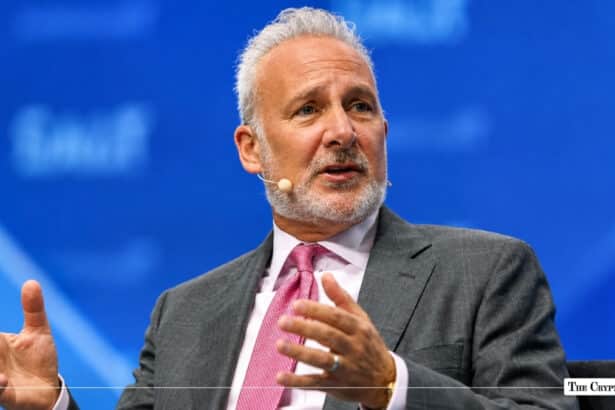
Also read: Peter Schiff Questions Catalysts Behind Bitcoin Rally, Citing Saylor