Key Highlights
- Maxine Waters criticized the CLARITY Act after the Senate failed to advance it in a 49–50 procedural vote.
- Waters argued that the legislation did not address concerns she has raised about President Trump’s crypto-related financial activities.
- Seven Senate Democrats said the failed vote was a setback but not the end of efforts to pass bipartisan crypto legislation.
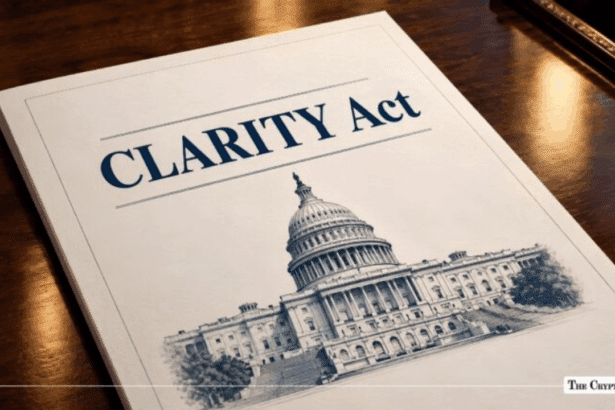
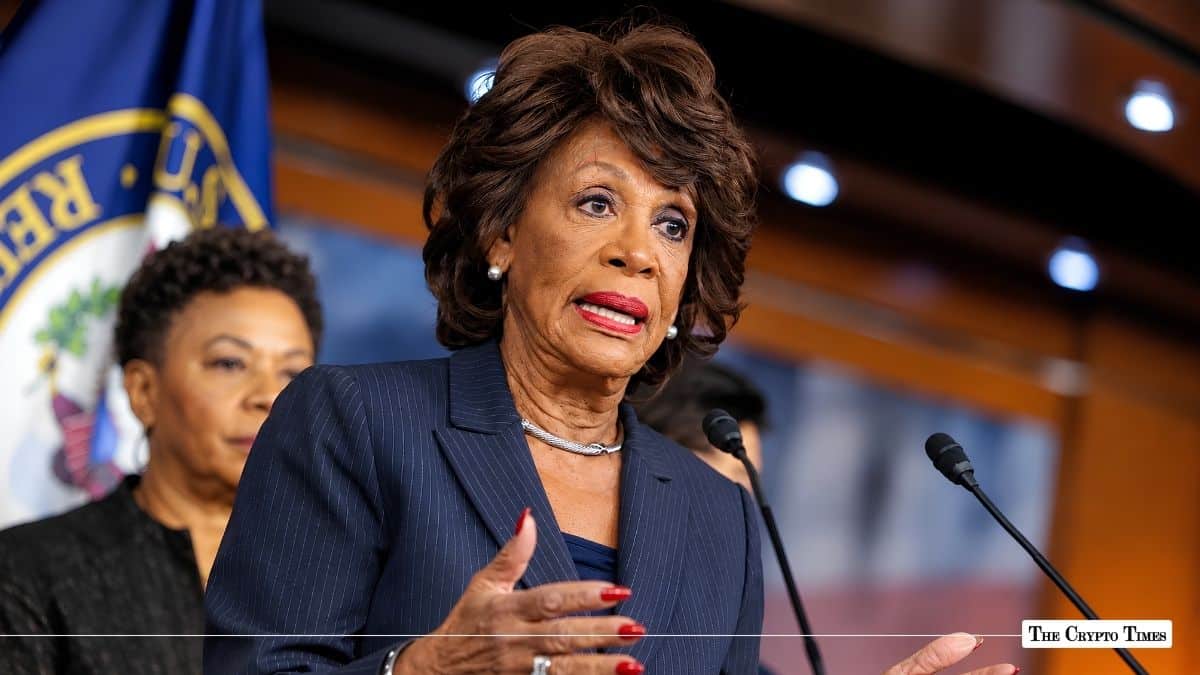
Congresswoman Maxine Waters (D-CA), ranking member of the House Financial Services Committee, issued a statement on September 17 after the CLARITY Act failed to advance in a Senate procedural vote.
In a statement released on the U.S. House Committee on Financial Service Democracts’ official website, Waters said, “No one needs to look any further as to why the Republicans’ crypto market structure bill, the CLARITY Act, failed in the Senate in a bipartisan vote than the fact that it did nothing to rein in Trump’s overt, pernicious, and dangerous corruption.
Until Congress passes legislation to end the President’s crypto profiteering and recoup his ill-gotten gains, any legislation in the crypto space would only serve to validate and condone his worst actions.”
Senate procedural vote
On September 16, the Senate did not invoke cloture on the motion to proceed to H.R. 3633, the CLARITY Act. The official floor record showed 49 yeas to 50 nays on the motion to invoke cloture on the motion to proceed to Calendar No. 423. The result fell short of the 60-vote threshold required to end debate and advance the bill to full floor consideration. It also fell short of a simple majority.
The vote followed weeks of negotiation and a series of last-minute drafting changes. The outcome halted comprehensive crypto market structure work in the Senate for 2026.
Senate Democrats respond on the failure
Seven Senate Democrats who participated in negotiations on crypto market structure issued a joint statement on September 16. Sens. Kirsten Gillibrand of New York, Angela Alsobrooks of Maryland, Cory Booker of New Jersey, Catherine Cortez Masto of Nevada, Ruben Gallego of Arizona, Mark Warner of Virginia, and Raphael Warnock of Georgia said the failed cloture vote was a setback rather than the end of the effort.
According to the statement released through Gillibrand’s Senate office, the group said Democrats had spent the last two years “working to pass crypto legislation that would expand opportunity, protect consumers, punish bad actors, create regulatory certainty, and include strong, commonsense ethics provisions for elected officials.”
The statement added, “This week was a setback, but not the end of that important work. We remain committed to working in a bipartisan fashion to get this legislation passed.”
Background on crypto activities
The Democrats’ official website further alleged that since before the start of his second term, Trump has used various crypto schemes connected to the Office of the Presidency. Trump’s 2025 financial disclosures show he made $1.4 billion that year. During that period, steps were taken to place crypto-related regulations under White House control at previously independent federal financial regulators.
Trump’s family has started businesses covering the crypto ecosystem, including Bitcoin mining, decentralized finance platforms, crypto tokens, memecoins, and stablecoins. Trump’s memecoin generated millions of dollars for him while costing investors $3.8 billion.
During the House Financial Services Committee’s consideration of legislation to create a stablecoin framework, the family’s crypto company, World Liberty Financial, issued its own stablecoin, USD1.
That stablecoin was later used by an Abu Dhabi-based investment firm for a $2 billion investment in the crypto exchange Binance. Days before Trump’s 2025 inauguration, a UAE-linked investment firm purchased a 49 percent stake in World Liberty Financial for $500 million. The Office of the Comptroller of the Currency later granted a conditional bank charter to World Liberty Financial.
Waters compared H.R. 3573 bill
The statement falso noted that on May 21, 2025, Ranking Member Waters introduced H.R. 3573, the Stop TRUMP in Crypto Act. The bill seeks to block Trump’s memecoin, end personal crypto schemes, and address crypto-related activities by the president. It would also prevent any future president, vice president, member of Congress, or their immediate families from engaging in similar crypto activities.
The CLARITY Act’s failure in the Senate procedural vote leaves the status of broader crypto market structure legislation unresolved for the remainder of 2026.
Also Read: US House Passes Strategic Bitcoin Reserve Bill 28-21 With 20-Year Lock