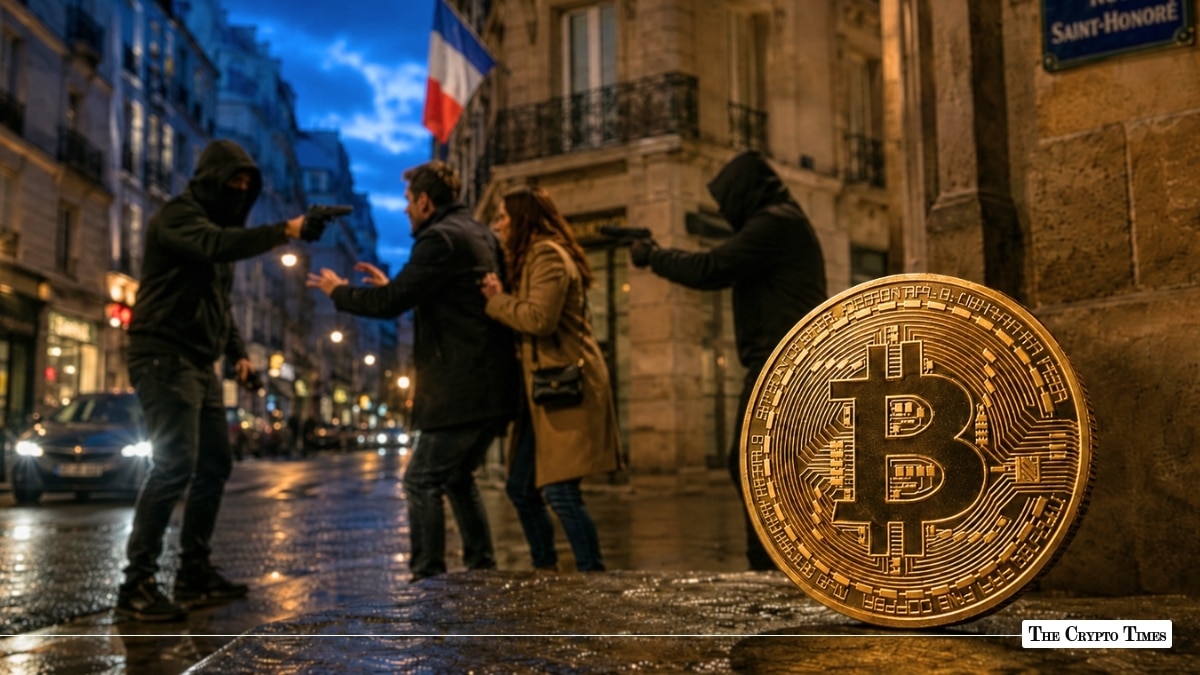
A French couple in Alès, Southern France, was tied up and held at gunpoint for several hours during a home invasion by masked attackers on August 29, seeking cryptocurrency transfers, in the latest violent crime linked to digital assets in France.
According to a report from local newspaper Midi Libre, the attack took place early Saturday in Alès, a city in southern France, where two armed intruders held the couple for more than two hours while attempting to force them to hand over assets through cryptocurrency transactions. The couple’s young child was also reportedly inside the house during the attack.
How the Attack Unfolded
The two assailants entered the couple’s home in a residential neighborhood in the hills above Alès, wearing masks and gloves. They were allegedly armed with a handgun and a knife.
The report stated that the couple was restrained and threatened as the intruders attempted to obtain cryptocurrency through forced transactions. It was not immediately clear whether the attackers obtained any digital assets before fleeing. The victims’ screams eventually alerted neighbors, who contacted police in Alès. The attackers escaped as officers arrived at the property.
The investigation has been handed to the Organized and Specialized Crime Division, known as DCOS, in Nîmes. Authorities had not announced any arrests in connection with the attack at the time of the initial report.
The Alès incident adds to a growing series of violent crimes in France involving people believed to hold cryptocurrency or have access to digital assets.
Unlike conventional financial theft, crypto-related extortion can involve attackers attempting to force victims to authorize irreversible blockchain transactions or surrender access to wallets and private keys.
Rising Crypto Attacks in France
France has seen a sharp increase in kidnappings, extortion attempts and home invasions connected to cryptocurrency.
Interior Minister Laurent Nuñez said in July that authorities had recorded 77 cases involving kidnapping, unlawful detention, extortion or attempted crimes connected to cryptocurrency by the end of June. The figure had already exceeded the 45 cases reported during the whole of 2025.
Authorities have responded by expanding intelligence-sharing efforts and cooperation with international partners, according to previous statements by Nuñez. Some people suspected of directing attacks were believed to be operating from outside France, while lower-level recruits allegedly carried out violence on the ground.
The latest Alès local report said around 80 similar incidents had been recorded since the start of the year, although different datasets use different methodologies.
Similar Patterns Seen Globally
The attack comes amid a broader rise in physical crimes targeting cryptocurrency holders in France and around the world.
Chainalysis reported in August that successful wrench attacks extracted more than $30 million from victims globally during the first half of 2026. The firm also identified France as a major hotspot for crypto-related physical attacks.
CertiK separately recorded 52 verified physical crypto attacks worldwide during the same period, up from 39 a year earlier. The cases increasingly involved home invasions, kidnappings and physical coercion.
In addition, in April, five members of a family in Ploudalmézeau were reportedly restrained during a crypto-linked home invasion. Investigators believed the family was targeted because the children’s father worked in the crypto sector, with attackers allegedly taking a digital wallet.
French authorities have also reported a rise in crypto-related kidnappings. National prosecutor Vanessa Perrée said in April that 135 cases had been recorded since 2023, with 88 suspects charged, including more than 10 minors. Authorities reported 18 cases in 2024, 67 in 2025 and 47 in 2026 so far.
The figures point to a growing security challenge for cryptocurrency holders, particularly those who maintain significant assets through self-custody. As digital assets become easier to identify through data leaks, social media activity and other information, criminals are increasingly turning to physical coercion alongside traditional cybercrime.
Also Read: Justin Sun Says HTX Hit by DDoS Attack, User Funds Unaffected