Key Highlights
- Grayscale says advances in artificial intelligence could make it easier to analyze and link public blockchain activity.
- The firm argues that greater digital surveillance could bring financial privacy back into focus.
- Zcash allows users to shield transaction details using zero-knowledge cryptography while retaining transparent transaction options.
Grayscale Research has examined how advances in artificial intelligence (AI) could change the way financial information on public blockchains is analyzed, with Zcash (ZEC) presented as one example of a network designed around transaction privacy.
In a research report published on August 31, Grayscale Head of Research Zach Pandl argued that improvements in AI could make it easier to analyze blockchain activity and connect pseudonymous addresses with information from outside the blockchain.
The report, titled “Zcash and the Privacy Imperative,” places the issue within a longer history of technological changes that have affected financial privacy.
AI could expand blockchain surveillance
Public blockchains make transaction records available for anyone to inspect. While wallet addresses are generally pseudonymous, activity can sometimes be linked to individuals through exchange records, wallet behavior, and information collected outside the blockchain.
Pandl argues that AI could make this analysis more effective by allowing larger datasets to be processed and relationships between different sources of information to be identified more efficiently.
“This was possible before AI, but the technology could make blockchain address labelling more effective and more widely available,” Pandl said.
The argument does not mean that AI will automatically identify every blockchain user. Instead, Grayscale’s concern is that improvements in automated analysis could increase the scale and effectiveness of blockchain surveillance.
That could make financial privacy a more prominent consideration for users and businesses operating on transparent networks.
Zcash uses shielded transactions
Zcash approaches the issue differently from fully transparent blockchains such as Bitcoin.
The network supports both transparent and shielded transactions. Transparent transactions expose transaction information on-chain, while shielded transactions use zero-knowledge proofs to verify transactions without publicly revealing the sender, recipient, or amount.
Users can therefore choose whether a transaction uses the network’s privacy features.
Zcash also supports mechanisms for selectively disclosing transaction information to authorized parties, which provides a way to share details when disclosure is required.
The distinction is important because privacy on Zcash is based on the cryptographic design of the protocol rather than simply obscuring wallet addresses.
Earlier data showed higher shielded activity
Grayscale’s latest privacy analysis follows an earlier report that examined Zcash’s shielded activity.
The firm said that, as of July 20, 2026, shielded transactions represented roughly 90% of Zcash’s transaction count, while about 4.2 million ZEC, or approximately 25% of circulating supply, was held in the shielded pool.
Those figures show increased use of Zcash’s privacy infrastructure, but they do not by themselves establish how many individual users are relying on shielded transactions or how much economic activity those transactions represent.
Financial privacy has evolved with technology
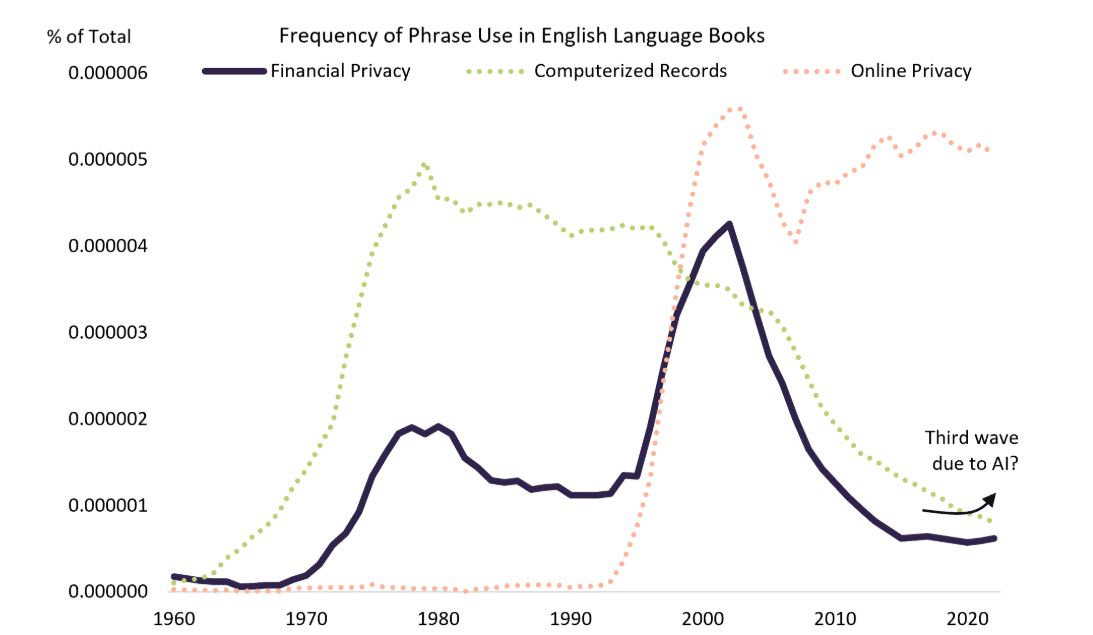
Pandl places the current discussion in a broader history of financial privacy.
Grayscale points to earlier periods when changes in technology altered how financial information was collected and stored, including the expansion of computerized recordkeeping and the rise of internet banking.
The firm argues that AI could represent another stage in that process because financial activity is increasingly digital while machine-learning systems are becoming better at processing large amounts of information.
For crypto users, the distinction is particularly relevant because public blockchains preserve transaction histories that can be analyzed long after individual transactions occur.
Privacy creates a different blockchain trade-off
Public transaction data provides transparency and allows participants to independently verify activity. Privacy-focused systems reduce the amount of information visible to outside observers but can introduce different challenges around compliance, auditing, and infrastructure.
Zcash’s selective-disclosure features are intended to address some of those requirements, but privacy-focused assets can still face restrictions or additional scrutiny from exchanges and financial institutions.
The regulatory treatment of privacy technologies also varies across jurisdictions, making adoption dependent on more than the underlying cryptography.
Zcash still faces technical and regulatory risks
Grayscale’s privacy thesis does not remove the challenges facing Zcash.
Privacy-focused networks must continue improving transaction usability, scalability, and security while dealing with regulatory requirements affecting exchanges, custodians, and other financial intermediaries.
Zcash has introduced several upgrades to improve its shielded transaction system, including Sapling and Orchard. The network’s development has also involved changes to its proving and cryptographic infrastructure.
These upgrades address parts of the technical challenge, but they do not guarantee broader adoption of shielded transactions.
AI could make privacy a larger crypto issue
The latest report connects two developments moving in opposite directions.
AI can make blockchain data easier to analyze, while privacy technologies attempt to limit how much financial information is publicly exposed.
For Grayscale, that tension could increase attention on assets such as Zcash. The firm has previously argued that Zcash’s privacy characteristics could become more relevant as AI-based financial monitoring develops.
However, greater interest in privacy does not necessarily translate into greater adoption of ZEC. Users, exchanges, businesses, and regulators will continue to determine how widely shielded transactions are used.
The broader issue extends beyond Zcash. As more financial activity moves onchain, the crypto industry will have to balance public verifiability with the ability to keep sensitive financial information private.
For now, Grayscale’s analysis suggests that advances in AI could make that balance more difficult to maintain on transparent blockchains, potentially putting greater attention on privacy-preserving alternatives such as Zcash.
Also Read: Blockchain Association Says Big Banks’ Stablecoin Warning Lacks Evidence