An investment vehicle tied to Abu Dhabi royal Sheikh Tahnoon bin Zayed Al Nahyan reportedly holds the largest individual stake in the holding company behind the Trump family’s planned crypto bank, according to The Wall Street Journal.
According to WSJ report, StringZ Holding RSC, an entity backed by Sheikh Tahnoon, the United Arab Emirates’ national security adviser and brother of its president, along with co-investors, owns 49% of WLTC Holdings. A Trump family-affiliated entity owns 38%, according to a person familiar with the matter cited by the Journal.
The Crypto Times has not independently reviewed the underlying ownership documents. The ownership figures in this report are therefore attributed to the Journal’s reporting.
What the Planned Bank Would Do
The bank at the center of the report is World Liberty Trust Company, a proposed national trust bank that the Office of the Comptroller of the Currency (OCC) granted preliminary conditional approval in August 2026. The approval does not mean the bank has received final authorization to operate. The proposed institution must satisfy additional conditions before beginning banking activities.
As a trust bank, World Liberty Trust Company would not operate as a traditional deposit-taking bank or make conventional commercial loans. Its planned role includes allowing World Liberty Financial to issue, redeem and custody its USD1 stablecoin directly, potentially reducing its reliance on third-party custodians.
USD1 is a dollar-pegged stablecoin with roughly $4 billion in circulation, according to market data as of publishing. World Liberty Financial says the assets backing USD1 are held in U.S. Treasurys and other cash equivalents.
The proposed bank’s role in the USD1 ecosystem is therefore significant, but the bank has not yet begun operating and its final structure remains subject to regulatory requirements.
Who Is Sheikh Tahnoon?
Sheikh Tahnoon bin Zayed Al Nahyan is the UAE’s national security adviser and chairman of artificial-intelligence company G42. He also oversees investment vehicles including MGX. His financial links to World Liberty Financial predate the planned bank. In January 2025, a Tahnoon-backed group invested $500 million for a 49% stake in World Liberty Financial itself, according to previous disclosures and reporting.
Trump family entities received proceeds from that transaction, according to President Donald Trump’s 2025 financial disclosure. In May 2025, MGX also used USD1 to settle a $2 billion investment in cryptocurrency exchange Binance, marking one of the stablecoin’s largest disclosed institutional uses.
The earlier investment is separate from the reported 49% ownership stake in WLTC Holdings and should not be treated as the same transaction.
Why the Ownership Structure Is Drawing Attention
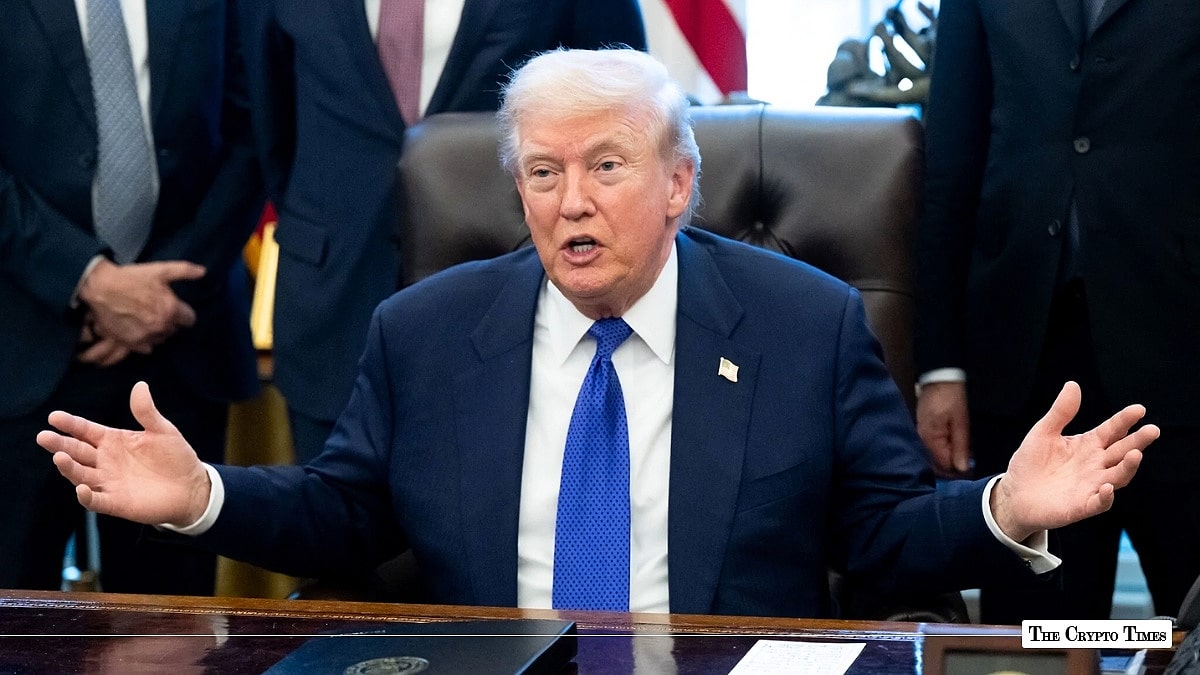
The reported ownership structure has drawn criticism from Democratic lawmakers and former government ethics officials, who argue that the Trump family’s ownership of the proposed bank raises questions about potential conflicts of interest while the institution is being reviewed and would ultimately be supervised by federal banking regulators.
Sen. Elizabeth Warren (D-Mass.), the ranking Democrat on the Senate Banking, Housing, and Urban Affairs Committee, has repeatedly raised concerns about the charter application. In January, she argued that the OCC’s review presented an unprecedented conflict because the regulator serves under a presidentially appointed comptroller while President Donald Trump and his family have financial interests in World Liberty Financial.
After the OCC granted preliminary conditional approval in August, Warren and a group of Democratic senators announced plans to introduce the Ending Presidential Corruption in Banking Act. The proposed legislation would prohibit federal banking regulators from approving certain banking applications when the applicant is owned or controlled by the president, vice president, their immediate family members or certain other government officials.
Former White House ethics lawyer Richard Painter has also questioned the structure. Speaking to CNN, Painter said it was “quite precarious” for the president and his family to have significant investments in banking while the president has influence over the regulators overseeing the industry.
The criticism does not establish that the OCC or World Liberty Financial engaged in wrongdoing. The OCC has said the application was reviewed by career staff and that the chartering process is intended to be apolitical and nonpartisan.
Response From World Liberty, the White House and the OCC
World Liberty Financial and the Trump administration have rejected the criticism surrounding the proposed bank. White House spokeswoman Anna Kelly has said the president’s holdings are managed in discretionary accounts by independent institutions and that there are no conflicts of interest.
World Liberty Financial has defended the proposed bank charter as placing the company under continuing federal oversight.
Zach Witkoff, the company’s CEO and the son of Middle East envoy Steve Witkoff, is slated to chair the proposed bank. He has described the regulatory milestone as involving oversight, institutional controls and accountability.
The OCC has said the application was reviewed by career staff. Comptroller Jonathan Gould has also rejected calls to halt the review, saying the chartering process should remain apolitical and nonpartisan. The OCC’s preliminary approval therefore represents a regulatory step, not a final determination that the bank can begin operations.
Why It Matters for Crypto
The proposed bank represents a test of how stablecoin businesses can interact with the U.S. banking system under the federal stablecoin framework. If World Liberty Trust Company receives final approval and begins operations, its ability to issue, redeem and custody USD1 could give World Liberty Financial greater control over the stablecoin’s infrastructure.
The development also comes as crypto companies seek greater integration with the traditional financial system, including through bank charters, stablecoin issuance and regulated payment infrastructure. However, the proposed institution faces both regulatory and political scrutiny, while USD1 competes with larger dollar stablecoins such as USDT and USDC.
The outcome could provide a precedent for how federal banking regulators approach crypto-focused trust banks and stablecoin-related activities, particularly where major political figures or their families have financial interests.
What’s Next
The OCC’s approval remains preliminary and conditional, meaning World Liberty Trust Company must satisfy remaining requirements before it can operate. The September regulatory process, potential congressional action, and further disclosures about WLTC Holdings’ ownership will determine how the proposed bank develops.
The reported 49% stake held by the Sheikh Tahnoon-backed entity also puts foreign investment at the center of scrutiny surrounding the venture, while the 38% Trump family-affiliated stake underscores the connection between the proposed bank and the president’s business interests.
The Crypto Times will continue to report developments as the regulatory and ownership details become clearer.
Also Read: US Treasury Launches Quantum Task Force With Dedicated Digital Assets Workstream