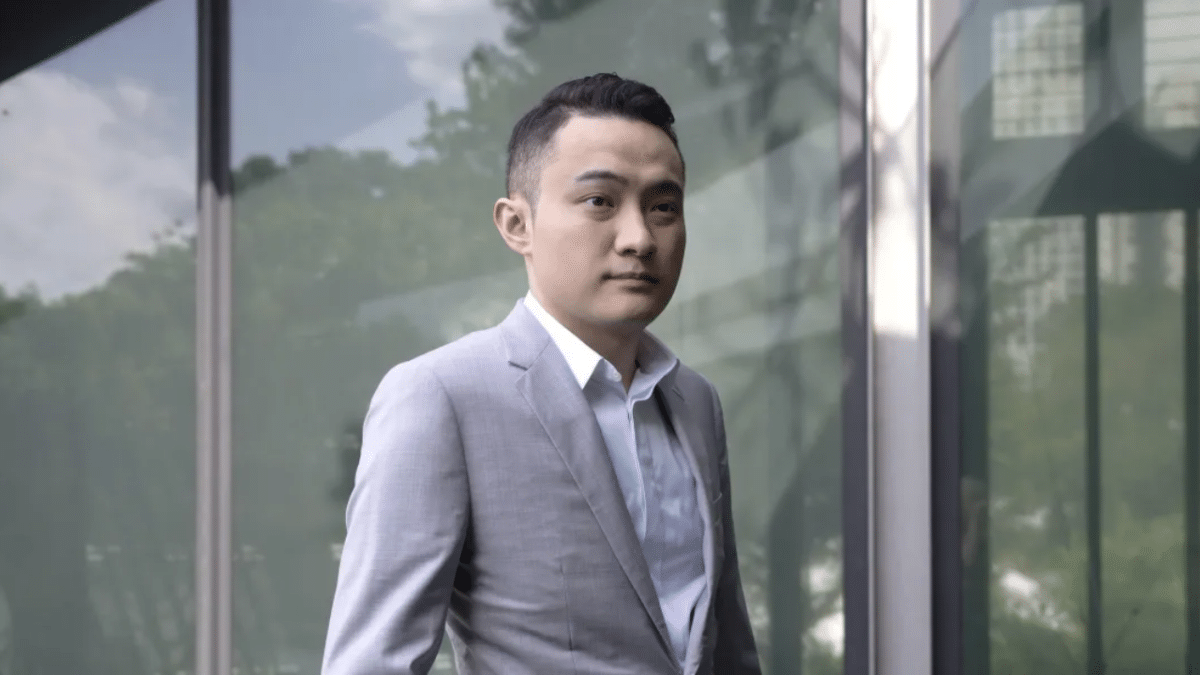
Tron founder Justin Sun has declared that his high-stakes legal battle with World Liberty Financial (WLFI) has evolved far beyond a commercial dispute over $45 million and roughly 4 billion frozen tokens, positioning it as a defining fight for the very principle blockchain was built on: true, permissionless ownership.
In a lengthy statement posted on X on Saturday, Sun said months of litigation had exposed what he described as the real stakes of the case, the industry’s founding conviction that “every person should truly own what is theirs… without needing anyone’s permission. Your keys, your coins.”
Sun accused the Trump family-linked project of quietly embedding, without disclosure or governance approval, the unilateral power to freeze any user’s assets directly inside its smart contract, and then activating that power against him within days of his tokens becoming tradable.
“Freedom in the name, control in the code,” Sun wrote. “That is not just an injury to me. It strikes at the reason this industry exists. If an issuer can confiscate any holder’s assets at any moment, then what separates blockchain from the old world it was built to replace?”
The Tron founder vowed to see the lawsuit through not only to recover his tokens but to establish a legal precedent that, in his words, “in this industry, ‘your assets’ must actually mean yours, written in code, and now written in precedent.”
“Liberty is not a trademark you can register. It is a design choice, verifiable line by line, on-chain,” he added.
Court Rejects Attempt to Move Case Into Secret Arbitration
Sun’s fresh escalation follows a significant procedural win two days earlier. On August 20, U.S. District Judge James Donato ruled that all of Sun’s individual claims against World Liberty will remain in open court, rejecting the company’s bid to force the entire dispute into confidential arbitration and seal supporting documents from public view.
The judge also refused to send every claim brought by Sun’s corporate entities, Blue Anthem Limited and Black Anthem Limited, to arbitration. Instead, both sides were ordered to meet and confer to decide which of those company-related claims will stay in federal court and which will proceed privately.
Sun called the outcome “a significant win,” saying World Liberty “tried to push this case behind closed doors, and the Court said no.” He argued that token holders across the industry deserve full transparency into how projects treat those who trust them with capital.
The ruling does not decide the merits of Sun’s underlying allegations of fraud, wrongful freezing, and breach of contract. It does, however, keep one of the most closely watched legal fights in crypto out in the open.
How the $45 Million Investment Turned Into a Lawsuit
Sun was one of World Liberty Financial’s earliest and largest backers. He committed $45 million to acquire approximately 3 billion WLFI tokens in late 2024 and early 2025, later receiving an additional 1 billion tokens in his role as an advisor. Sun has consistently stated that his backing helped transform a struggling raise into a roughly $550 million token sale.
The tokens officially went live for trading on September 1, 2025. Within days, according to Sun, World Liberty activated the freeze and restrict functions embedded in the WLFI smart contract against his wallet, preventing him from selling any of his holdings and stripping his governance rights.
In April 2026, Sun filed suit in the U.S. District Court for the Northern District of California, alleging that the project had secretly installed freeze, restrict, and burn capabilities in the smart contract without any governance proposal or disclosure to buyers. The complaint further claims World Liberty threatened to permanently burn his tokens and made criminal referral threats when he pressed his rights.
Sun is seeking hundreds of millions of dollars in damages. Shortly after filing, he obtained a court order barring World Liberty from burning, destroying, or reallocating his tokens while the case is pending.
World Liberty’s Countersuit and Denials
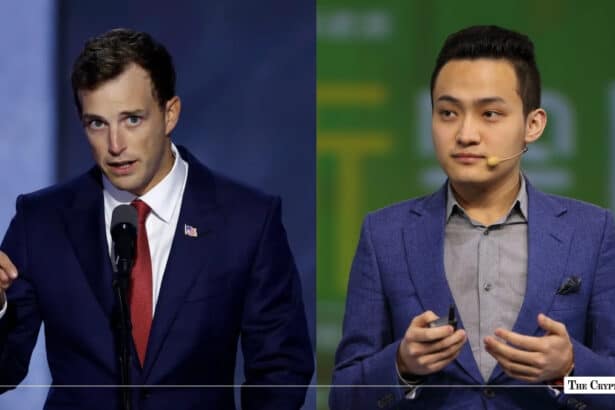
World Liberty has strongly denied the allegations. CEO Zach Witkoff previously called Sun’s claims “entirely meritless” and said the company acted to protect itself and its user base following what it described as misconduct by Sun. The project maintains that its freeze functions were disclosed in the terms of sale.
In May 2026, World Liberty filed a defamation countersuit in Florida state court, accusing Sun of running a “public smear campaign,” engaging in short selling of WLFI, making improper transfers, and using straw purchases. Sun dismissed the countersuit as a “meritless PR stunt” and pledged to fight the claims in court.
Responding to Sun’s characterization of Thursday’s ruling as a major victory, Witkoff pushed back on Sun, saying the court had actually agreed with World Liberty that many claims brought by Sun’s companies must go to arbitration and that “even Sun’s lawyers had to concede in the courtroom that these claims do not belong in court.”
Widening Concerns Around USD1 and Circular Lending
In recent statements, Sun has broadened his attack beyond WLFI itself, raising red flags about the same freeze and control functions allegedly existing inside World Liberty’s USD1 stablecoin, which recently launched natively on the Stripe-backed Tempo L1 blockchain and now carries a market capitalization of more than $4 billion.
He has also questioned the project’s overall financial health, pointing to reported circular lending arrangements including the deposit of roughly 5 billion WLFI tokens as collateral on the Dolomite lending platform, which is linked to a World Liberty executive, to borrow $75 million in stablecoins. Similar concerns fed into the sharp market reaction earlier this year when WLFI plunged nearly 20% after a controversial governance vote to unlock 62 billion tokens.
Sun has also flagged prior controversies involving the project, including WLFI’s partnership with a crypto venture tied to an alleged scam network linked to broad U.S. sanctions.
WLFI itself has lost close to 80% of its value since launch, weighing on early backers regardless of the court outcome.
Sun Keeps Political Line Clear
Even as the courtroom battle intensifies, Sun has repeatedly stressed that he remains a supporter of President Donald Trump and the administration’s crypto friendly policy stance, directing his criticism strictly at the operators of World Liberty Financial rather than the president or his family.
The Tron founder has taken an increasingly public posture on integrity issues since the U.S. Securities and Exchange Commission dismissed its long running case against him earlier this year, and he has consistently framed the WLFI dispute as a matter of investor rights rather than politics.
What Comes Next
The case, Sun et al. v. World Liberty Financial LLC, Case No. 3:26-cv-03360-JD, continues in the Northern District of California. No trial date has been set, and the underlying claims of fraud, wrongful token freezing, extortion, and breach of contract remain unresolved. The parties are also still working through which corporate claims will remain in federal court.
Sun’s Saturday message marks the clearest escalation yet in how he is framing the fight. What began in September 2025 as a wallet dispute has, in his telling, hardened into a test of whether blockchain will deliver on its original promise of genuine, permissionless ownership, or whether centralized administrative controls buried in smart contract code will be allowed to quietly rewrite it.
“Your assets must actually mean yours,” Sun said. “Written in code, and now written in precedent.”
Also Read: Zach Witkoff Defends $4B USD1 Bank Push as Justin Sun’s WLFI Court Fight Goes Public