Twenty-four hours after Justin Sun forced World Liberty Financial’s dispute into open federal court, the Trump-linked project’s leadership is racing to protect the one narrative it cannot afford to lose control of, the story it is telling regulators about USD1.
The court order has landed at the most delicate moment in World Liberty’s short history, with the Office of the Comptroller of the Currency still holding the pen on whether World Liberty Trust Company opens as a national trust bank and issues the roughly $4 billion USD1 stablecoin under federal supervision.
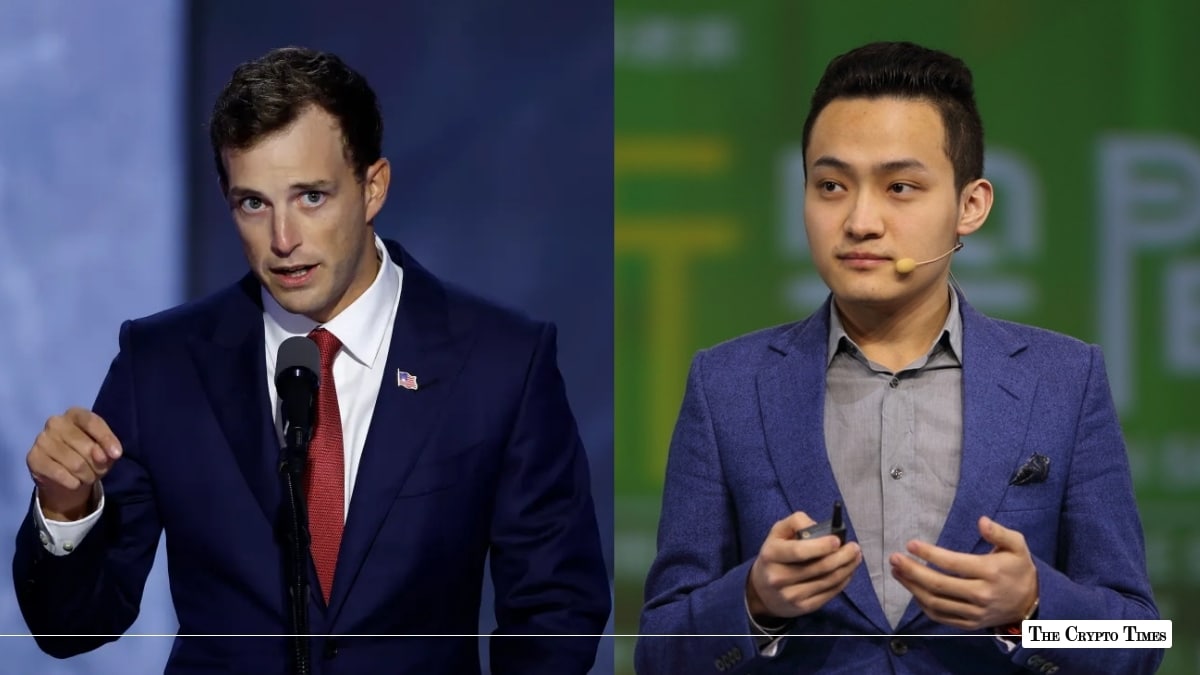
At the center of the messaging fight is CEO and co-founder Zach Witkoff, who has spent the past week positioning World Liberty as a federally supervised, institutionally credible operator rather than a decentralized-finance startup under investor duress.
His latest post on X, continues to project confidence in the trust bank buildout and the stablecoin operations that will sit inside it. It arrived hours before Sun uploaded two consecutive posts of his own, doubling down on the substance of a case that will now play out in public view.
Two Very Different Stories in Front of Two Very Different Audiences
The gap between the two camps’ messaging has never been wider. Witkoff, who was named president and chairman of World Liberty Trust Company, N.A. after the OCC granted preliminary conditional approval on August 14, has told regulators the firm “welcomes continuous scrutiny from Federal regulators for many years to come” and described the trust-bank structure as the natural home for USD1 issuance, custody, and reserve management.
Under that framing, the litigation with Sun is a manageable dispute, and Sun’s allegations are, as Witkoff has previously called them, “entirely meritless.”
Sun’s follow-up posts on Thursday tell a very different story to a very different audience. He is speaking directly to token holders, stablecoin users, and, increasingly, to the regulatory bodies now examining World Liberty’s balance sheet.
His central warning, and the one most consequential for USD1’s roadmap, is that the same administrative override capabilities he alleges exist inside the WLFI smart contract also extend to the USD1 stablecoin. That claim, if it gains any traction in the courtroom, becomes a governance question for the OCC just as much as it is a contractual question between two parties.
The Trust Bank Timeline That Cannot Be Ignored
The regulatory calendar makes the timing especially awkward. Preliminary conditional approval is a milestone, not final authorization. World Liberty Trust cannot begin operations until it satisfies a lengthy list of pre-opening requirements, including at least $20 million in Tier 1 capital and enough liquid assets to cover 180 days of operations. The OCC has also expressly reserved the right to modify, suspend, or rescind its approval before the bank opens if an intervening event warrants it.
An open, public docket in Sun’s case is exactly the kind of window through which intervening events tend to enter the record. Discovery will now proceed in front of investors, journalists, and, potentially, the regulator itself. That is the risk profile Witkoff and his team are working against, and it explains why the CEO has been so aggressive about defending both the venture and the incoming federal supervisory structure on X rather than allowing the courtroom narrative to run unopposed.
The larger business context for the trust-bank push and USD1’s institutional roadmap has been covered previously in reports on World Liberty’s plan to take over USD1 issuance from BitGo and its earlier national trust bank charter application.
Sun Presses the Balance Sheet Question
Sun’s most pointed follow-up did not focus on legal theory. It focused on money. His argument is that his own damages claim, which runs into the hundreds of millions of dollars, is only one of the several potential claims that could land on World Liberty at once, and that USD1’s roughly $4 billion market capitalization consists of user collateral that legally cannot be tapped to satisfy a corporate judgment.
Behind that reserve pool, he argues, World Liberty’s own available capital may be far thinner than its public posture suggests.
The specific data point Sun keeps returning to is Dolomite, the DeFi lending platform co-founded by World Liberty’s own chief technology officer. Public reports indicate World Liberty deposited roughly five billion WLFI tokens as collateral there, borrowing about $75 million in stablecoins, a structure Sun’s team has compared to the circular leverage patterns seen at pre-collapse FTX.
Whether or not that comparison holds up in court, it is now the sort of factual question that discovery will bring into the sunlight rather than leave in a private arbitration file. Sun’s earlier objections to the project’s economics were also detailed in coverage of the $550 million raise and undisclosed insider allocations.
Why the Case Now Threatens WLFI’s Political Cover
Politically, the timing could hardly be worse for World Liberty. Senators including Elizabeth Warren have publicly attacked the OCC’s preliminary approval as the “most brazen act of self-dealing” the U.S. financial system has seen, and the argument that a sitting president’s family should not be operating a federally chartered bank whose flagship product they also own has been building on Capitol Hill for months. Every additional public filing in the Northern District of California gives that coalition new material to work with.
For Witkoff, the political exposure is personal. His father, Steve Witkoff, serves as the United States Special Envoy to the Middle East, a role that has already drawn scrutiny over WLFI’s ties to overseas capital, including the reported $2 billion investment from an Abu Dhabi state-linked entity in USD1 last year.
A public courtroom fight about token control mechanics, insider capital arrangements, and the identity of who exactly holds the keys to WLFI’s smart contract is likely to keep those conflict-of-interest questions on the front pages for months. Witkoff’s team pushed back forcefully in Miami earlier this year when speculation began circulating about internal turmoil at WLFI, but the defense has now shifted from “there is nothing to see” to “the process is federally supervised.”
The WLFI Market Reaction and What Traders Are Watching
The WLFI token, which has already lost the vast majority of its all-time high value since launch, has been trading in the ballpark of $0.06 heading into and out of the ruling, with no dramatic single-session collapse but also no sign of a rebound. Traders are increasingly treating the token as a headline-driven vehicle where the next major move is more likely to come from a courtroom filing or a regulatory announcement than from onchain fundamentals.
USD1, unlike its WLFI sibling, remains pegged, but the market is watching closely to see whether any of the freeze-mechanism concerns Sun has raised bleed into stablecoin holder behavior in the coming weeks. Concerns about the mechanics of WLFI’s freeze powers had already surfaced when Sun alleged a one-signature wallet freeze capability earlier in the year.
There is also the shadow of the June 2026 USD1 freeze episode, when World Liberty froze wallets connected to Sun’s HTX exchange during a separate dispute, prompting HTX to delist USD1 entirely and convert user balances into USDT. That event moved the debate about administrative controls from theory into practice, and it is one of the reference points Sun’s legal team is expected to lean on as discovery unfolds.
Witkoff’s Next Move and the Playbook Ahead
Witkoff and World Liberty still have real options in the courtroom. The company retains the ability to seek dismissal of specific claims on the substance, the parties will negotiate over which company-related claims may still head to arbitration, and the separate Florida defamation counter-suit against Sun continues on its own track, where WLFI is the plaintiff attempting to prove Sun coordinated a smear campaign that damaged its reputation.
On the messaging side, the playbook is already visible. Expect more emphasis on regulatory legitimacy, more use of the trust-bank framing, more reference to Chainlink-backed proof-of-reserves for USD1, and more attempts to characterize Sun’s allegations as the personal grievances of a single frozen investor rather than a systemic critique. That is a difficult narrative to sustain if courtroom filings begin producing documents that suggest otherwise, but it is the only narrative that keeps the OCC’s final authorization on track.
The Real Test Is Discovery
Ultimately, this case has moved into a phase where the loudest voice on X matters less than the quietest document turned over in discovery. What the smart contract’s administrative functions actually do, who actually holds the keys, how the Dolomite collateral is structured, how the USD1 reserve arrangement will look inside a federally supervised trust bank, and whether the shared executives, treasury decisions, and governance across the group survive scrutiny, these are the questions that will now be answered on the record rather than in press statements.
Witkoff’s Thursday post reads as an attempt to keep the story about USD1’s institutional future. Sun’s two follow-up posts read as an attempt to make sure the story is instead about how those institutions were constructed and what they may still be hiding.
Judge Donato’s decision to keep the fight in public court does not settle which story wins, but it does guarantee that both will be told out loud, in front of an audience that now includes federal bank regulators. For a project whose most valuable asset may be regulatory goodwill, that is the outcome World Liberty spent hard to avoid.
Also Read: Justin Sun Scores Legal Victory Over Trump-Backed World Liberty Financial