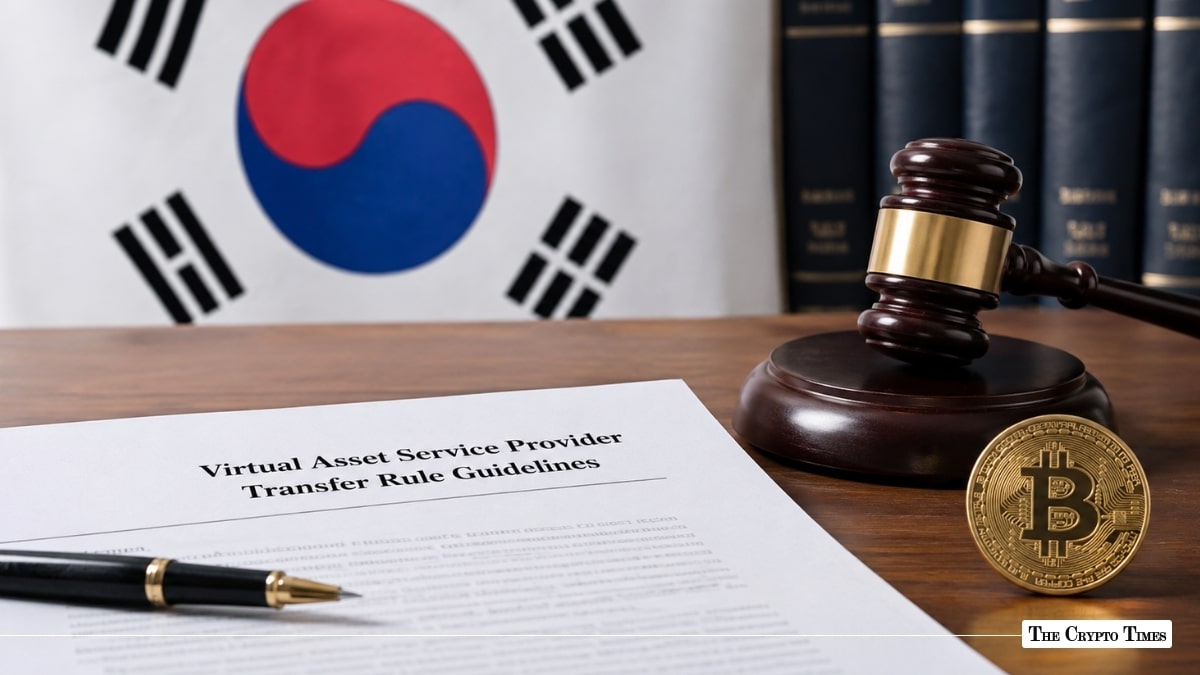
South Korea’s Financial Services Commission (FSC) is removing the 1 million won ($700) threshold for its crypto Travel Rule, requiring registered virtual asset service providers (VASPs) to exchange transaction information for transfers of any value.
The Cabinet approved amendments to the Enforcement Decree of the Act on Reporting and Using Specified Financial Transaction Information on August 11, as authorities move to tighten anti-money laundering (AML) controls across the country’s digital-asset market. The change is aimed, in part, at preventing users from circumventing transaction-monitoring requirements by splitting large transfers into smaller amounts.
Closing the split-transfer loophole
Under the existing rules, the Travel Rule applies to transfers of 1 million won or more between registered crypto service providers. That threshold will be removed, meaning information-sharing requirements will apply to every transfer between registered VASPs, regardless of size. Receiving platforms will also be required to obtain information about the sender and recipient. If the required information is missing, exchanges can request it or refuse the transaction.
South Korea’s Financial Intelligence Unit (FIU) cited a case involving about 200 million won that illustrates why the government is changing the rules. In the case, a user deposited roughly 200 million won into a crypto exchange to purchase USDT and then made 216 withdrawals, each worth less than 1 million won.
Authorities said the pattern raised suspicions that the withdrawals were deliberately split into smaller amounts to avoid the Travel Rule and make money-laundering tracking more difficult. The transactions were also inefficient in terms of fees and time, given the large number of separate withdrawals.
Tighter overseas transfer rules
The amendments also introduce additional AML requirements for transfers between South Korean VASPs and overseas crypto platforms or individual wallets.
Local exchanges will have to assess the risk associated with the receiving platform or wallet before allowing transfers.
Transfers to overseas exchanges considered low risk will be permitted. Transfers involving other overseas exchanges or personal wallets will generally be allowed when the sender and recipient are the same person. Transactions involving high-risk counterparties will be prohibited.
For transfers of 10 million won or more involving overseas exchanges or individual wallets, VASPs will also be required to establish and operate internal systems for monitoring suspicious transactions.
The FIU said the measures are intended to address growing concerns that overseas platforms and personal wallets could be used to move illicit funds beyond the reach of existing AML controls.
Authorities also highlighted a suspected money-laundering pattern in which crypto was withdrawn from an exchange in amounts below 1 million won to multiple unidentified personal wallets. The funds were later consolidated into a single wallet, with the pattern repeated over several months.
Tougher scrutiny of crypto firms
The changes go beyond transaction monitoring and also tighten the requirements for companies seeking to operate as registered VASPs.
Authorities will examine the financial condition and social credibility of crypto businesses, while scrutiny of major shareholders will be expanded.
A VASP will generally need a debt ratio of no more than 200% and must not have damaged the credit system through defaults or similar conduct during the previous three years. Certain financially distressed institutions and firms whose financial licenses or registrations have been revoked will also face restrictions.
The rules also set requirements covering IT expertise, physical infrastructure, security systems and internal controls. Executives, representatives and major shareholders will face additional qualification requirements, including restrictions linked to certain criminal convictions and regulatory violations.
Existing VASPs will receive a one-year grace period for some of the new financial, staffing, infrastructure and internal-control requirements.
South Korea is also moving ahead with its long-delayed crypto tax plan. The government has confirmed that a 20% tax on virtual asset gains above the 2.5 million won annual deduction will take effect from January 1, 2027. Including local taxes, the total tax rate will be 22%.
What happens next
The provisions covering the strengthened VASP registration system will take effect on August 20, while the Travel Rule expansion and other requirements covering crypto transfers will take effect six months after the decree is promulgated.
South Korea’s FIU said it will continue to tighten oversight of VASPs and virtual-asset transfers to reduce money-laundering risks and strengthen user protection.
The government is also preparing updated reporting guidance for crypto businesses and plans to hold a briefing for VASPs and prospective operators on August 13 in Seoul.
Also Read: As CLARITY Act Stalls, SEC Moves to Write Its Own Crypto Rules