Key Highlights
- Pi Network’s PI token gained more than 7% in 24 hours, with trading volume surging over 50% ahead of the August 11 Protocol v26 upgrade deadline.
- Investor sentiment improved amid expectations that Protocol v26 and the RoboPay partnership could strengthen Pi Network’s security and real-world utility.
- Despite the rally, large token unlocks and future supply dilution remain risks that could weigh on PI after the upgrade.
Pi Network’s native token, PI, rebounded on Thursday, rising more than 7% over the past 24 hours to trade near $0.0935 ahead of the August 11 deadline for the Protocol v26 upgrade.
According to CoinMarketCap data, the move pushed its market capitalization above $1.03 billion and lifted the token ranking to around #52 on major market trackers. Trading volume increased more than 50% to approximately $16.8 million, signaling renewed interest after weeks of muted activity.
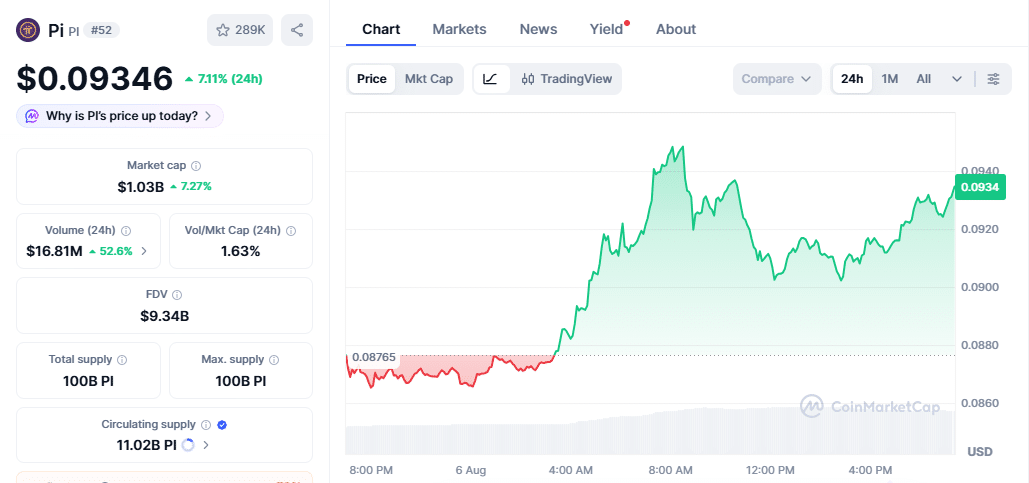
Data from CoinMarketCap showed PI opening the session near $0.087 before moving higher. The 24-hour range stretched from a low of about $0.0863 to a high near $0.0951. On the daily chart, price broke above recent consolidation and closed the session with a clear green candle, recovering from levels that had tested multi-week lows earlier in the summer.
Weekly performance was stronger, with gains exceeding 13%, while the monthly chart still reflected a decline of roughly 16%, highlighting the token’s continued volatility since the open mainnet phase.
Why is Pi token surging
The immediate drivers appear to be the August 11 deadline for Mainnet node operators to complete the protocol v26 upgrade and growing interest in Pi Network’s RoboPay partnership.
Protocol v26 is designed to improve smart-contract security, state management, cross-chain compatibility, and cryptographic features. It serves as the penultimate step before the final planned protocol v27. The hard deadline, with non-upgraded nodes facing disconnection, has focused community and investor attention on the network progress.
Concurrently, announcements linking Pi payments to AI agents and autonomous robots through RoboPay have fueled speculation about expanded real-world utility.
Technical indicators show improving momentum
The 24-hour chart displayed a steady climb through the overnight and morning sessions, with successive higher lows. The one-week view showed a clear recovery from sub-$0.083 levels at the end of July. The one-month chart, by contrast, illustrated a series of lower highs and a persistent downtrend that only recently showed signs of flattening.
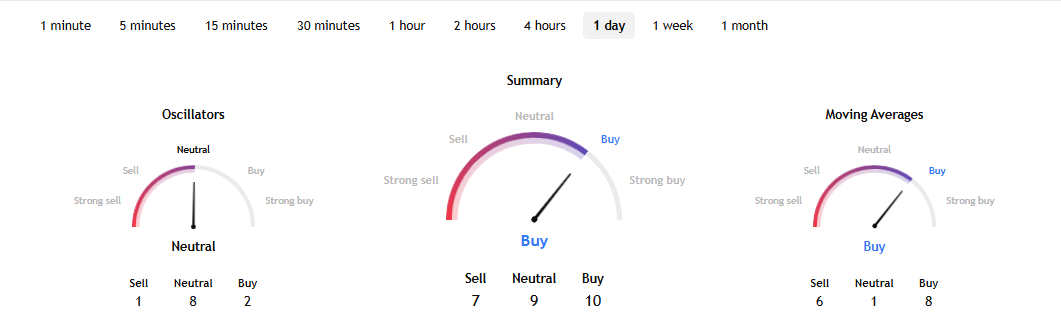
According to TradingView data, technical indicators took a cautiously constructive stance. Oscillators remained largely neutral, with a majority of readings clustered in the middle ground. Moving averages, however, tilted toward the buy side, and the overall summary signal leaned bullish.
The broader context remains mixed. PI’s all-time high of $2.98, reached in late February 2025 shortly after the open mainnet launch, still sits nearly 97% higher. The token recorded its all-time low of approximately $0.0707 on July 14, 2026. Since then, it has recovered more than 30%.
Circulating supply stands at 11.02 billion PI against a maximum of 100 billion, leaving a portion of the total supply still locked or unissued. However, fully diluted valuation hovers near $9.3 billion.
The rally came as major cryptocurrencies traded in relatively narrow ranges. Bitcoin remained near $64,000, allowing attention to shift toward selected altcoins.
Token unlocks remain a risk
Roughly 127 million to 128 million PI tokens are scheduled to unlock in August, higher than recent months, creating potential selling pressure from long-waiting holders.
Circulating supply is still only a fraction of the 100 billion maximum, implying substantial future dilution. The token remains more than 96% below its early-2025 peak, and previous upgrade-related rallies have frequently faded once the event passed.
Also Read: Base Hacker Steals $500K USDC but Loses 74% in Costly Uniswap V4 Swap