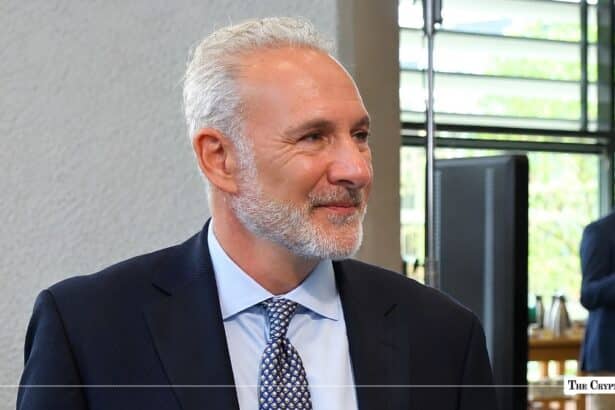
India should allow regulated rupee-backed stablecoins to help users and institutions reduce exposure to U.S. dollar fluctuations, according to Binance APAC Head SB Seker.
In an interview with Moneycontrol, Seker said INR-backed stablecoins would allow Indian users to hedge their positions in rupee terms instead of relying on dollar-backed assets such as USDT and USDC.
“Having Indian rupee stablecoins will be critical because it allows users and institutions in India to reduce the exposure they have from a foreign exchange perspective. You can hedge your positions in Indian rupee terms and not be exposed to U.S. dollar movements that are beyond your control,” Seker said.
He said regulated rupee-backed stablecoins could strengthen India’s digital asset ecosystem while supporting blockchain-based payments and settlements.
Dollar stablecoins bring unwanted currency risk
Seker said stablecoins have become an important settlement layer in the crypto ecosystem because they allow users to move funds quickly across digital assets and other financial products. “Stablecoins have become important because it gives users a settlement mechanism within these platforms that is highly friction-free,” he said.
However, India’s crypto market remains largely dependent on dollar-backed stablecoins, exposing users to fluctuations in the USD/INR exchange rate. According to Seker, regulated rupee-backed stablecoins would help users and institutions hedge against foreign exchange risk while reducing dependence on the U.S. dollar.
He added that local-currency stablecoins could complement India’s financial infrastructure by enabling faster cross-border payments, remittances and tokenized asset settlements.
Seker also identified real-world asset (RWA) tokenization as one of the biggest growth opportunities for India’s digital asset market. He said the country has already shown legislative and policy momentum in this area, citing initiatives in states such as Maharashtra. While India’s approach to stablecoins is still evolving, he believes progress on tokenized real-world assets is moving in the right direction.
India’s stablecoin rules awaited
These comments come at a time when India has yet to introduce a dedicated legal framework for privately issued stablecoins, despite becoming one of the world’s largest crypto markets. The country currently taxes crypto gains at 30% and applies a 1% tax deducted at source (TDS) on many digital asset transactions, but broader regulations remain under discussion.
India’s June 2026 USDT supply crunch has fuelled demand for rupee-backed stablecoins. USDT was trading at an 8.5% premium on Indian exchanges after the Enforcement Directorate’s raid on alleged illegal cross-border crypto transactions. The shortage highlighted India’s reliance on dollar-backed stablecoins.
The Reserve Bank of India (RBI) has also taken note of the global push for regulation of stablecoins. In its June 2026 Financial Stability Report, the central bank referenced frameworks such as the U.S. GENIUS Act and the European Union’s MiCA rules while continuing to support the digital rupee (CBDC).
In the meantime, the RBI has taken a cautious stance on privately issued cryptocurrencies. Industry participants say private stablecoins and the digital rupee can coexist as they serve different purposes.
Seker also welcomed Parliament’s proposal to introduce self-regulatory organizations (SROs) for the crypto sector, saying similar models have proven effective in several Asian markets.
“Self-regulating organizations are not new to us. We deal with them in Indonesia, Korea and Japan. Built correctly with a healthy mix of industry participants, they can be useful,” he said.
As India shapes its long-term crypto policy, attention is increasingly turning to whether a regulated rupee-backed stablecoin can reduce dependence on the U.S. dollar while supporting domestic blockchain innovation and the broader digital asset ecosystem.
Also Read: India’s ED Arrests Crypto-Hawala Mastermind Behind US Call Centre Scam